Česky
Česky


Michal, what was your life like before you got sick? How would you describe yourself?
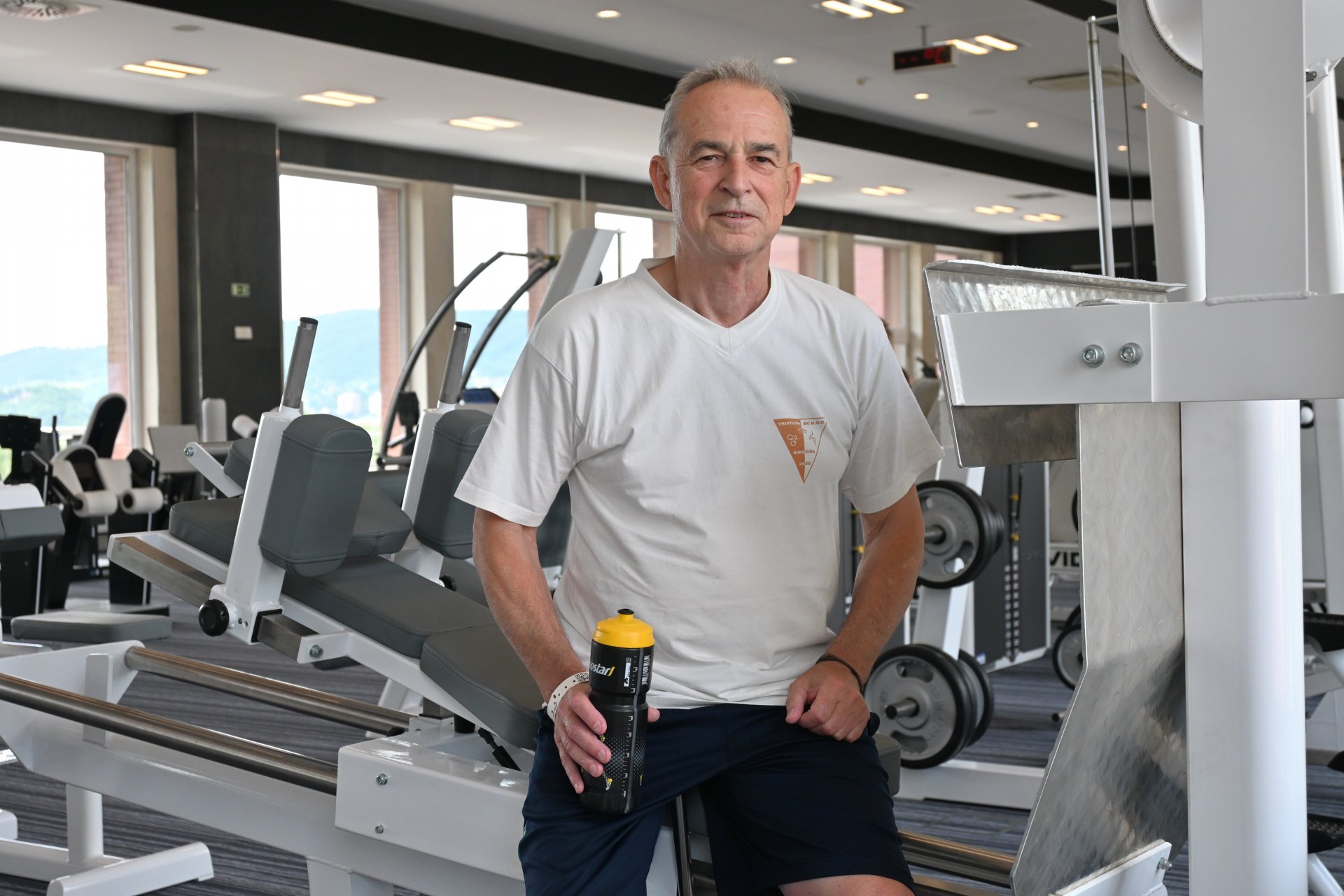
I was a completely normal person. I went to work—I’ve been selling screws my whole life. We had our usual worries and joys; our first granddaughter had just been born at the time. And above all, I was very active in sports. I played handball and volleyball competitively, though at a lower level. On top of that, I really enjoyed long-distance running—I’d run a few marathons and participated in those amateur, fun triathlons. Simply put, sports have been a part of my whole life; I did them for fun, but like any true athlete, I wanted to win.
When did the first signs appear that something was wrong?
I remember it exactly. My wife, some friends, and I were participating in a charity run at Letná in Prague. The idea was that for every lap you ran, you raised money for a good cause. We started running, and suddenly I felt a terrible sharp pain in my back. I slowed down; the others passed me and wondered where I was, since I usually ran at the front. It was a strange, unusual pain that I’d never experienced before. Afterward, we went down from Letná for a beer, and it was pretty fine, but about two weeks later, the back pain started to get worse. It got worse and worse; I couldn’t sleep—I felt best sitting in the corner of the couch. I’d even go to work as early as four in the morning because I couldn’t lie down.
“I thought they’d tell me which muscle I’d strained and recommend some exercises. The reality, however, was shocking.”
How did you deal with it?
I underwent a CT scan. I went in expecting them to tell me which muscle I’d strained so I’d know how to move it. But the doctor called me into his office and told me I had metastases in my spine.
What went through your mind at that moment?
It was a terrible, awful feeling. It’s always on your mind, and it keeps coming back to you. Then the whirlwind of tests began. It turned out to be lymphoma—blood cancer. Unfortunately, the metastases had severely damaged two of my vertebrae. The physicians planned a surgery to try to “scrape” it out of my spine. In the meantime, though, my ability to walk was deteriorating very quickly. I didn’t really realise it myself, but my wife saw it. I was walking like a sailor on a storm-tossed ship. The surgery was originally scheduled for fourteen days later, but because my condition was deteriorating so quickly, they operated on me just a week later. That was right before Christmas in 2015; I spent the holidays in the hospital.
But unfortunately, there were complications after the surgery, right?
Yes, after the surgery I lost the ability to walk completely. I could still feel my legs to some extent, but I couldn’t stand on them at all—they wouldn’t support me. It was clear that I had to start rehabilitation immediately. But at the same time, I had to undergo chemotherapy. And that’s when it became clear just how exceptional the Rehabilitation Hospital Beroun is. It was, in fact, the first—and for a long way around, the only one—that was willing to admit me for intensive rehabilitation even while I was undergoing chemotherapy. My wife called the then -chief physician, Dr. Horáček, during the holidays. He was in the mountains at the time, but he called her back that evening, and when he heard what the situation was, he said, “Bring him in, then.”
What were your early days like in Beroun?
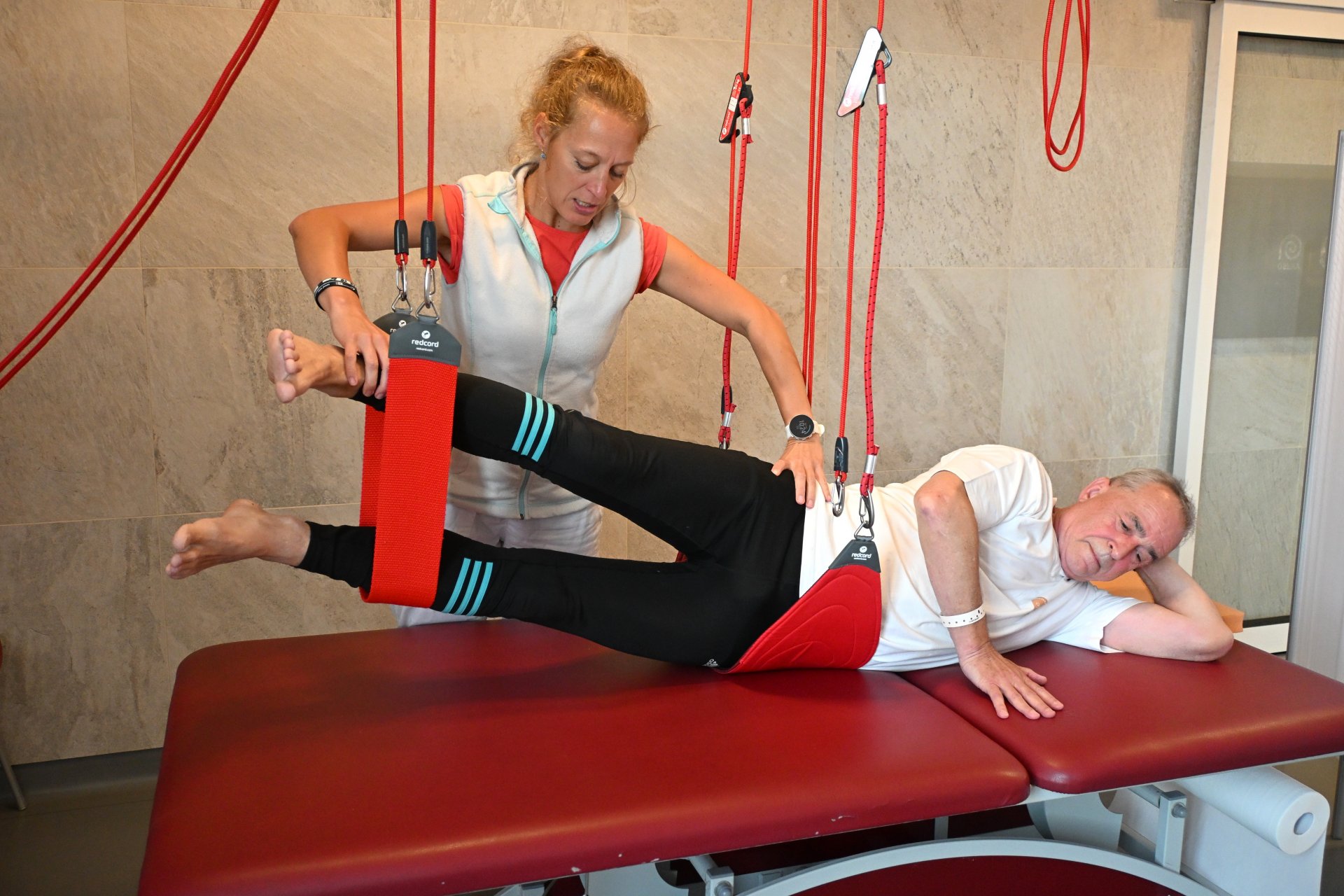
They brought me there as a completely bedridden patient. But I really wanted to work hard. When the therapist told me to do five exercises, I wanted to do six. At first, there was a bit of a time issue: by the time they wheeled me from my room to the gym, transferred me from the wheelchair to the exercise bed, and then back again, only a fraction of that half-hour was left for the actual exercises. So the physiotherapists started coming right to my room to do the exercises with me, which was great. I’d lift my legs on the bed, and Dr. Horáček was constantly coming up with new exercises.
Did he come up with a special method for you back then?
The adjustable bed was a great feature. There’s a display at the end of it that lets you raise the entire bed and bring it into a vertical position. So I’d lie on it, they’d strap me in, raise the whole bed with me on it, and I’d actually stand like that for a while every day, getting used to that position. That helped me tremendously.
What else did you undergo as part of your rehabilitation?
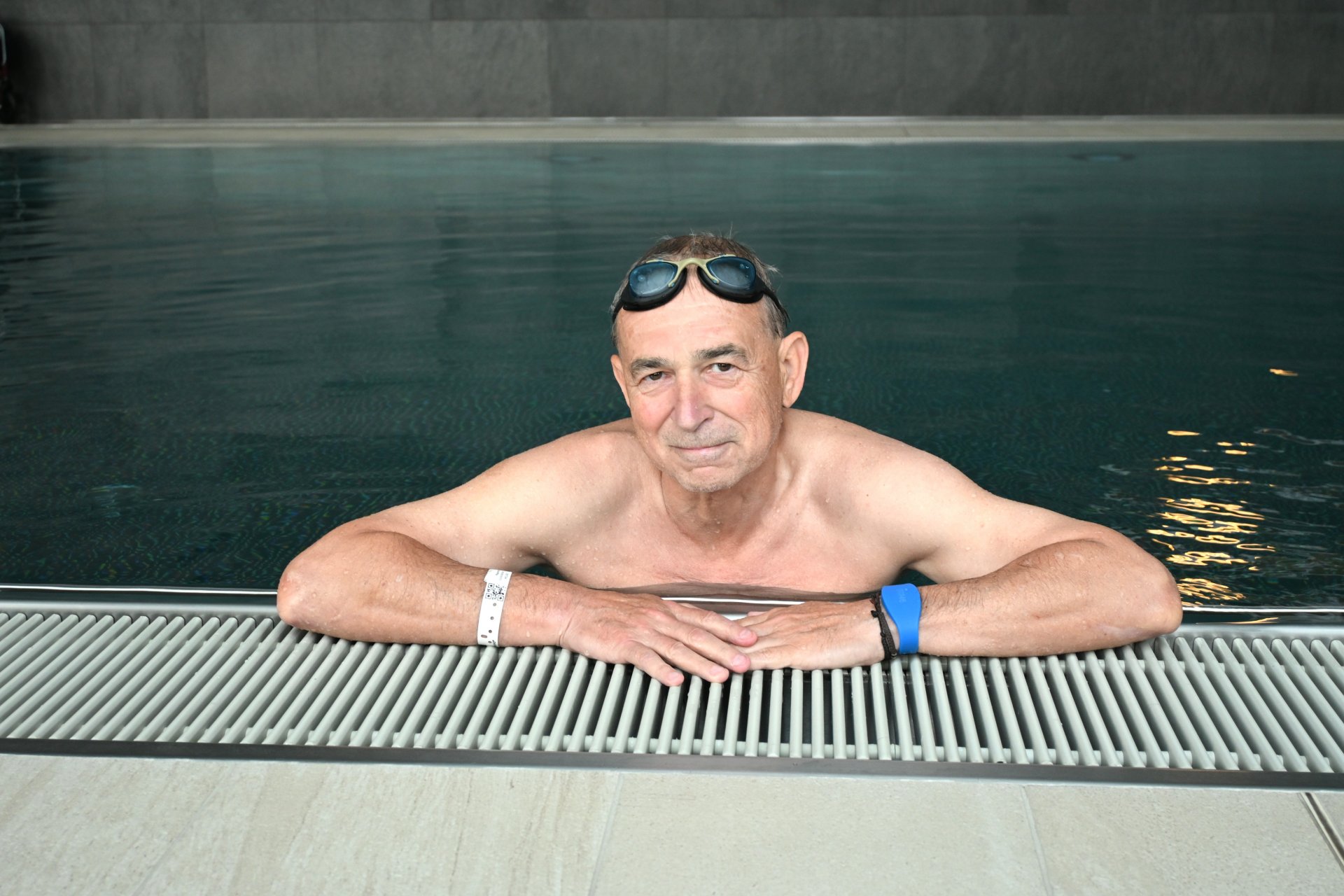
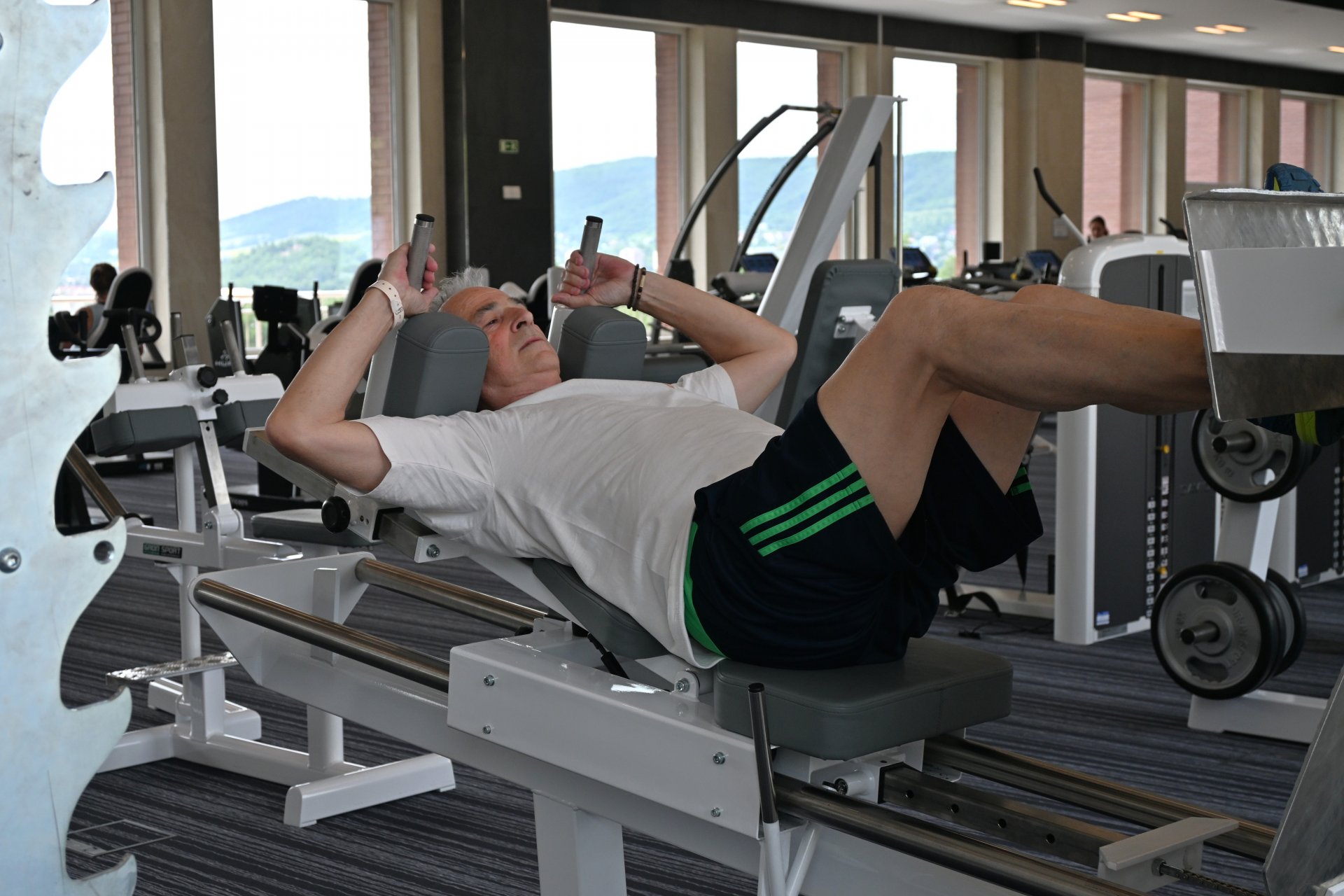
Water helped me a lot. In Beroun, they have a fantastic facility—the water walkway. It’s a tub where they lower you in and fill it with water exactly to your needs—up to your chest, for example. You hold onto the handrails there; the water keeps you afloat, so you can walk even if you can’t yet maintain your balance on dry land, and you know you won’t fall. I spent a lot of time there. Then I also went to a warm-water massage pool, where I’d sit down and stand up on my own against the jets. They also practiced the Vojta method with me. I’d never really believed in that sort of thing, but there I could actually feel the warmth passing through my body via those reflex points and my leg twitching on its own. It was an amazing feeling.
“I grabbed him around the neck, and he pulled me to my feet. It was an incredible feeling.”
It seems you really inspired the staff there with your positive attitude.
It was mutual. The physiotherapists were happy to see how eager I was to exercise, so they devoted even more attention to me. One physiotherapist once asked me when I was going to the pool in the morning. When I told her the time, she grabbed her swimsuit and, even though she was off duty, went into the water with me to show me some more special exercises. That really motivates you.
I remember how therapist Janek came to see me in my room one Saturday; my wife was there at the time, too. We went to exercise; he sat me on a large exercise ball, I wrapped my arms around his neck, and suddenly he stood me up. It was an incredible rush of emotions—I was unbelievably excited. From that moment on, things moved forward quickly. I started transferring myself to the wheelchair, brushing my teeth, and taking care of my personal hygiene—those were my biggest victories. After that, the staff didn’t have to push me anywhere anymore; I was moving around on my own, and I tried my first steps in front of the mirror in the hallway.
How long did this struggle to regain mobility last?
Basically, I spent a year in hospitals; I was hardly ever at home. My routine was this: I’d undergo chemotherapy, then they’d transfer me to Beroun, where I’d work hard for three weeks, then back to the hospital for a while for more chemotherapy, and so on. When I was finally home for a few days at a time, it was tough. Being in a wheelchair—my wife had to prepare my meals before she went to work. I’d wake up in the morning and wonder if it was even worth getting out of my pajamas when I was just going to be lying down again anyway. For someone who’s always been so active, it was mentally draining. But my family and friends really supported me. In the summer, for example, my friends would load me into their car, take me to their backyard pool, exercise with me in the water, and my wife would pick me up again in the evening. I couldn’t have done it without that support.
“I left those crutches there! I just didn’t need them anymore.”
Physicians are increasingly saying that half the success in treating such serious conditions is in the mind. Apparently, you never let yourself believe that things could turn out badly.
That’s true—I never even considered it. Maybe it was harder for the people around me, who saw me in a wheelchair, but all I could think about was that I would simply get back to moving. When I started in Beroun, I told them, “Once I’ve run that lap around the hospital, you won’t see me here anymore.” And I really did run those laps there every morning.
When I thought about where that determination came from, I think it’s precisely because of team sports. Volleyball or handball teaches you that you show up for a game, the ref calls it against you, you lose—but what do you do? A week later, you go play another game and you have to deal with it. Life just throws you a curveball sometimes, but you can’t let it get to you.
When did the definitive turning point come—when you put away your crutches?
That’s a great story (laughs). When I was already back home and walking only with trekking poles, my wife and I went to a triathlon where my physiotherapist from Beroun was competing, to cheer him on. After the race, we sat down at a pub, chatted, and then I got up and went to the restroom. When I got back to the table, I said, “I left my walking sticks in there!” And the physiotherapist started laughing and said, “Well, you see, that’s the greatest rehabilitation success.” I’d forgotten that I needed them and just walked on my own.
That’s fascinating. And how are you living today? Have you returned to your beloved sport?
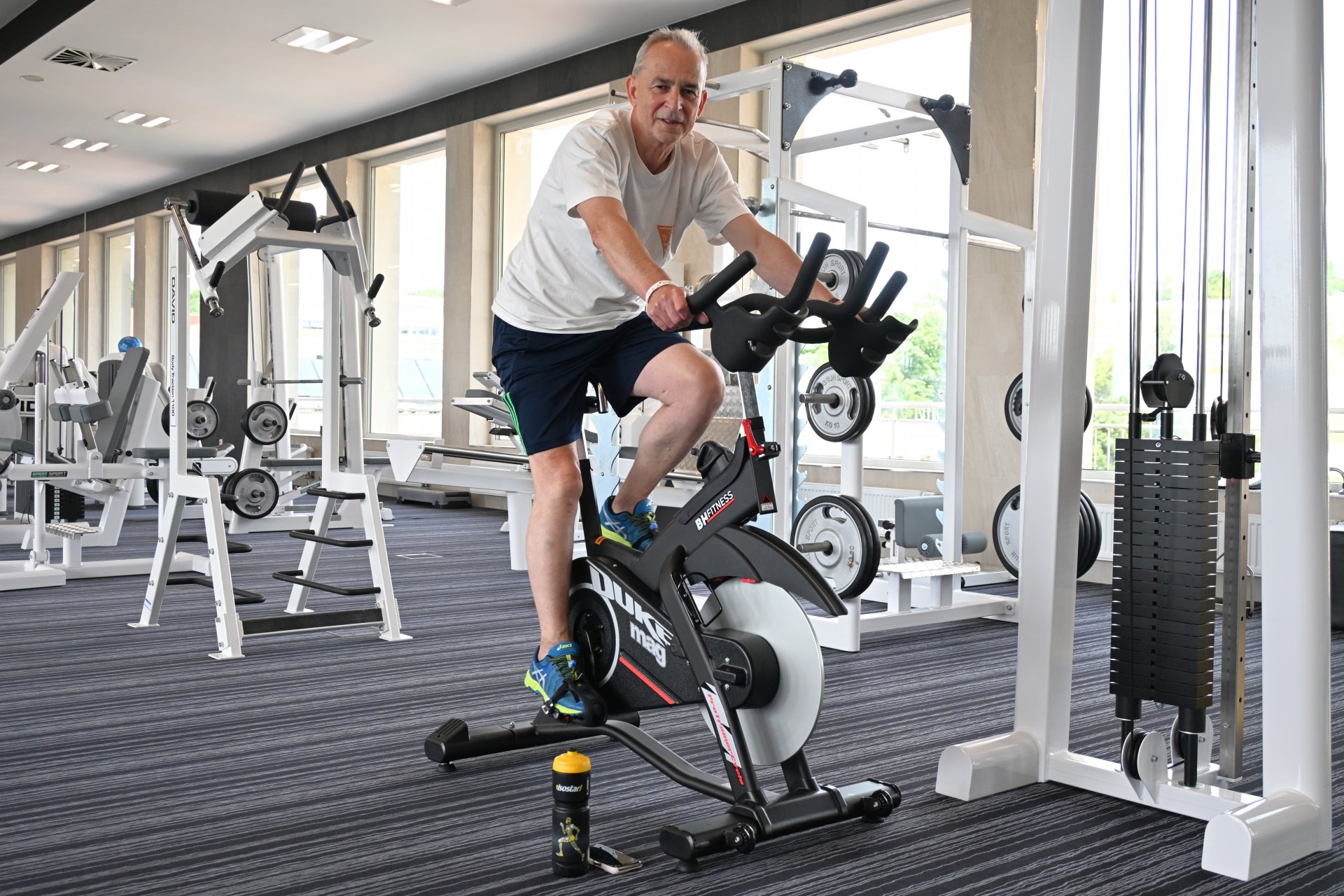
I live a completely normal life. I go to work, where I have no problem climbing a ladder. I swim, ride a bike, and compete again. The year after that incident at the pub, I ran that triathlon, too. It was more of a slow jog, but I made it. A friend of mine organises another tough triathlon where you run nine kilometers, two of which are up a steep hill. When I ran it for the first time after my illness, everyone else had long since crossed the finish line; he was waiting there for me, cheering me on, and during the awards ceremony he said into the microphone that if I hadn’t finished, it would have been my memorial race starting next year. That really touched my heart.
As for the lymphoma, fortunately, it’s completely gone. I don’t even have to go for spine checkups anymore—it’s stable there. I only go for blood tests at the oncology clinic once a year now, and so far, it looks like everything is perfectly fine.
What message would you like to share with people who are going through something similar?
Sometimes in hospitals, I hear people constantly complaining that they have a headache right now and won’t go to physical therapy. I always tell them—and I’d like to say this here too: Realise that you’re in a rehabilitation hospital, not a spa. You’re here to work hard. No one forced you to be here. And if you don’t want to exercise, make room for someone else who wants to live—someone for whom it will save their life. Because in Beroun, they really do work miracles, but you have to put in the effort yourself.
“Life sometimes knocks you down. But you mustn’t give up. In Beroun, that motivated me incredibly.”
And what message would you like to share with our hospital?
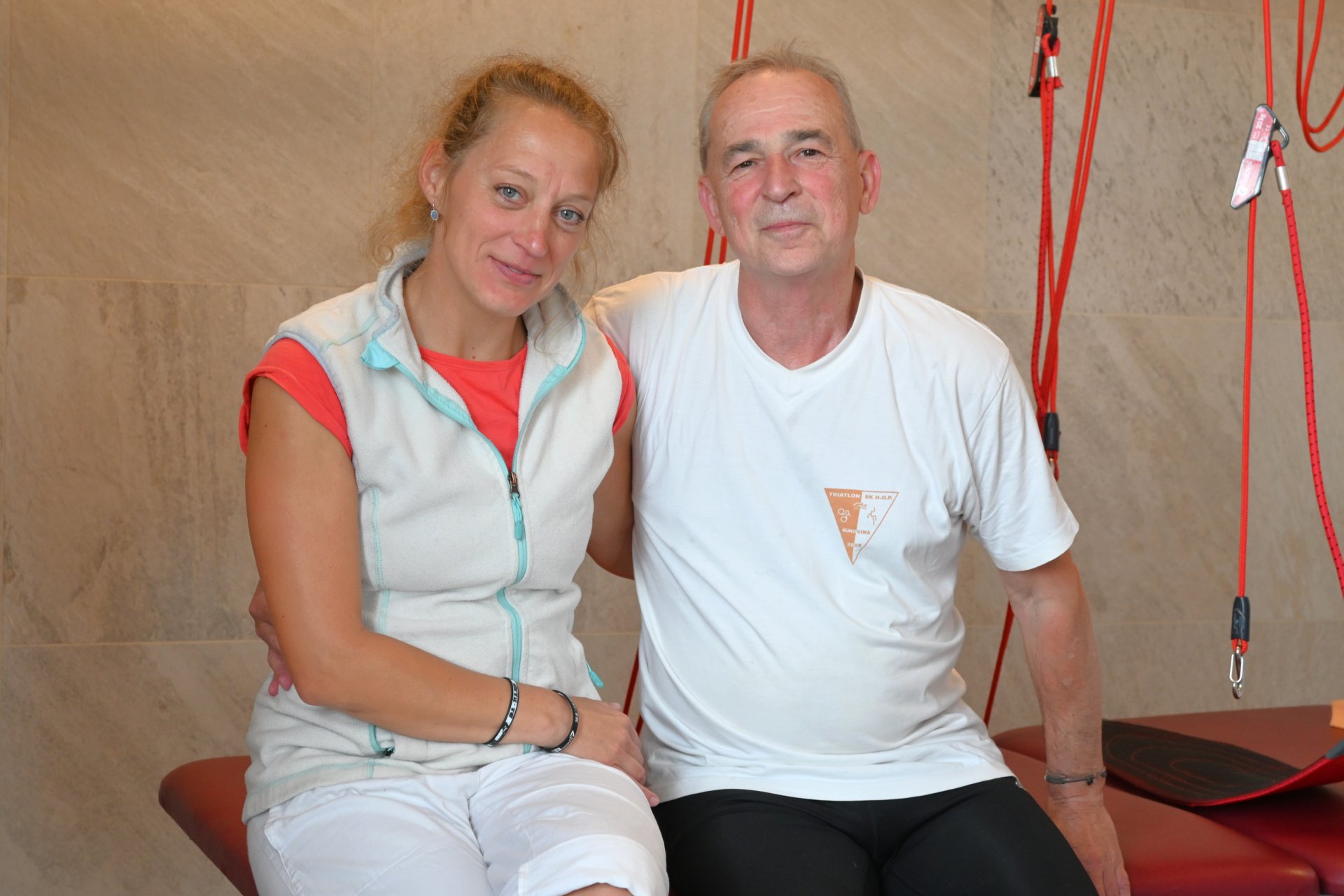
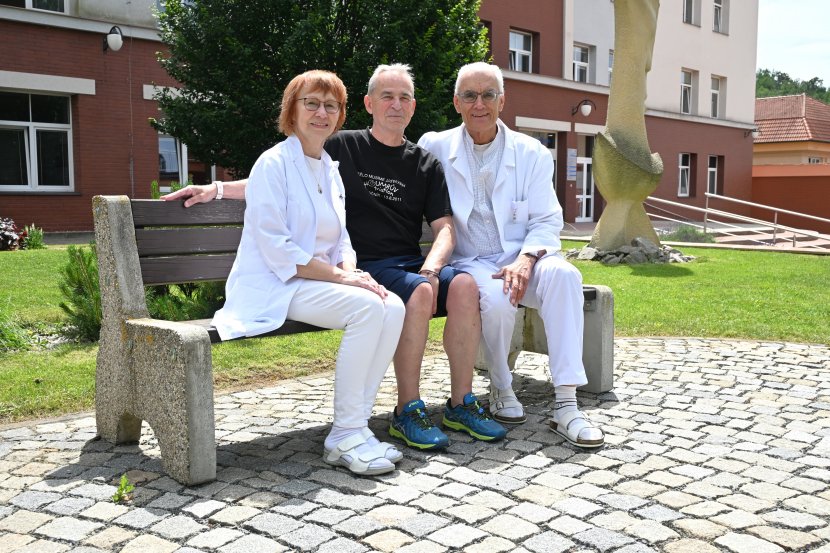
In Beroun, they gave me back my active life. The entire staff—from the doctors to the physiotherapists to the orderlies and cleaning staff—was incredibly kind and compassionate. They became my second family.