Česky
Česky


Doctor, how would you assess the current functioning of the arthroscopy centre?
We've had a year of really big changes. The number of theatres has expanded, new colleagues have been added, and as a result, the number of arthroscopic operations has increased. We follow the market trends, we cooperate with supply companies and we regularly learn about new implants and techniques. We are at the cutting edge in this respect.
What range of procedures do you offer patients?
Virtually complete. From simple arthroscopic procedures to complex reconstructions. In the case of knees, we treat menisci, ligaments, including plastics, and perform reconstruction of the ligamentous and patellar apparatus. In the shoulder area, we perform everything from simple subacromial decompressions to complex stabilisation surgeries. We manage some procedures on a day care basis, with more complex procedures patients stay until the next day. A great advantage is the direct link to rehabilitation care in our hospital, which is not commonplace everywhere.
"It doesn't look like robotics in arthroscopy yet. It would be a very challenging process."
There's a lot of talk about robotics in medicine. How do you see its use in arthroscopy?
To be honest, I can't really see it yet. Because learning how to do arthroscopy is very difficult in itself. It's like building a boat in a bottle - you work through optics and look at the screen, not your hands. The transition to robotics would be extremely challenging and the device itself would have to be very "smart", probably using artificial intelligence. The question is how this would be more advantageous for the patient and the surgeon compared to conventional methods. So far, I don't think this will be an issue in the next few years. On the other hand, we once could not imagine smartphones and today we cannot do without them.
What kind of patients are you targeting?
We specialise in adult patients. Arthroscopy is a minimally invasive method that can be used in all age groups. Younger patients often have traumatic conditions and sometimes systemic diseases. In the elderly, degenerative joint diseases predominate. If you treat the joint in time, you can prolong its functionality. If not, the patient may end up with a total endoprosthesis, which already means a foreign body in the body. And it's always best to have your own joint.
Does lifestyle play a role in preventing joint disease?
Huge. It helps to maintain a healthy weight, play sports regularly and stay fit. Genetics also plays a role, but less than it might seem. The problem is that a lot of people have sedentary jobs and try to catch up at the weekend. And that's what's most damaging to the joints. They need regular movement, not impact loads.
"Patients come to us from almost every region. They find top-notch care and a modern environment."
Patients come to you from other regions. What attracts them to your centre?
The combination of quality equipment, environment and state-of-the-art implants. We have around thirty orthopaedic surgeons who regularly come to us from further afield. And with them, of course, patients from many regions.
How has arthroscopy developed from a technical point of view?
Fundamentally. We used to look into the knee with a tube, then came the transfer to a black-and-white screen. Today we work with very high resolution optics, we have specialised instruments for the knee, shoulder, wrist. The equipment is getting more sophisticated and more accurate.
You are the centre manager, what does this role mean to you?
I see it more as a coordinating role. We have professionals here who stand behind their work and have their own patients. For me, the most important thing is the outcome and the responsibility of each surgeon. Of course, we also encounter very complicated cases, but it is always necessary to bring the operation to a successful conclusion. And we manage to do that.
Why did you choose orthopaedics?
At the beginning it seemed simple. Everything is clear on the X-ray, no complicated detective work like in internal medicine. But it soon became clear that it wasn't that simple. Orthopaedics is a manual job, where you use your hands, a little bit of your head, plus imaging and lab results. I think of surgery as a reward and actually a rest. Outpatient clinics, on the other hand, are mainly about psychological work, the patient has to trust you, without that the treatment doesn't work.
What would you like to see in the future for your centre?
That it works well, that we don't have any major complications, and that we have enough staff. This is the task of every management and leadership which I think is succeeding.
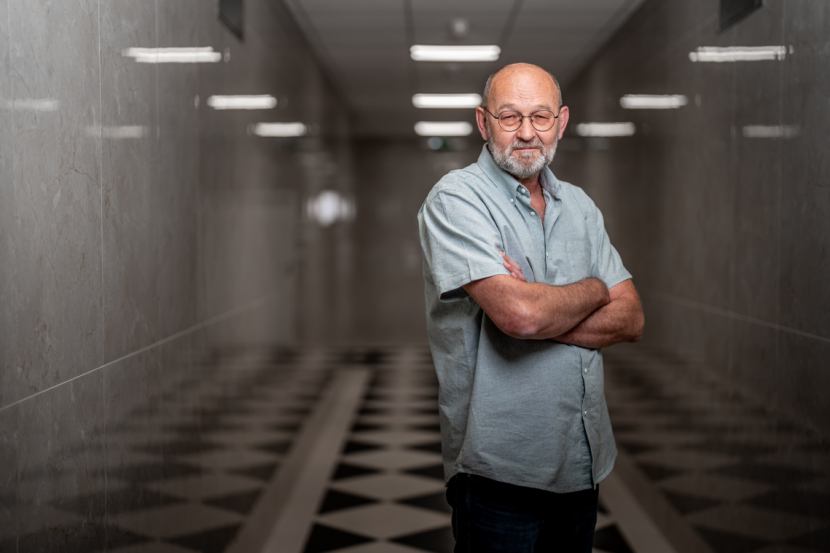
as. MUDr. Zdeněk Kopečný
He has been the head of the Beroun Arthroscopy Centre since 2008. He also works at the Orthopaedic Clinic of the 2nd Faculty of Medicine of the Charles University and Motol University Hospital and at the 2nd Faculty of Medicine of the Charles University in Prague. He has attended professional courses and study stays in the Czech Republic and abroad, for example in the USA, Germany and Sweden. He is a member of several scientific organisations such as the Czech Medical Chamber, the Czech Society for Orthopaedics and Traumatology and the Slovak Society for Traumatology and Orthopaedics. In addition to arthroscopy, he is also involved in alloplasty of large joints, computer-navigated knee TEP surgery, revision alloplasty and management of septic complications.