Česky
Česky


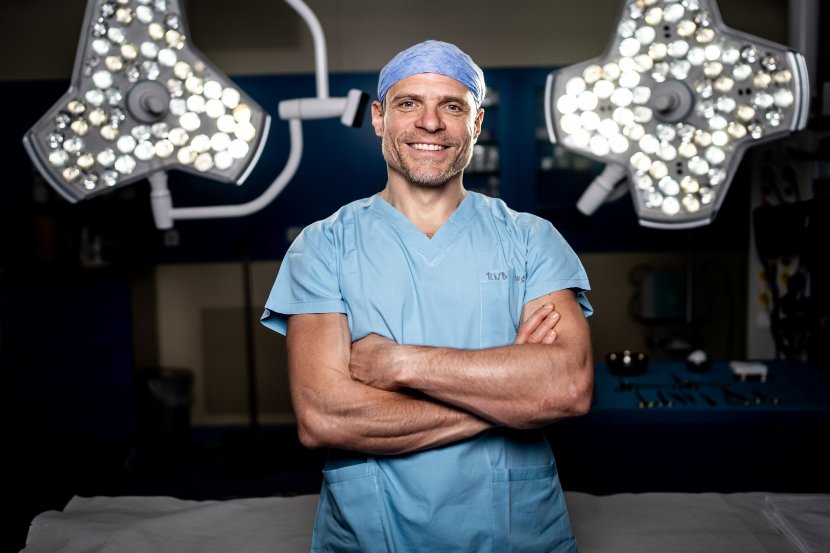
What's still on your operating schedule here at the Day Care Centre today?
It's a cholecystectomy, or gallbladder surgery, this afternoon. I'll be assisting my great colleague Filip Dolecek, so it's certainly going to be a great job and I'm looking forward to it.
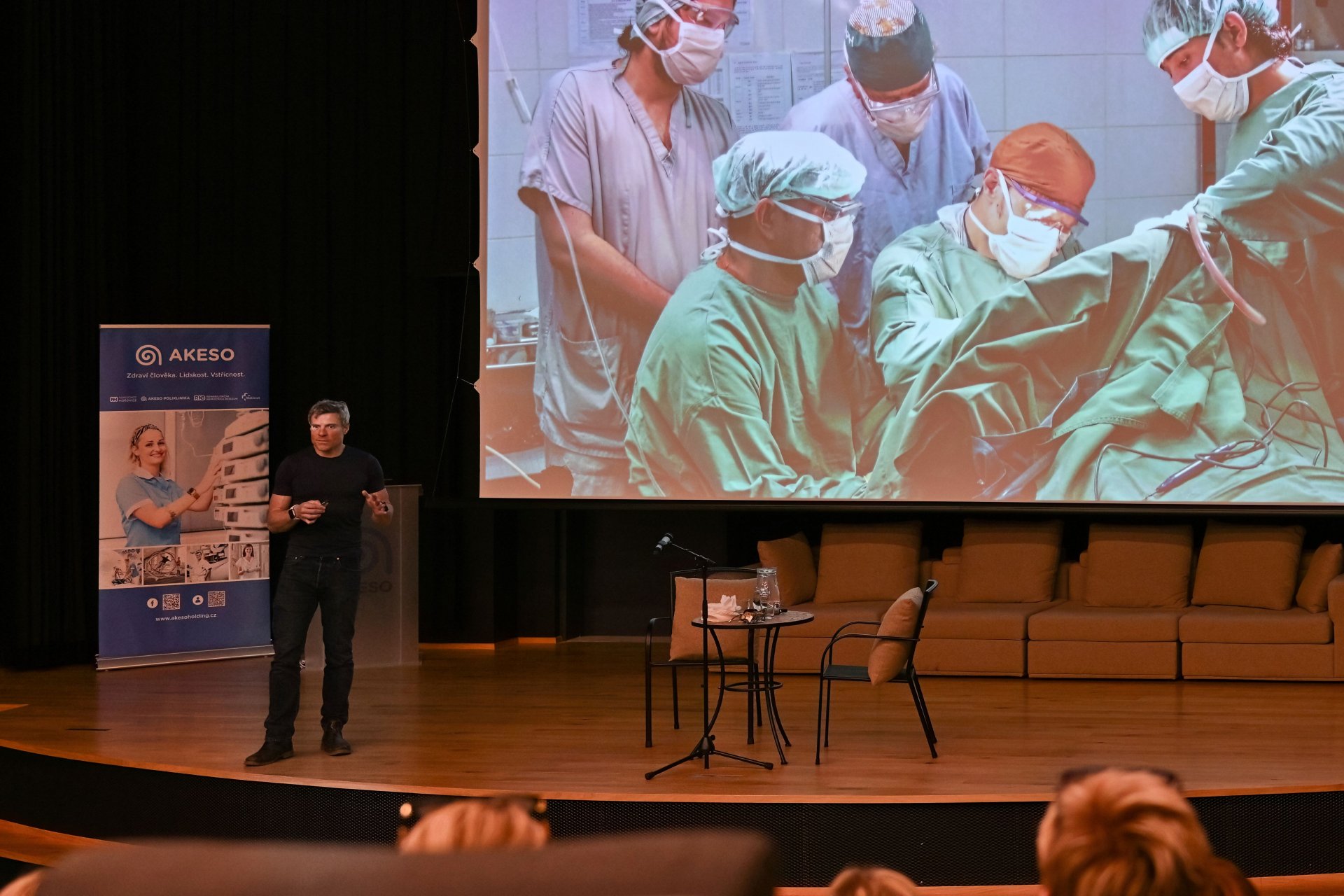
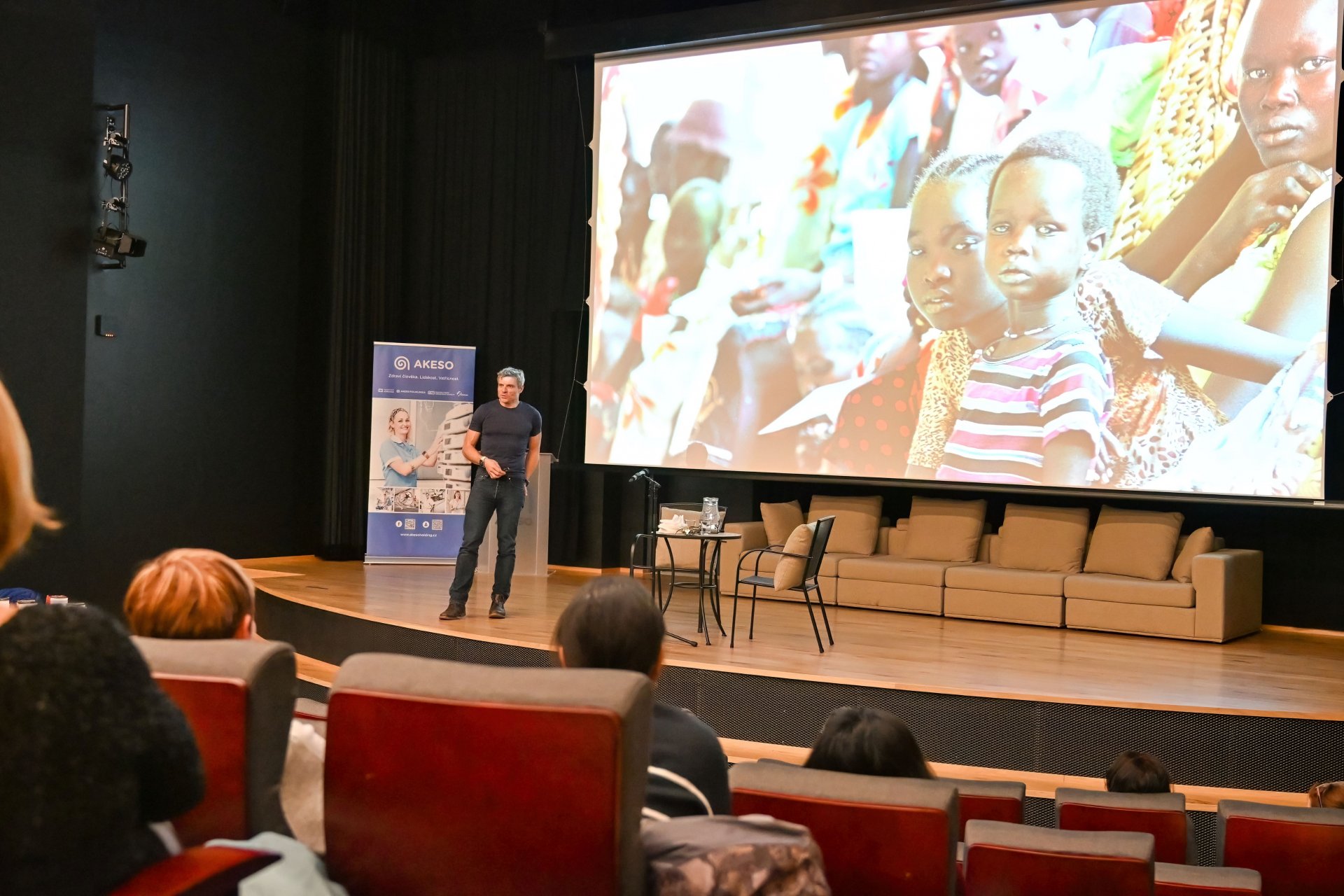
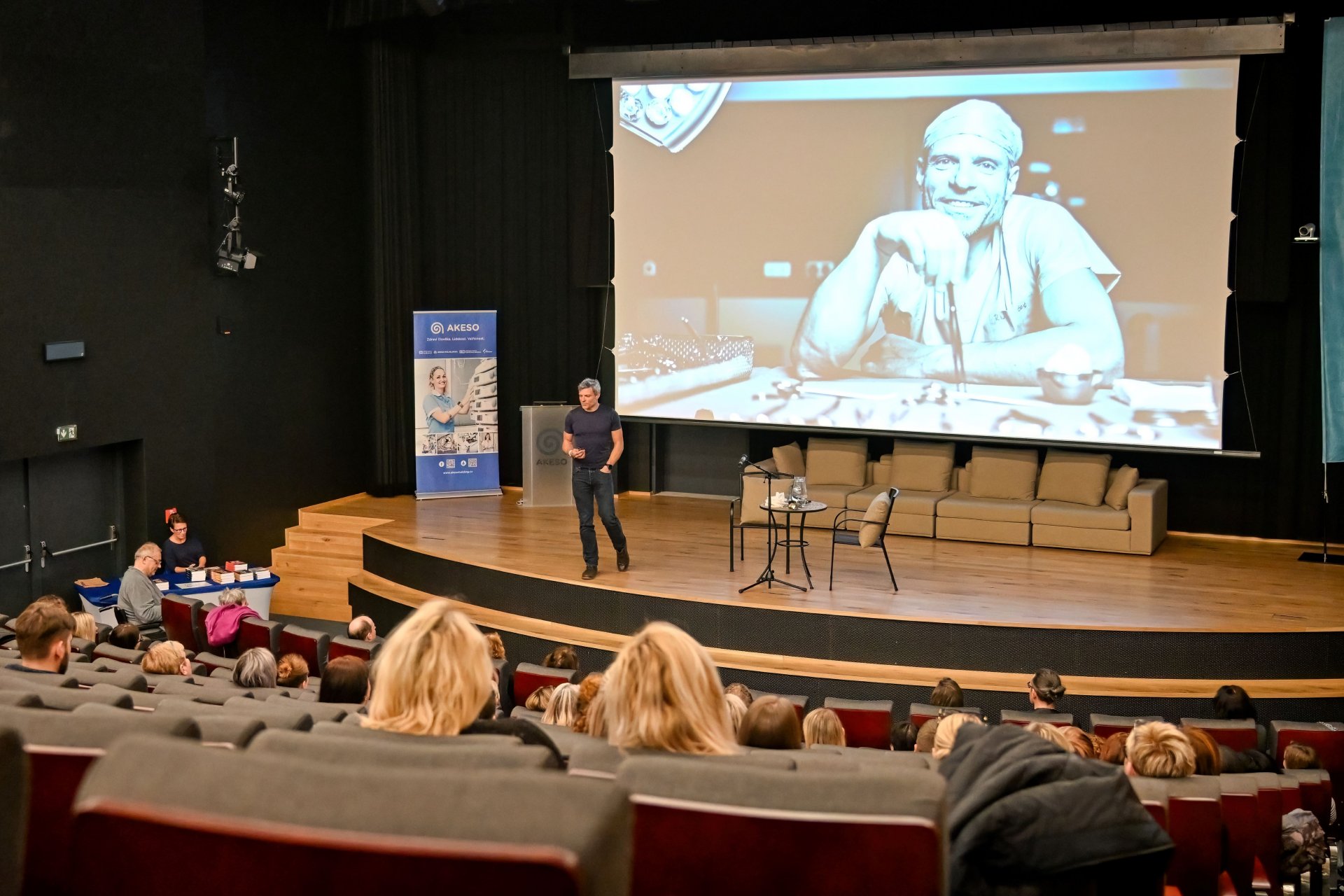
Let's move on to your latest book, Objective Finding, which you presented at a lecture and book signing here in the Multipurpose Room. I read it myself in two days. And that was in the operation of a household with two young children. I just couldn't tear myself away from it. I'm assuming I'm not alone and you've had more reactions like this?
I don't want to brag, but yeah (laughs). No seriously, the book did as well as I hoped it would and maybe I won't be perceived as positively anymore. But still, someone might think I'm not doing things completely wrong, even though I've tried to convince the reader otherwise. The feedback that has been flowing in quite massively, which I also encourage in the book, is incredible. I get 5 to 10 emails every day, and they're not short messages, they're mostly stories of people who may have experienced similar things. I develop several thematic lines in that book that alternate and the common denominator and the main theme is parents and children. And the main message of that feedback is: We're not entirely happy that you've come down from that pedestal, but at least you're flesh and blood. We're more sympathetic. I was pleasantly surprised that 99% of the feedback is positive, and I'm in the Czech Republic! Of course, there will be someone who didn't like the book thematically, but that happens. At the moment, we have sold about 50,000 books and we are still in first place of the best-selling books.
In the book, you say you're no hero. But how can someone who's not a hero go on a mission where they have basic equipment and have to solve cases they've never done before? Not to mention he's in an environment where even his own health or life could be at stake...
Someone who calculates, prepares, plans, questions, scares, and that has nothing to do with heroism in my opinion. It's more like risk management, my lifelong approach. That you name all the possibilities, once you have named them, you can make an informed decision whether to take some level of risk, which will always remain a little unnamed. So it's not in the spirit of the dude who just goes in headlong and jumps in and do what happens. I like to plan things out and always admit to myself that I have concerns. By the way, if I didn't have concerns, I wouldn't pass the Doctors Without Borders screen for this particular job because the psychologist will reveal you to be just plain nuts. Those who aren't afraid don't have a flap, and it's not safe to work with them. So I don't really consider myself a hero, I just calculate the risks and then I navigate those risks. And usually I don't do it alone, but I have a team of people around me, which also dilutes the risk. Then it may look heroic in the end, but it's just an appearance.
Also, in the book you go into yourself and criticise yourself for not always being a good parent. Or at least the kind of parent you wish you could be. So what would the ideal parent look like?
That's something I left open in the book because I don't know. And rather than criticise all of us and say, "nobody's perfect," which may be true to some extent, and thank goodness we're willing to admit that. So I've gone to the extent that, not only in the area of parenting, but also in the area of my work, I've mostly ground myself.I've criticised what I don't like about myself, but at the same time I'm willing to work with it. When the book came out, I was worried if this would be a topic in Czech society, and obviously it is, otherwise there wouldn't be this huge feedback. So I'm happy when someone identifies with the story. But who am I to judge? I don't compare, I listen patiently to the stories, I'm happy that people are thinking about it themselves, but I don't judge who is a better or worse parent. So I've told everyone that I'm the worst.
I beg to differ, because the worst parent, in my opinion, is the one who abandons, doesn't care for, or abuses their child...
I think I have touched on these topics and opened them up, albeit fleetingly. And if anyone had the impression that I was born with a golden spoon in my mouth, they weren't. But it doesn't give me any alibi to project my traumas onto those I love the most, which is your children and your partner, is what I meant to say.
I think you've done that. What about your family, who are willingly exposing themselves to you?
We've been talking about all this at home for months and maybe years. Before the book came out, I needed to know that my children, my wife and my brother were on board with it. Even though it's my story, I'm touching them through there and I don't want them to feel uncomfortable. This public confession is just a product of our debates, my attempt to be a better rather than worst father.
Are you still going to be on a mission with Doctors Without Borders in the future or have you closed that chapter?
I am, but I'm sure it won't be a matter of the next few years. I'm guessing 5 or 10 years at the earliest, if circumstances allow. A lot depends on whether Doctors Without Borders is interested in me as well.
Why wouldn't they?
There are several levels that have to meet. First, you have to align your time window and that of the organisation. Next, within that time window, you still have to hit a location where you'll be needed. That's why I can't tell you even now where that would be, you don't even know a week in advance. I'm primarily a surgeon with a subspecialty in war surgery and trauma, which doesn't fit everywhere. Doctors Without Borders now works in 75 countries around the world in about 500 projects. So it's a constant sort of floating game of finding each other and shuffling those few dozen countries where it's theoretically an option into the mix. So there's no telling right now whether I'll be needed in Afghanistan or Yemen or South Sudan in 5 or 10 years. I could certainly do vaccinations, for example, but I probably wouldn't use my potential there (smiles). I would also be able to educate, which is also an important part of our work, to pass on expertise. Everything is in play.
It's true that you also represented a general practitioner in Africa.
It was more like playing him (laughs)... It was a bit of a detour initially for a few hours, I ended up spending about 14 days as a "practitioner". And thanks to the help of my colleagues, I managed at least not to screw it up and to benefit those patients a little bit. I would say it was my best mission ever, because the broader medicine is so interesting and there I wondered, among other things, if I would open a GP's office somewhere here in the village in my old age. Because I find the work varied and interesting, it brings together everything from the detective work of that diagnosis to the fact that I could be a practitioner with the ability to intervene further. I'd really enjoy that.
And the amount of paperwork that not only GPs complain about wouldn't bother you?
I would very much like to live the story without the paperwork, and I am also actively doing something about itthrough a non-profit organisation that my colleagues and I have founded. I am terribly sorry that in the Czech Republic we do not have the digitalisation of healthcare that we deserve. To have more space to do our work, to focus on the patient. And somewhere in the background, artificial intelligence can listen to us and take the role of administrator. So I hope that when that eventually comes (GP work, editor's note), that we can finally make a difference, even with our own contribution. But for now, the situation is still bleak.
What did you realise during your mission?
What I have realised about people is that they are the same everywhere. We are dealing with the same things here as we are in Haiti or Sudan, just in a different setting, with different resources and opportunities. We're dealing with the mortgage here, they're dealing with where to put their heads. But we are still one species of Homo sapiens, regardless of colour or religion. And we all deal with the basic issues of life, like happiness, sadness, work, sex, children, food. It's the same all over the world. It's just that most of the time it only hits you when you experience it for yourself. You have a lot of mediated resources and you can often have a very distorted image of them. Then when you create your own experience, it broadens your horizons tremendously. And the second thing is that, as much as we tend to talk pejoratively about Third World countries or underdeveloped economies, which I hate to hear, this humble part of the world, from our point of view, often has a much better ability to survive than we do in these so-called developed economies. Because these people communicate with each other, support each other and can help each other in the most difficult moments, such as war or a natural disaster. They can provide the basic necessities of life much more efficiently, even though their rights are being suppressed by the system. And that's something that is extremely heroic, by the way, when we talk about these heroes. A hero to me is my patient or a person living in a country where I am helping as a doctor without borders. In the comfort and the excess of money, the amount of things we own that we end up despairing of, it would be nice to think if that's where we should be inspired. I'm not trying to mentor, I'm just putting the two worlds side by side and let everyone make up their own minds.
You are currently a surgeon at the Day Care Centre in Beroun Hospital. What brought you here?
I have to start from the beginning, when I started at Hospital Hořovice in 2002. I stayed there until about 2010 and to this day it is my beloved hospital. And after some time, when my family and I were living abroad, an offer came from the Rehabilitation Hospital Beroun to participate in the expansion of the orthopaedic programme in addition to the same-day surgery. I gladly accepted this offer also because I am still partly on parental leave and the overnight care can be combined with the role of a father quite well. I was happy to become part of the hospital where until recently the great director Natasha Petsini was working and now her son - the equally great director Tomas Petsinis - has taken over. The best things in my life have always happened and are happening by chance and this was one of them.
The book Objective Finding won the prestigious Magnesia Litera award in the Kosmas Readers' Choice category. Congratulations!