Česky
Česky


A man with the physique of a marathon runner walks into a large room with a sign that reads Occupational Therapy. He uses trekking poles to secure himself as he walks. He's not running again, but he's walking on his own. A year ago he came to the Rehabilitation Centre of the hospital in Beroun as a helpless patient. He was bedridden with a damaged spinal cord as a result of bone metastases. He fought the insidious disease and was helped to his feet at the Beroun hospital. It was not planned that the former athlete came to prove that when quality rehabilitation care and the patient's will come together, success is achieved. But that is not the rule.
The rehabilitation centre at the Beroun hospital, which is owned by Greek-born businessman Sotirios Zavalianis along with the hospital in Hořovice and the Multiscan cancer centre in Pardubice, is one of the most modern in the Czech Republic. With 150 beds, it is also one of the largest inpatient rehabilitation facilities. It is still full.
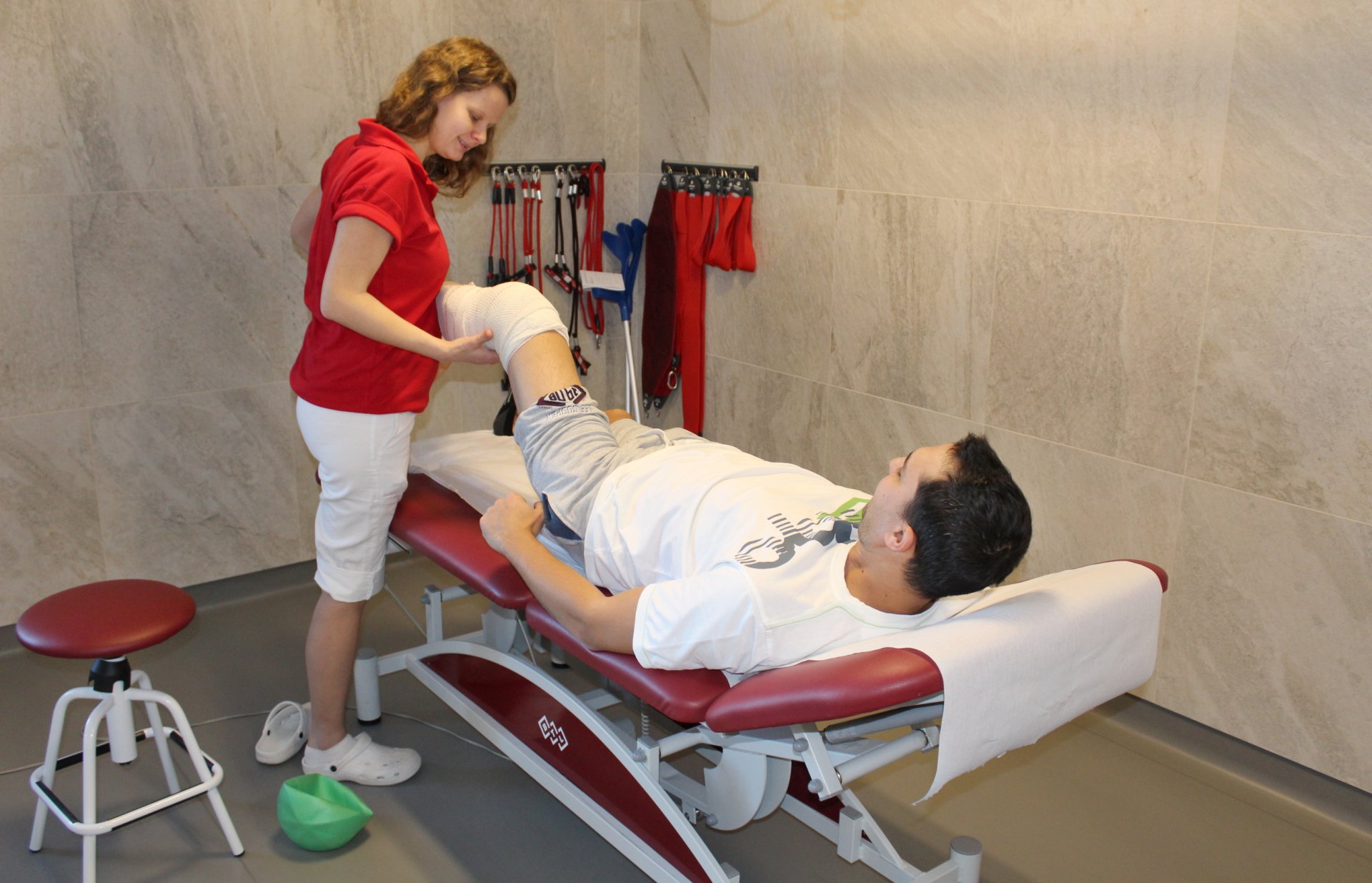
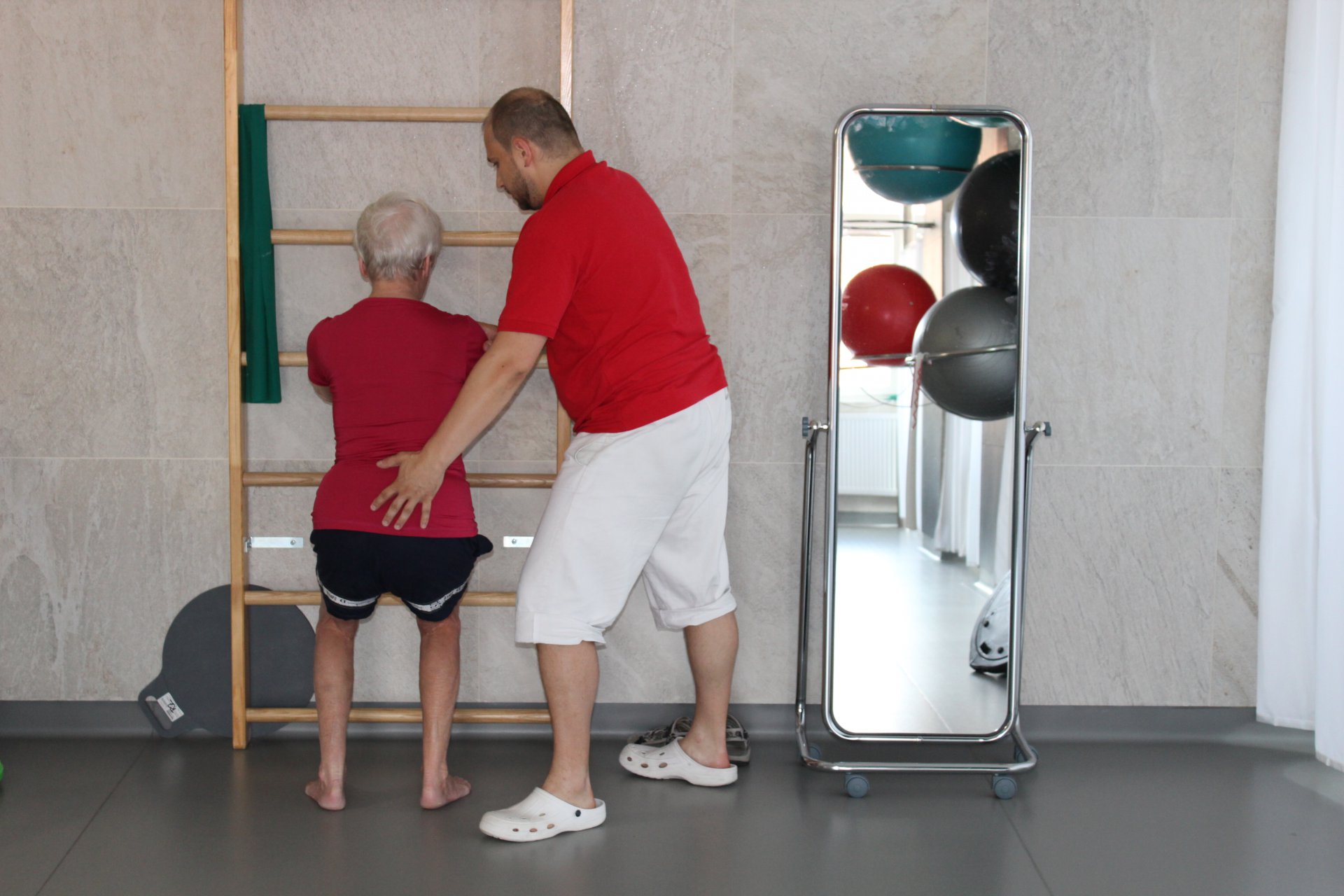
"We focus on early rehabilitation. We accept patients a week or ten days after surgery, more severe injuries or after a stroke. There are also clients with multiple sclerosis, amyotrophic lateral sclerosis and other major problems, for example with the musculoskeletal system," says deputy head Milena Kolářová. She has nothing in common with Pavel Kolář, the most famous Czech physiotherapist, apart from his profession and surname. As a doctor at a top rehabilitation centre, she works in a team supported by physiotherapists. Forty-nine of them work here on a permanent basis, with another sixteen coming in regularly to help out.
Like all facilities in the country, physiotherapists are in demand. Demand for care focused on musculoskeletal disorders is generally growing. Over the past decade, the volume has more than doubled, according to a review by the Institute of Health Information and Statistics. In 2007, it recorded 1.5 million examinations; the year before, it recorded over 3.3 million (last year's data are not yet available). Health insurance companies spend around CZK 6 billion annually on these procedures. People are also willing to pay for their own care. However, even private facilities should not charge extra for procedures that are covered by insurance.
Having a physiotherapist is no longer just a privilege for top athletes. For more and more people, it is a necessity due to health problems. For some, it is even a fashion, just like having your own psychologist, fitness trainer or nutritionist.
"The amount of care and people's expectations are growing. They want to be healthy and they are also taking more care of their health. They are getting older and with the retirement age getting longer, they need to be functional," lists the main reasons for the increase, says Vladan Toufar, president of the Union of Physiotherapists. He works in the rehabilitation department of the hospital in Breclav, and they would also hire a physiotherapist if he applied. "That's probably everywhere. I don't know that a person with this specialty has ever been to the employment office," he notes.
People are increasingly seeking physiotherapists also because conventional medicine often fails to help them. Even the most expensive machines may not reveal the cause of the pain. "A CT scan will show what's inside you. But by touch you can detect tissue tension and you can find out about difficulties that the machine won't reveal. But if you don't have knowledge of anatomy, neurophysiology and other medical disciplines, palpation is useless," says physiotherapist Šárka Hanušová, co-owner of the Prague Physiotherapy Centre.
Among her patients are people with congenital defects, multiple sclerosis, after car accidents, various injuries, migraineurs or diabetics. For example, an experienced physiotherapist helped a canoeist who had been suffering from shoulder pain for a long time. It turned out that the cause was a large scar in the rectus abdominis muscle as a result of a violent movement during squash. "He immediately felt terrible pain in his abdomen afterwards. He underwent a full abdominal sonogram but focused on the internal organs, colonoscopy, gastroscopy and they found nothing. No one had ever asked him if he had ever torn a muscle before. I stretched and loosened the stiff scar. The shoulder stopped hurting," says Hanušová.
As a pupil and long-time colleague of the renowned Professor Karel Lewit, she learned from him to look at the human body in context. "For example, you can find the cause of a headache that lasted for years, which brought a gentleman to me from afar. The reason was a complicated appendicitis he had suffered at the age of eight," she says.
Doctor Milena Kolářová knows from her practice that ninety percent of people experience pain caused by functional disorders of the musculoskeletal system. The physiotherapist looks for their cause. "He works with his hands, but he must also have the ability to empathise in order to find the origin of the problem," she points out. Poor posture, cervical spine or headaches are increasingly bringing children into the surgery. "They don't have normal movement. Either they are just sitting at the computer or they are overloaded as they go from one ring to another, but at the same time they are being driven around in the car. We used to go out, we had time to relax," Dr Kolářová compares the change, which affects the functioning of the musculoskeletal system.
In the Beroun outpatient clinic of the rehabilitation centre, for example, they helped a 12-year-old girl who was plagued by headaches. Before that, the neurologist had not detected anything. "The cause was functional changes in the cervical spine. The muscles react to this, their greater tension hurts more than degenerative changes," points out Milena Kolářová. The girl played tennis intensively and in the meantime practiced the violin several times a week. She did not do any compensatory exercises. Her body resisted the overload, which manifested itself in headaches.
The role of physiotherapists is not only to relieve people's pain, but also to teach them how to treat their own bodies. There are now 11 452 such health professionals in the country. This figure, as of 1 May this year, is given in the register maintained by the National Centre for Nursing and Non-Medical Health Professions in Brno, which is under the Ministry of Health. These are registered physiotherapists; it is not compulsory to register.
According to official data, the number of physiotherapists has recently increased significantly. The 2015 Health Yearbook gives the number as 7,564. Last year's statistics have not yet been published. Professionals in this profession are employed in hospitals, in special rehabilitation clinics or institutes, in spas, by far the largest number work in purely outpatient facilities.
Despite the increase in numbers, the Czech Republic is still lagging behind Western countries in the number of physiotherapists per 100 000 inhabitants. According to the European Commission, there are 79 physiotherapists per 100 000 inhabitants. In neighbouring Germany, there are almost three times as many. Among European countries, this care is most accessible in Finland, where there are 247 such health professionals per 100 000 people.
"Compared to European countries, we are in the middle. In the future, we should definitely get to a hundred in the number of physiotherapists per hundred thousand inhabitants," expects the president of the Union of Physiotherapists. He considers the current level of care in the Czech Republic to be good, although he admits some problems. "In some areas there may be worse accessibility. The clinics are quite congested, so sometimes there are longer appointment times. The reimbursement set-up and the lack of physiotherapists is also the reason why the volume of physiotherapy is not always sufficient in follow-up care," explains Master Toufar.
Milena Kolářová, deputy head of the Beroun rehabilitation centre, worked for four years in two rehabilitation clinics in Germany. She can therefore compare. "The Germans have excellent outpatient care and especially many large rehabilitation clinics that accept patients after surgery and neurological disabilities. They have probably calculated that early care pays off. In the Czech Republic, the overall level of this field is very good. However, there are gaps in the number of inpatient facilities, which are not enough and cannot provide timely care to the extent needed," the doctor says. Many more centres like the one in Beroun would be needed in the Czech Republic. Clients come here from all over the country for rehabilitation immediately after hip, knee or shoulder surgeries, after major injuries or strokes.
The profession of physiotherapist is in demand, but financially undervalued. "Our field is one of the lowest paid. If you stick electrodes on a patient or put them in a whirlpool, you sometimes get more from the insurance company than if you use your hands in therapy," points out Šárka Hanušová. If you want to become a physiotherapist, you have to go to university and get at least a bachelor's degree. "A master's graduate gets a starting salary of CZK 17 870 when joining a budgetary and contributory organisation. Other institutions more or less copy this level. If the salaries do not change substantially, the problem of graduates going abroad will deepen," warns Vladan Toufar. He adds that they are now leaving mainly for Arab countries or the German and Austrian border regions. "So far the number is not staggering, it is around three percent of graduates," he adds.
The growing demand for physiotherapy care is also bringing "experts" into the market who are merely posing as such without proper training. Although they face fines of up to CZK 1 million, the head of the Union of Physiotherapists has not heard of anyone being fined as a fake physiotherapist. The professional organisation sponsors the vocational training that these health workers must compulsorily complete throughout their lives. However, it has no leverage to police whether the courses it sponsors are really only for professionals. That is a requirement.
"You cannot mix course attendees with lay people. Lecturers don't always comply, mainly because of their financial interests. Of course, this significantly reduces the quality of the events," says Vladan Toufar. He sees the problem in the very vague legislation, which only very generally addresses who can be a lecturer. How to choose a good physiotherapist? "A person without experience with this specialist will not recognise his qualities. He should not be fooled by luxury, it may not always be relevant," says the president of the Union of Physiotherapists. He recommends references as a guide.
How affordable is care in Europe
Number of physiotherapists per 100,000 inhabitants in selected countries
Finland 247
Norway 231
Germany 216
Belgium 186
Netherlands 169
Denmark 157
Sweden 130
France 126
Italy 100
Czech Republic 79
Poland 65
United Kingdom 44
Slovakia 34
Bulgaria 22
Source: European Commission (data for 2014, published in January 2017)
11,452 physiotherapists were recorded in the Register of Healthcare Professionals maintained by the National Centre for Nursing and Non-Medical Health Professions in Brno as of 1 May 2017.