Česky
Česky


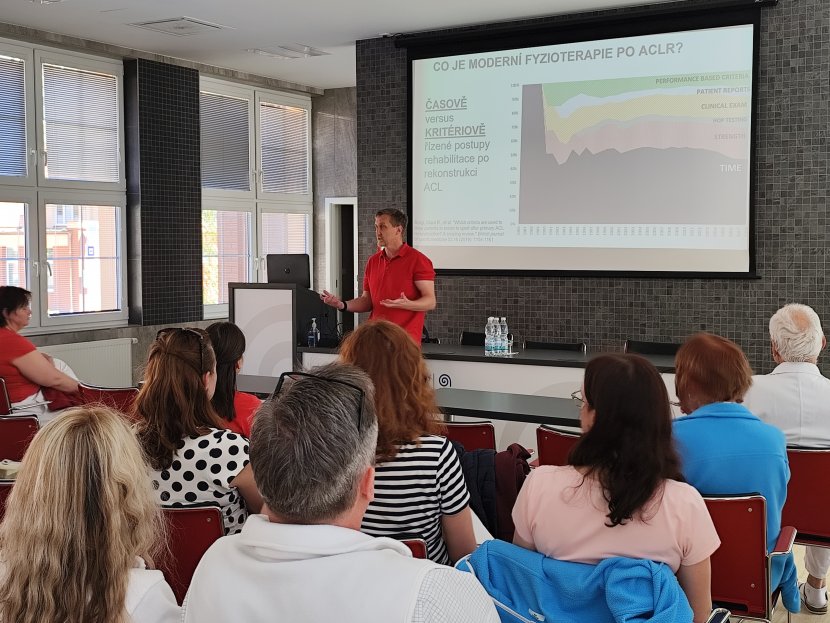
"I chose the topic also in view of the fact that the Rehabilitation Hospital Beroun also includes an Arthroscopy Centre, which performs up to 6,000 arthroscopies a year. Surgery is thus naturally connected with rehabilitation care within one workplace," says Mgr. Mgr. Ondřej Houška, physiotherapist and methodologist at the Beroun hospital and author of the seminar.
Structure and phases of the rehabilitation process
The seminar programme mapped out the entire process of patient care in detail . He outlined the epidemiological data concerning anterior cruciate ligament rupture in athletes and described the important goals of preoperative rehabilitation after knee injuries, with special emphasis on psychosocial factors. He also briefly discussed the specifics of each type of surgery from the perspective of everyday physiotherapy practice.
"I also dealt with the first phase of post-operative rehabilitation. In this part I focused on the main objectives and specific procedures usable by the physiotherapist in the early stage. I mainly talked about the elimination of swelling and pain, restoring full range of motion, alleviating the effects of arthrogenic inhibition of the knee extensors and then returning to normal gait without compensatory aids," Houška explains.
The path to full weight-bearing and end-of-life care
The final session of the seminar focused on the advanced phase, which includes the correct dosage and gradual progression of plyometric exercises and the specific issue of returning to running.
The entire seminar concluded with a comprehensive summary of criteria for safe termination of rehabilitation care. It is the meeting of these exact indicators that is key to the decision to return a client to unrestricted physical and sporting activities without increased risk of re-injury.
In addition, seminar participants received free use of the author's Czech translations of prestigious foreign methodologies - the American Mass General Protocol and the Australian Melbourne ACL Guide 2.0.