Česky
Česky


Many people who have already had COVID-19 do not feel well for a long time afterwards and often have various health problems. Some even so serious that they need rehabilitation. What difficulties most often afflict patients after COVID-19, how individual rehabilitation sessions work and how long they last, we will discuss all this here today. We'll start with the symptoms and health problems, so what are they?
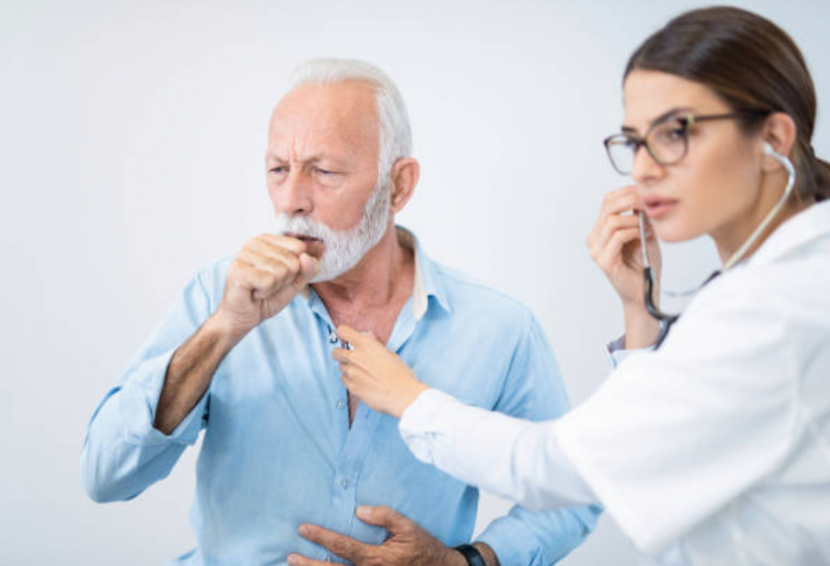
The health problems are very varied, just as the disease itself is varied. There can be milder manifestations associated with fatigue, skin rashes, long-lasting loss of smell or taste. In some cases it can also be chest pain, there is a need for a doctor's examination so as not to neglect it, or persistent cough and shortness of breath . And after a severe course of Covid, these can be really serious problems. A person who spends some time on artificial pulmonary ventilation then usually suffers from a general severe weakening of the body, the so-called polyneuropathy of critically ill patients. This is paralysis of the upper and lower limbs. These patients are prone to infections, are frail and really need inpatient intensive rehabilitation.
Is there any way to generalise what rehabilitation is appropriate for them? I suppose that if COVID-19 disease is characterized by a variety of symptom problems, the rehabilitation for each post-covid patient will also be very individual.
That's right, each patient is individual. However, in general, for patients after a worse course with more severe and neurological impairment and breathing problems, intensive individual physiotherapy is essential. This means analytical exercises on special methods, neurophysiological exercises, breathing rehabilitation, and then of course occupational therapy. So-called cognitive training is also practiced with patients suffering from oxygen deficiency and associated difficulties with memory and concentration. In short, we teach them to return to normal life. And because they are fragile and sometimes have difficulty moving around, the nursing staff, i.e. nurses and orderlies, also play a key role, as there is the need to care for the skin or positioning of the patient. For patients with simpler symptoms, rehabilitation can also be carried out on an outpatient basis. It is again individual or even group exercises, video treatment, physical therapy. Recently, studies are increasingly published that high power laser significantly helps to improve disability after lung damage. However, this remains to be seen, as many things are still being investigated.
Now that the pandemic has broken out, is there any way of knowing what the lasting effects will be? We've talked about the lungs, but there's also a lot of talk about joints and so on. Is there any more detail on that, or is that also yet to be investigated?
I wouldn't want to get into any speculation. I am sure there will be some changes after the severe course of the disease, especially in the cardiac, cardiac and respiratory areas. However, the milder symptoms are expected to disappear just after the person has tried to get back to his previous state through proper rehabilitation and improvement of his condition. But what will remain and what will persist is still being investigated and would be speculation. I would be optimistic, because the body has great regenerative abilities and if we help it a little, I think it can be improved a lot. The more severe the course, the more likely it is that some effects will remain.
What kind of patients do you care for most often? We mentioned the post-covid ones, but are they already post-surgery patients, post-trauma patients or patients with degenerative diseases, for example?
We have 150 beds. We also had a little less in the covid condition, where we had to transfer some beds to the internal medicine department. But now, hopefully, we will gradually return to normal. We have quite a lot of patients in inpatient and outpatient clinics. We treat those after strokes, severe polytrauma, after peripheral nerve damage, but also chronic neurological diseases such as multiple sclerosis, amyotrophic lateral sclerosis, mainly with early rehabilitation. But what we had less of now was, for example, a special programme after lung transplantation in cooperation with the surgical clinic in Motol or cardiac rehabilitation in cooperation with IKEM. I hope this will be started again. Otherwise, of course, we also have patients with spinal pain, the spectrum of patients is really wide.
Question in conclusion, what kind of care do you provide and what can you offer to patients?
I hope almost everything within rehabilitation. That means individual physiotherapy, occupational therapy, we also have a clinical speech therapist, psychologist, quality nursing staff or instrumentation, digital therapy and hydrotherapy. I believe that we can offer everything from the above mentioned spectrum to the patients, but I see human hands and quality staff as the basis.
Source: interview on Radio Zet