Česky
Česky


23.4.2015
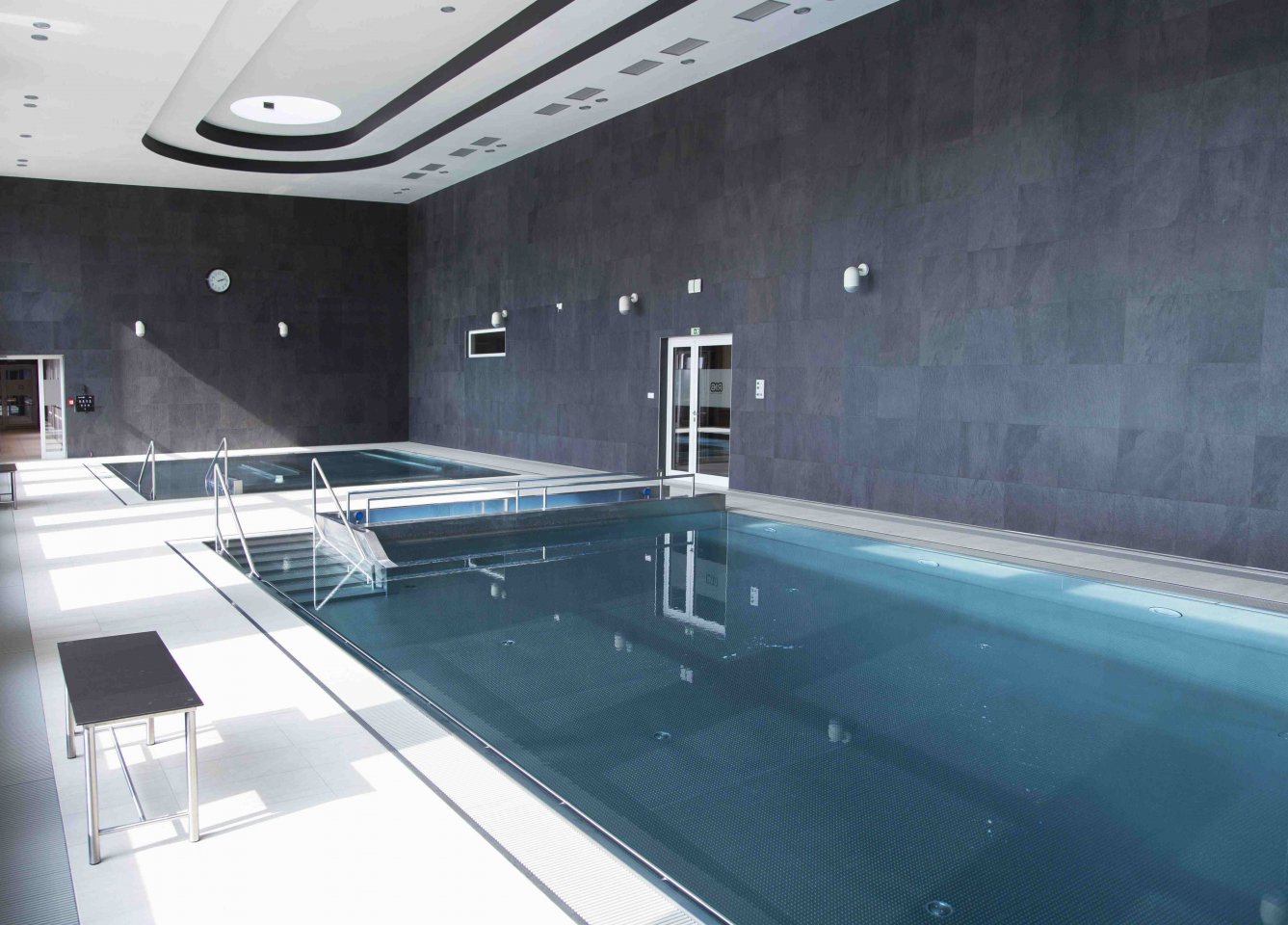
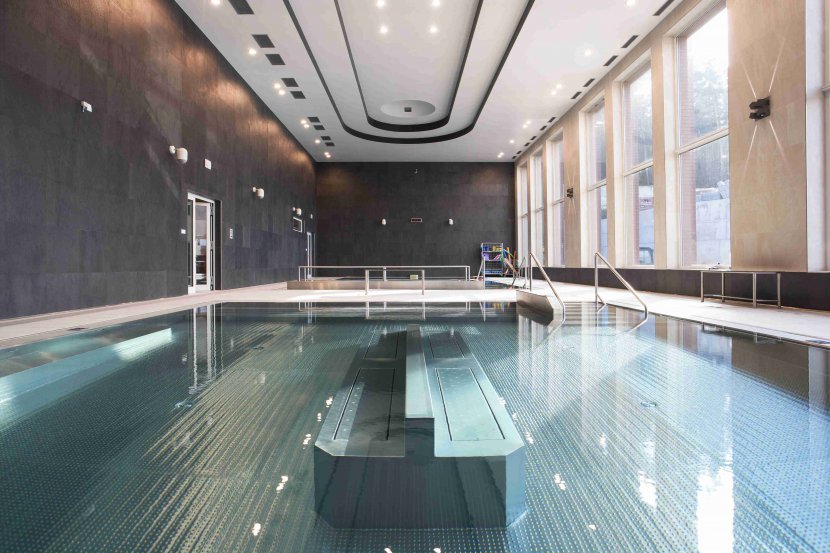
The Rehabilitation Centre in the Beroun Hospital, today one of the top facilities of this type not only in the Czech Republic, has opened a beautiful, modern hydrotherapy section. It is located in the new extension of the centre and offers two pools for individual and group therapy of patients in one part, and various possibilities of individual treatments in the other part.
The larger pool has a water temperature of 28-32 degrees Celsius, a depth of 120 cm and a rehabilitation walkway with a height-adjustable bottom. A counter-current will also be used. This pool is mainly intended for group exercise, the nature of which varies according to the type of disability involved. A smaller massage pool, with a depth of 105 cm and a water temperature of 36 degrees. It has a system of jets with which the patient can perform underwater massages. "These are mainly used to affect abnormally increased muscle tension and skin reflex changes, often occurring mainly in patients with spinal pain, those with joint problems, as well as some post-traumatic conditions," says the head of the centre, Ondřej Horáček, MD, PhD, D., and adds that the pool also offers bubble massages (both for lying and sitting), which are suitable for a wide range of disorders thanks to the fact that they allow overall muscle relaxation.
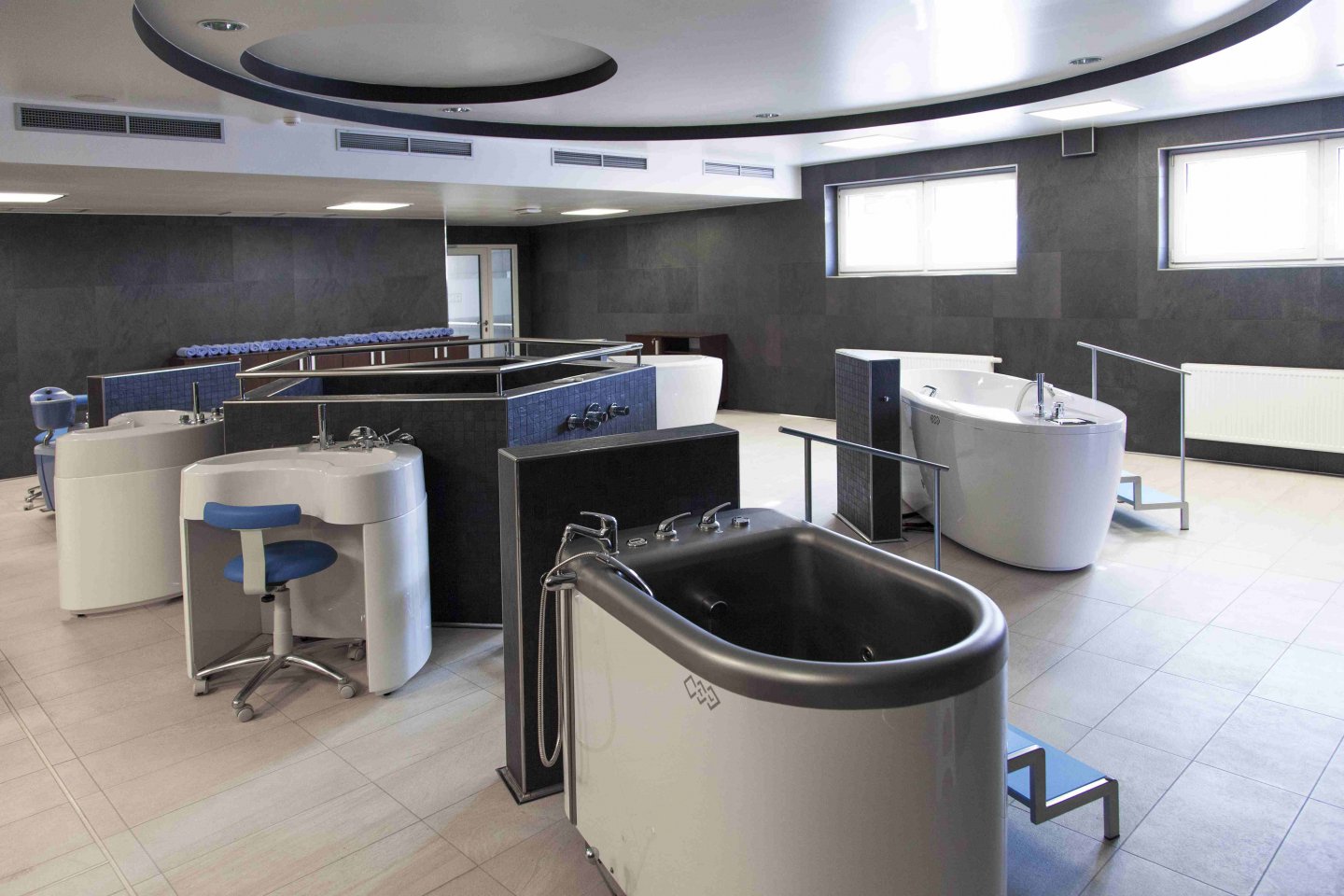
Another part of the hospital's newly built hydrotherapy Rehabilitation Centre will then be used for a range of individual treatments. For example, full-body whirlpool baths, which have a beneficial effect on reflex changes, chronic swelling of the limbs, post-traumatic conditions and many others, as well as whirlpool baths of individual limbs. Two-chamber/four-chamber baths, the so-called hydrotherapy baths, are indicated for peripheral palsies, neuropathies and the like, while alternating baths using hot and cold water baths are very effective for patients with ischaemic disease of the lower limbs. In this part of the hydrotherapy area, there are also scotch splashes, which are appreciated by patients with vegetative disorders, and a carbonic bath, which is of great importance for patients with vascular diseases, heart diseases and circulatory disorders.
"Exercises and all other procedures will of course be carried out under the guidance or supervision of experienced physiotherapists and other qualified staff, emphasises the head physiotherapist Lucie Lefnerová, and also reminds that in all hydrotherapy procedures it is always necessary to consider the mobility and independence of the patient, especially in those who are less mobile, with crutches, or those who have suffered a stroke.