Česky
Česky


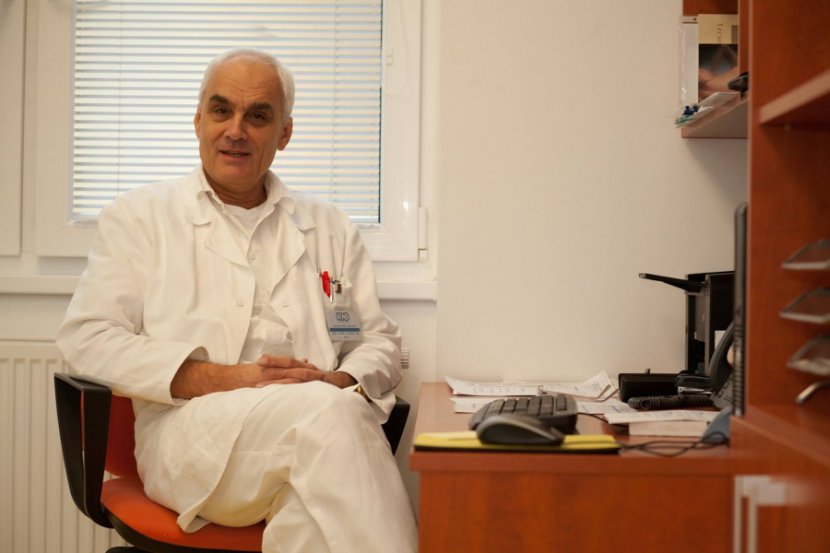
The head of the Beroun Rehabilitation Centre talks about patients after injuries, but also about those who suffer from increasingly widespread civilisation-related musculoskeletal disorders.For a healthy lifestyle, the head of the Beroun Rehabilitation Centre recommends regular aerobic, light endurance sports activities.
Which patients does your Beroun rehabilitation centre focus on in particular?
Our rehabilitation centre provides comprehensive early medical rehabilitation to different groups of patients, and a stay with us should follow a patient's stay in an acute care ward after the health condition has stabilised. Our rehabilitation centre mainly receives patients from orthopaedic, trauma, neurological, spondylo and neurosurgical departments. Most patients from orthopaedics come after total hip and knee arthroplasty implantation and after arthroscopic knee or shoulder surgeries. From the trauma wards, these are most often older patients after proximal femur fractures resulting from falls, but there is also an increasing number of younger patients after osteosyntheses of the long bones of the limbs or pelvic fractures, most often as a result of car accidents or sports injuries.
We have a large number of patients after spinal stabilisation spondylo-surgery and neurosurgery for intervertebral disc prolapse. We also manage a significant number of patients with spinal pain of various origins where there is no indication for surgery and whose treatment is sometimes really difficult. We also deal a lot with neurological diseases, especially patients after strokes or with multiple sclerosis, as well as patients with Parkinson's disease, peripheral paresis, various polyneuropathies and muscular dystrophies. For these groups of patients we are able to provide really high quality and complex medical rehabilitation thanks to very good staffing and equipment, as well as space. And we have great support from the hospital management and the operator in this activity.
Do you accept patients from other hospitals?
The range of cooperating departments that regularly send their patients to us is constantly expanding. For example, our cooperation with the spondylosurgery department and the neurosurgery and neurology clinic of Motol University Hospital works very well, as well as with the neurosurgery department of Na Homolce Hospital. These departments send a lot of patients to us. There is also a wide cooperation with the departments of our sister hospital in Hořovice, where we mostly receive patients from the orthopaedic department. Especially in the last year I have noticed that the number of requests for hospitalisation in our centre is increasing, but because the capacity of our department is limited, unfortunately we are not able to accommodate all applicants. However, it is not only for capacity reasons. Sometimes it is quite obvious that a patient is not indicated for admission to an early rehabilitation ward, which is our main focus, given the nature and severity of the disability, but rather should be treated in a long-term rehabilitation facility or an aftercare ward.
What is the composition of the specialist team that cares for patients?
Our patients are cared for by a multidisciplinary team of different professionals. These include rehabilitation doctors, physiotherapists, occupational therapists, and a clinical speech and language therapist and psychologist are also important members of the team. We also have a prosthetist, and of course we work with a social worker. But there are also other workers in our centre, without whom we cannot do without. It is therefore a very large and diverse team whose activities are interrelated.
Which methods do you use?
The main methods are physiotherapy, occupational therapy, physical therapy and possibly also hydrotherapy. Within physiotherapy we use both analytical procedures and methods on neurophysiological basis, which include e.g. Vojt's method, sensorimotor stimulation, proprioceptive neuromuscular facilitation according to Kabat, Bobath's method, dynamic neuromuscular stabilisation according to Prof. Kolář, which are the basis of rehabilitation especially for patients with neurological disorders. In the large gym of our centre, group exercises with different focuses (e.g. for patients after endoprostheses, with spinal pain, relaxation yoga exercises, balloon exercises, etc.) take place. In occupational therapy, we focus mainly on improving self-sufficiency, restoring fine motor skills of the hands, but also on influencing cognitive disorders. In the field of physical therapy procedures, the most frequently used are various forms of electroanalgesic procedures, electrostimulation, magnetotherapy, therapeutic ultrasound, laser, vacuum-compression therapy for the treatment of swelling and other methods. Rehabilitation is facilitated by certain devices, such as upper or lower limb motors, verticalisation devices, suspension exercise systems, traction tables, treadmills, motomeds, etc. For practically all diagnoses, we use group or individual forms of hydrotherapy such as full-body whirlpool, whirlpool bath for upper or lower limbs, underwater massage, bubble bath, etc. In the large multifunctional hall of our centre, we use special fitness equipment (David and HUR machines), where patients undergo an individually tailored programme under the supervision of a specialist. Classical massages and manual lymphatic drainage are also widely used.
Does it make a difference if the patient played sports before their injury, or does it not make a difference?
The fact that a patient played sports before surgery or injury does not mean that their rehabilitation will be more successful or faster than a patient who does not play sports. Many other factors contribute to the effect of rehabilitation. However, I can say from many years of experience that patients who were previously sporty and regularly played sports definitely approach rehabilitation more actively. And it is certainly easier to motivate them to participate in movement therapy than patients who have led a predominantly sedentary lifestyle and tend to avoid physical activity. Other colleagues in the field will probably confirm that it is much better to work with a patient who comes to our outpatient clinic asking, among other things, how to exercise properly than with a patient who, on the contrary, emphasises that the only thing that helps him is massage.
Is it true that sport, especially elite sport, is a route to health problems in middle and later life?
In my experience, it is not possible to say unequivocally that if someone plays a sport at a young age, they will have health problems later on, or have them more often than someone who has never played sport or only played sport recreationally. It certainly depends on what kind of elite sport and how long it has been practiced. If it is a long-lasting and high-level sport where the essence is, for example, lifting extremely heavy loads, as in weightlifting, one can expect that almost every such individual will have some negative effect on the musculoskeletal system. How the body handles the athletic load also depends on the innate resistance of the musculoskeletal system, the strength of the joint-ligamentous structures, the quality of the deep stabilisation system of the spine and the motor skills of the individual. These connections are often emphasised by Prof. Pavel Kolář, who has, among other things, many years of experience in the therapy of elite athletes and from whom I have learned a lot of useful information in this area. It is well known that there are great individual differences in terms of tolerance of sports load. To give you an example: a talented hockey player who has the necessary physical disposition for the sport and is sufficiently and all-round resilient will eventually make it to the national hockey team, for example, while another, equally physically gifted hockey player has to quit active hockey due to health problems even as early as his teenage years, because he probably did not have the necessary resilience or somatic prerequisites for top hockey. In the Canadian-American NHL, then, only the chosen ones who, in addition to exceptional talent, are also extremely physically and mentally tough, have the motor skills for the sport and are able to cope quickly with the fatigue, pain and injuries that this tough sport inevitably brings. It is thanks to these qualities that some NHL hockey professionals are able to play this highly prestigious and demanding competition well beyond the age of 40 and are even able to "keep up" with 25-year-olds. The important thing is that the individual in question practices the optimal sporting activity for him or her. If, for example, a child with generalised hypermobility or a severely defective spinal posture takes up intensive gymnastics, this can lead to unphysiological overloading of the spine and then subsequent pain. The problem, in my opinion, is also that some sports are performed at a top level at a young age when the musculoskeletal system is still developing and is then all the more vulnerable.
So, can sport-strengthened muscles and ligaments eliminate or mitigate injuries to some extent?
Reasonably performed sport in recreational form can help to strengthen the musculoskeletal system, and perhaps even help to improve muscular stability of the joints and spine. It can also improve motor coordination and motor control to a certain extent, which eliminates the risk of dystocia, for example. However, the ligamentous structures cannot be strengthened so much by sports, because the quality of the connective tissue, i.e. the strength of the ligaments, is primarily a hereditary matter. But even recreational sports can lead to health problems if the individual is not properly equipped for the sport.
Do you encourage your patients to exercise and otherwise play sports?
Rather, we recommend and teach rehabilitation exercise to positively influence the patient's difficulties. The patients we see who come to us with a problem and are already doing some sport need to discuss in detail what physical activities they are doing, whether and how they are strengthening and think about what could be changed in their sport regime, what they should avoid. Occasionally, I have patients come to my outpatient clinic who eventually discover that their spinal pain started only after a previously unsporting and muscularly underprepared individual started to engage in some form of weight training without professional guidance. As an example, I can cite the development of lumbar spine pain related to improperly performed abdominal muscle strengthening. In very general and simplistic terms, some regularly practiced aerobic, light endurance sports activities such as running, cycling, swimming, hiking are suitable for a healthy lifestyle. But that's more of a question for experts in physical medicine, which I am not.
Which sports do you consider to overload the body?
This is again very individual. What is still a suitable load for one person may already represent a non-physiological load for another, so there is no easy answer. If practiced for a long time and at a peak level then almost any sport can lead to overload or even damage to the musculoskeletal system under certain circumstances. For example, a professional volleyball player who has been training several times a week for 20 years and who often smashes during every practice and match, certainly overloads the shoulder joint of the smashing limb with such an intense load, which is then the source of permanent shoulder problems in some volleyball players. Or, for example, in a triple jumper, where extremely strong bounces and hard rebounds on one lower limb alternate, overloading the knee and hip joints, can lead to earlier development of arthritic changes and subsequent pain in these joints. The longer the sport is practised at the top level, the greater the risk of musculoskeletal damage. But only some of these athletes will have permanent health consequences, because here again many other factors matter. In very general terms, sports that are more likely to lead to overuse injuries are those that involve prolonged hard rebounding, sharp bounces (ball games), long runs on hard surfaces, lifting extremely heavy loads, or sharp swinging movements of the limb with the load (javelin throw). Terms such as 'throwing shoulder', 'tennis elbow', 'javelin elbow', 'jumping knee', which have been commonly used in the literature, particularly in the past, are indicative of the possible negative effects of certain sports on certain areas of the musculoskeletal system. My experience is, and colleagues in the field will probably confirm, that among patients coming to our rehabilitation clinics for spinal pain or hip and knee pain, there is a strikingly large subset of those who in the past have been involved in top-level activities such as volleyball, basketball, handball, football, hockey, weightlifting. And some of them had to end their sporting careers prematurely for health reasons. Some athletes have experienced hip pain or even prearthrosis at a relatively young age. And the cause is sometimes congenital hip dysplasia, which is not recognised in time, and then sports overload only accelerated the development of difficulties. In recent years, I have noticed that there are more and more patients who have difficulties in connection with sports such as golf, squash or bowling, which are sports that were not commonly practised in this country 30 years ago.
Do you play sports yourself?
I have always played sports and in my youth I did track and field for a few years competitively. Later I played more volleyball. Otherwise, traditionally, in winter my wife and I try to go cross-country skiing, we have favourite trails in the Jizera Mountains, and sometimes we go downhill skiing. In the summer I like to mountain bike, again in the Jizera Mountains, where I have my favourite trails. And if I find a suitable teammate, I like to play tennis in the hall during the summer or even in the winter.
Do you have time for other hobbies with your workload?
Sometimes there is really little time for hobbies, but we like to go to the theatre sometimes, we also have a subscription to the Czech Philharmonic. I like to listen to good music, it can be modern or classical. I like, for example, the chansons of Hana Hegerová, but sometimes I prefer country music, I go back to the songs of the Beatles or the Rolling Stones. From Czech classical music I like to listen to Antonín Dvořák.