Česky
Česky


How did the fact that you were born into a mixed marriage affect you? How have your years abroad affected your life?
Being born in a mixed marriage usually brings with it many advantages, unexpected life obstacles and a lot of funny situations. As a child, I had no problem perceiving three languages at the same time: At first it was English and a little Spanish here and there. Depending on how my parents communicated with each other and also what the school and the street provided during my childhood in wartime England. Then, of course, English was added. That was the basis. It was often the case that there was one sentence in our family composed of all three, or at least two languages together. During the war and for about two years afterwards, my brother and I had about the same childhood as the other children in the area, and I remember especially my mother, who had more time to devote to us than my father, who as a doctor spent most of his time in the hospital. They say that children of mixed marriages are somehow genetically better off. I guess so, since my brother and I were very hyperactive and quick learners.
You and your family spent some time as refugees. How do you feel about the current debate about migration and multiculturalism?
We as a family have never been exiles or refugees. My father went voluntarily to the Spanish Civil War. I was born in France and my brother in England. In my brother's case it was very easy when he left communist Czechoslovakia in 1968 that he immediately received British citizenship. He felt at home in England because he was born there. Perhaps our mother was the only one who could feel like an exile, as she was not allowed to go to her native country for the whole of our stay in Czechoslovakia. On the question of contemporary migration and multiculturalism, I can hardly comment. Personally, I do not take part in any such discussion, and my personal opinion is that the wheels of history cannot be stopped, that the turbulent evolution will bring us many unexpected surprises in terms of mass exoduses, mixing of peoples, and many clashes due to ethnic and mental differences. No one would have expected that the greatest conflict of the twenty-first century would be religious wars. Multiculture is a rapidly deteriorating mirror of the consumer world. The space for original culture and traditions even in atavistic communities is steadily shrinking.
You grew up the son of a doctor. Didn't you want to follow your father's career path?
I remember when I was a first grader in England, my mother took me to church, probably a Catholic church, and at the time I was fascinated by the priest who preached and no one flinched. I thought for a long time afterwards that I wanted to be a preacher and everyone would listen. In the fifties, when I had already begun to think about following in my father's footsteps, I came across the Bolshevik term that I was not of working-class origin and that I had to become such a cadre. So I apprenticed at Tesla, in Vrchlabí.
How did your "relationship" with the Beroun hospital come about? How do you spend your time in the hospital?
A happy moment for our family was the fact that the Beroun hospital showed unprecedented helpfulness in the case of my long-term ill wife and offered us previously little-known possibilities to take care of her professionally. Since I have been visiting my wife daily since May 2016 and providing her with mainly psychological support, I was happy to welcome my own hospitalisation in the Rehabilitation Hospital Beroun after the operation of the right knee endoprosthesis. I was able to visit my wife daily during my own rehabilitation, which I experienced in this institution, thanks to the high professionalism of all the doctors, nurses, rehabilitation workers and the entire staff, like a walk in a rose garden. I am glad that there is some progress in her case as well. It is also a response to the way I spent my time here. I was glad that we had created something like a second home here. I still commute to the hospital, even though I am back in the workforce, to rehabilitate my endoprosthesis and keep my wife company.
What are your favourite destinations in Spain and Greece?
Spain is beautiful everywhere, as is Greece and the surrounding islands. We used to go to Spain to visit relatives in Jijon and of course we showed the children everything that makes this country and the people beautiful. Same in Greece, where I think there is not much mental difference from the Spanish, because they all share the charm, kindness and wildness of the Mediterranean. The legacy of the ancient creators of human ethics and the indelible culture of the world can be felt everywhere.
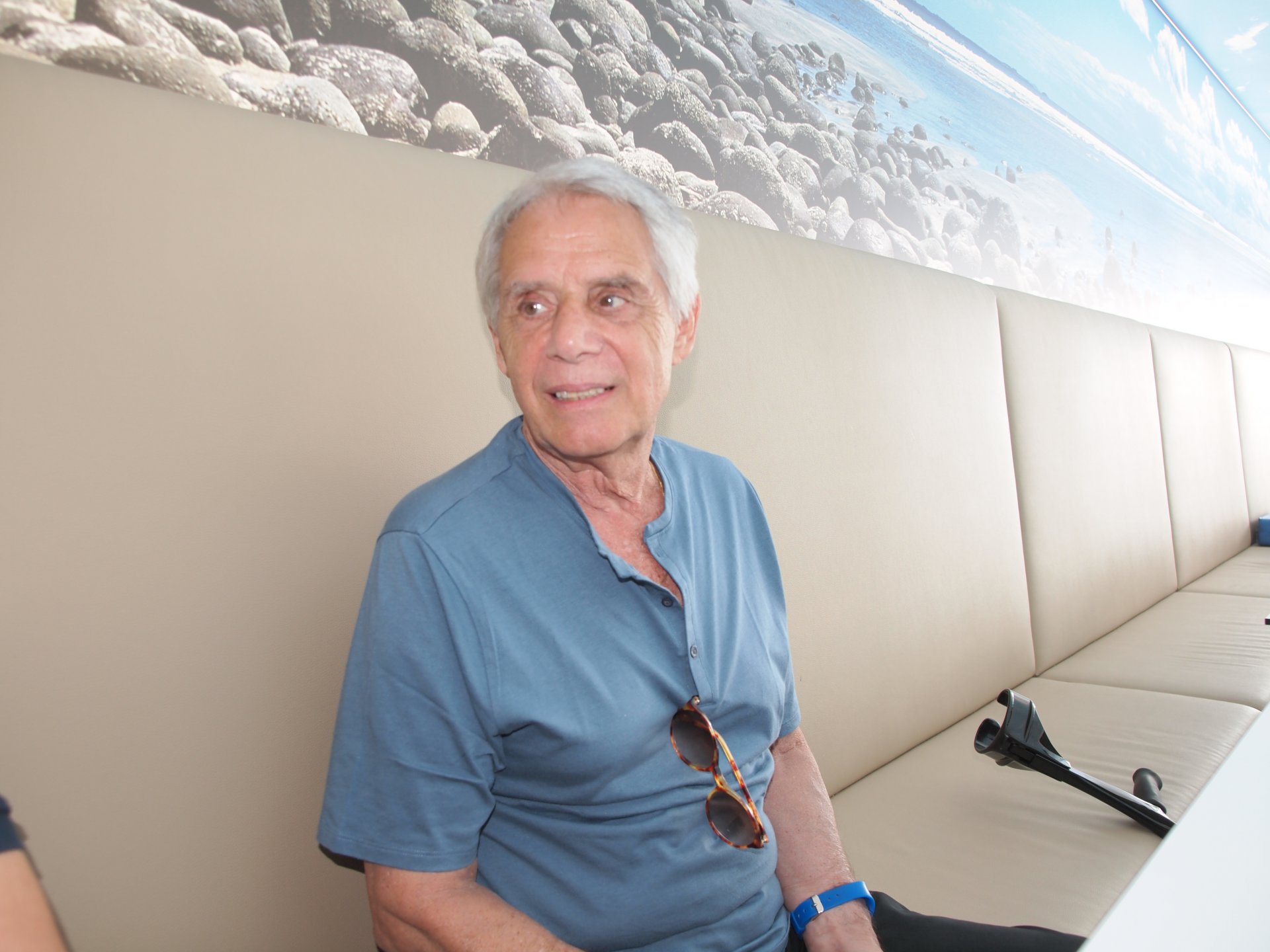
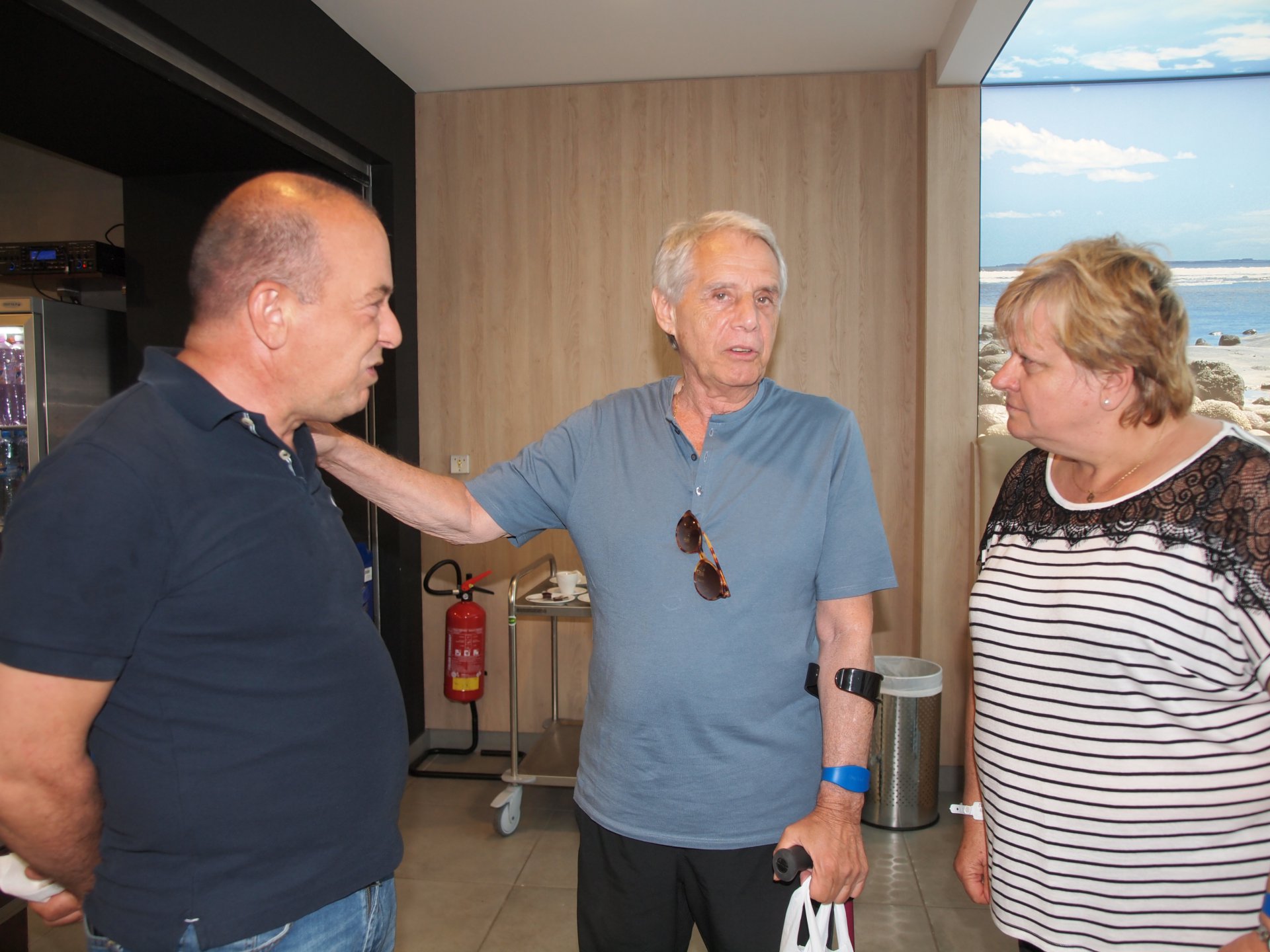
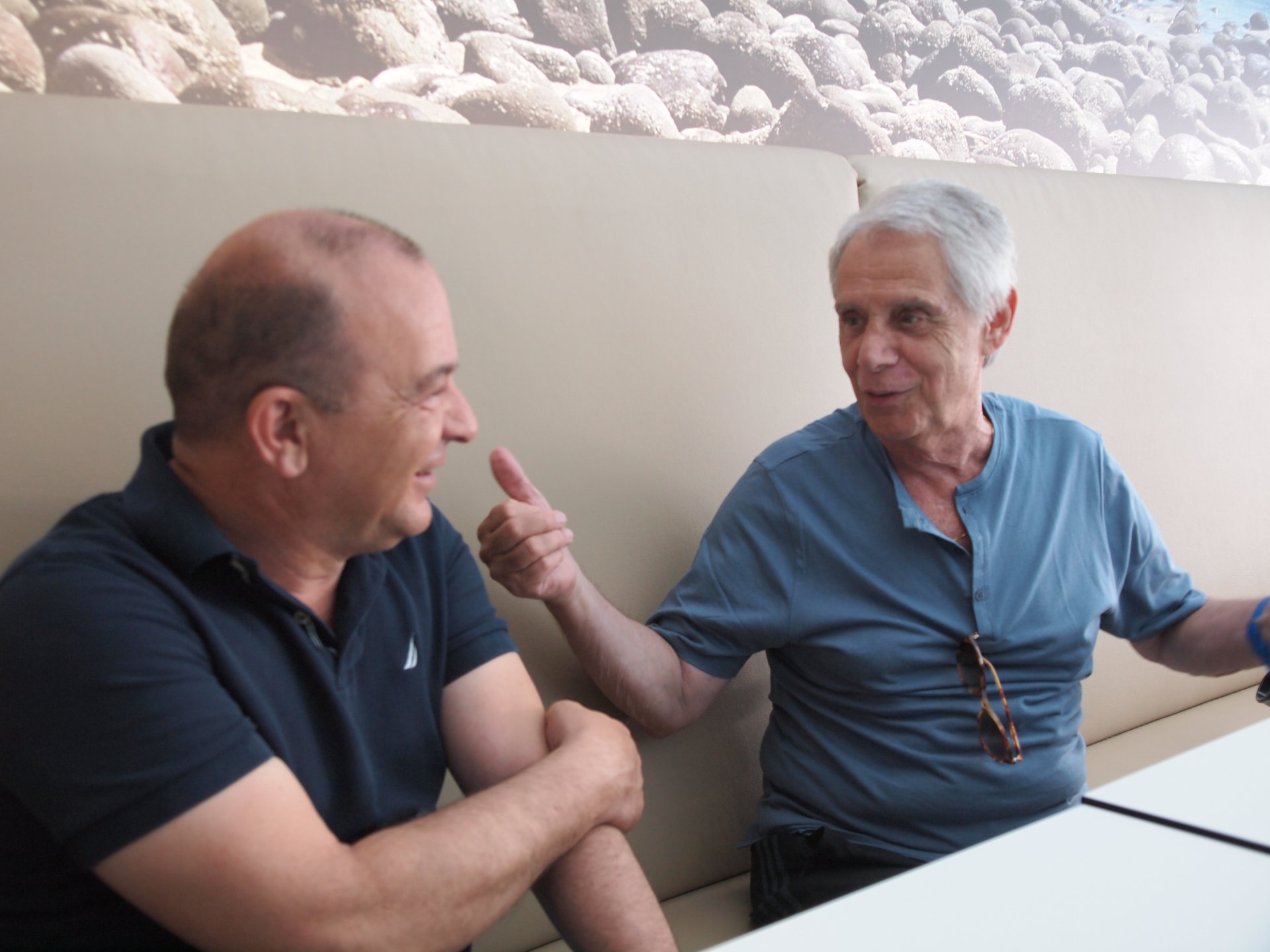
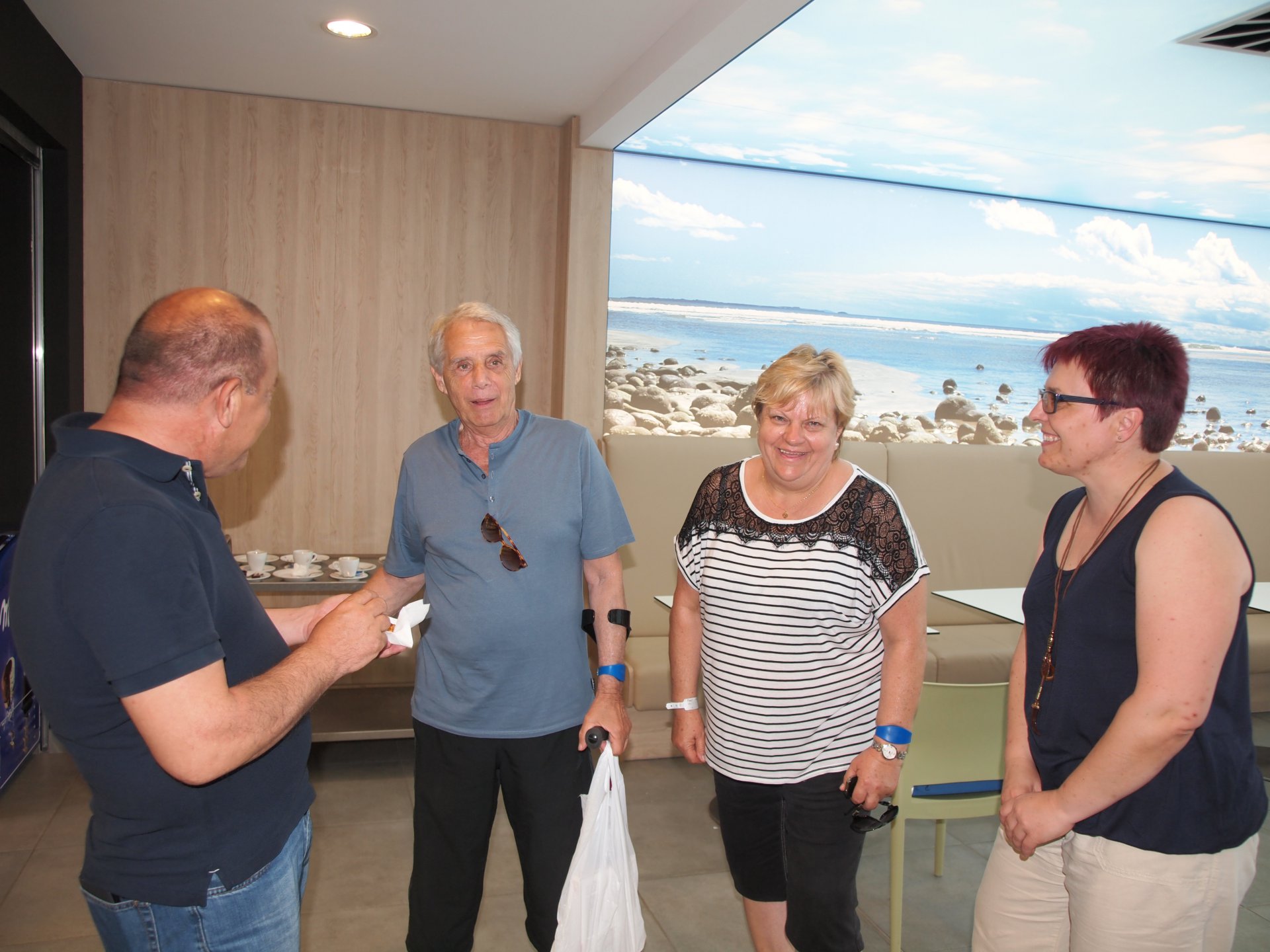
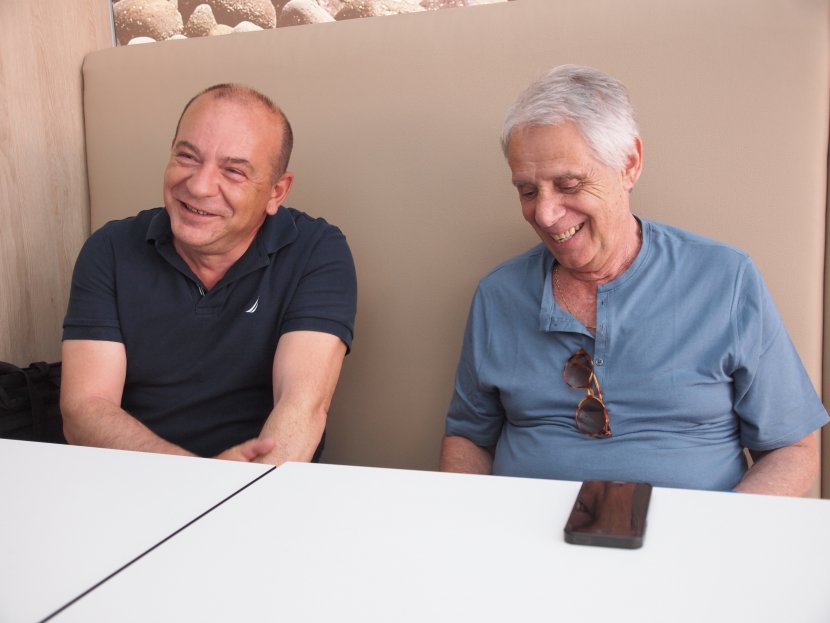
Photo: In the opening picture Josef Laufer with the owner of the Beroun hospital Ing. Josef Josef Beroun with the head of the Beroun Hospital.