Česky
Česky


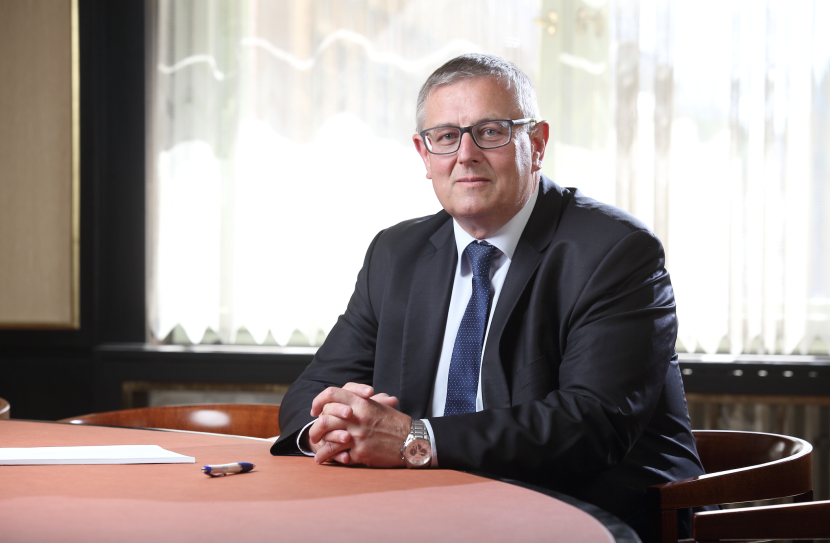
What happened to you that you ended up in our hospital?
In mid-July I was out on a singletrack and apparently I didn't make a turn, I don't even remember. I damaged my 4th and 5th cervical vertebrae, I was completely paralyzed, but luckily my spinal cord wasn't severed. I was putting myself back together relatively quickly, I was already out of the average in the ARO ward at the Brno University Hospital, where I was airlifted, and in the spinal unit in Motol I was already sitting and standing up. Within three weeks I became independent. It seemed that everything was only going to get better, but as a concomitant phenomenon I developed spasticity, which has been giving me a hard time lately, although exercise always improves things. My first goal was to make sure I didn't need anything from anyone. That's why I wanted to continue my rehabilitation, and my medical reports are already in the hands of many people (laughs). My son sent them to a friend, and she wrote to him - "he got off the gravedigger's shovel, nice work by the doctors!" In short, everybody had a hand in it, because now I don't even look outwardly ill. But I've never experienced anything so unpleasant.
Where exactly did you come from, and how do you like it here?
I came from the aforementioned Motol, where I was in the spinal unit and then in rehab. Then I continued here because my references were good - my wife was here with a broken leg, so I already knew the place. Otherwise, I have to say it's really nice here. I've known Beroun for years, back when the cement factory stood here, and this building has the advantage of a beautiful view. A lot of hospitals make you feel like you're in a basement. Everything is modern, airy and light. If someone came in here and didn't see the patients, they probably wouldn't even think they were in a hospital. I also like the equipment and the attitude of the medical staff. From the first minute I was brought in, my name was already lit up on the board, there was no confusion as to where I would be quickly placed. At the same time, I like that everything can be flexibly adjusted during treatment, nothing is dogma. I also liked the lower occupational therapy workshop, where I even knitted a basket to take home for my motor skills. I also took pictures of the park where I got to taste apples from local apple trees.
How do you evaluate the treatment program, are the treatments too much for you?
I did a lot of exercise back in the spinal unit, where they said they could do things with me that they haven't done in years, and here I've always had physiotherapy, occupational therapy, a pool, a motorbike, a treadmill and a workshop. While I generally don't like listening terribly much, here I decided not to talk back. I certainly don't do heroics when asked about pain, but I've never, for example, stopped a workout halfway through because I couldn't anymore. Because I'm trained on the bike, I've even managed to tear down the motoped twice, so we reported that I overloaded it, and then I just continued on the treadmill (laughs).
We are also interested in your work - what does the State Veterinary Administration actually have under its thumb?
There's an awful lot. We generally supervise all animal breeders. We are in charge of all slaughterhouses and processors of animal commodities such as dairies or meat factories, we also deal with all warehouses and freezers or all trade within the European Union and third countries. We also supervise restaurants and markets where meat products are sold. In addition, of course, we monitor the health status of the entire livestock population and, to some extent, pet farms. We are in charge of all diseases - most notoriously mad cow disease, bird flu and African swine fever, in which we were the first country in the world to recover an entire population of wild pigs. We are also tackling animal welfare, that is, the welfare of animals, and also animal cruelty, which unfortunately continues to occur, albeit more in pet farms than in livestock farms.
In your career, what do you consider to be the worst case of animal abuse, and which cases of animal abuse are generally the most common?
The worst are the huge breeding farms. For example, we once removed 220 dogs that were decimated without the neighbors in the neighborhood even knowing about it. But then there are good things that happen - for example, when you take some new measures, and even these people understand that things can be done differently. It's not always possible to take the animals away from them right away, sometimes they get a second chance to make amends, and fortunately that happens too.
What do you consider to be the biggest myth about the functioning of the State Veterinary Administration?
Probably the most dangerous myth is that the animals are not eating anything other than antibiotics, we try to dispel that with specific tests and supporting evidence. I also try to be open with journalists - in short, if something happens, let them know right away. The sooner, for example, cases of disease are solved, the quicker and more effective their resolution. In general, however, it is true that many people have no idea what we are doing, which I am finding out now when I am lying around in various hospitals. But that's probably a good thing too, because we would be the most talked about if we were making a big mess.