Česky
Česky


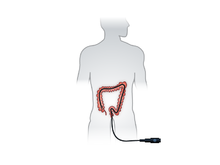
In colorectal cancer screening, colonoscopy is used as a stand-alone examination method, the so-called primary screening colonoscopy, followed by a positive test for occult bleeding (TOCS). Colorectal cancer is not only a serious health problem in developed countries, but also an economic problem. In men, the incidence per 100,000 inhabitants per year is highest in Slovakia at 92, followed by Hungary at 87, and the Czech Republic is in a sad "medal" third place, with 81 affected. In Czech women, it accounts for 13% of all cancers and we rank 10th in its frequency. It is alarming that 8,000 colorectal cancers are diagnosed in the Czech Republic every year and 4,000 patients die from this disease in the same period. The number of cases currently occurring per 100 000 inhabitants is about 550. This means that there are currently about 55 000 people living with the disease in our country.
Several questions, arising mainly from the most frequent questions that patients turn to him with, were answered by MUDr. Michal Vasicek, a doctor of the gastroenterology outpatient clinic of the Internal Department of the Rehabilitation Hospital Beroun, which examined 835 patients in 2015. It is certainly good news that due to the improved material and personnel situation of this department, it is now possible to satisfy all those interested in preventive colonoscopy from the catchment area.
Doctor, colorectal cancer, along with breast cancer, is the most common cancer in our population and the most common cancer of the alimentary canal. Could you characterise this disease?
"It is a malignant disease that arises from the lining of the digestive tube and up to 95 per cent of the development comes from a genetically altered cell through a benign glandular tumour (adenoma) that turns into a malignant glandular tumour, i.e. a cancerous tumour. This development lasts in the order of 10 years. During this long period of time, there is a real chance to diagnose the tumour and intervene therapeutically."
The issue of primary prevention of colorectal cancer has received a great deal of attention in the national media, including major news outlets. What has been the evolution of prevention in this country?
"Unfortunately, the number of new cancers per 100,000 population in our country is 76. For interest in the stomach, it is 17. The means to reduce the incidence and mortality of this disease is a screening programme in persons who have no difficulties, based on the diagnosis of occult, i.e., hidden bleeding. The participation of the general public is a prerequisite for the success of this programme and GPs play a major role in it. The programme applies to clinically healthy people over 50, is covered by health insurance, and is based on the fact that tumours bleed covertly and intermittently. The test was first introduced in Germany in the 1970s, and was implemented in this country before November 1989, then in the 1990s, under different health systems. It has been used continuously since 2000. The results are clearly positive. The positivity of the test is supposed to be between 3-5%. Of the positive tests, 5-10% detect carcinomas, 15-30% adenomas, i.e. benign tumours, and the rest are other sources of bleeding. At this point it is necessary to emphasise that tumours caught by this method are in the early stage, i.e. operable. The vast majority of carcinomas, i.e. cancers of the colon and rectum, arise from benign tumours that can be removed by colonoscopy. If a patient has a positive test for occult bleeding, he should undergo a colonoscopy without fail.
Since 2009, a revised screening programme has been in force, according to which people aged 50-54 years are screened for TOCS annually; at 55 years, the participant decides whether to continue this screening at intervals of once every 2 years or to undergo a so-called primary screening colonoscopy at 55 years instead of the occult bleeding test. If the test is negative, the patient is entitled to a free repeat primary screening colonoscopy in 10 years. The occult bleeding test replaces it for this period."
Is colonoscopy painful?
"The examination at our clinic is carried out after intravenous administration of a pain-relieving and soothing substance, called analgosedation. This is sufficient for almost all patients. Quite exceptionally, we use the participation of a physician from the anaesthesiology and resuscitation department, who intravenously administers more intense numbing agents than can be administered by the physician who performs the colonoscopy."
What is the advantage of colonoscopy over the occult bleeding test?
"Any test for occult bleeding is based, as the name implies, on the fact that the tumour, whether small or large, malignant or benign, is bleeding. However, colorectal tumours are known to bleed irregularly. If no blood is present in the stool, the examination for occult bleeding is negative, even if a tumour is present. It is primary screening colonoscopy that fills this diagnostic gap."
Can a patient make an appointment for a primary screening colonoscopy?
"In principle, he can. It is necessary to have a blood count and coagulation parameters checked. However, to be examined under conditions of enhanced analgosedation, i.e. administered by an anaesthetist, he must have a clinical pre-operative examination including an ECG, an X-ray of the heart and lungs and laboratory tests, which are provided by the general practitioner. With these findings, the patient should visit the anaesthesiology outpatient clinic of the hospital in order to take into account in time the possible requirements of the anaesthesiologists who will be "contributing" the patient during the colonoscopy.
Will GPs not force patients to prefer to be screened for occult bleeding on the basis that attending a primary screening colonoscopy will increase their contracted financial lump sums, which are closely monitored?
"This should not be the case. GPs have no reason to restrict primary screening colonoscopies. Health insurers charge for the cost of these tests outside of lump sum payments. It is safe to say that currently primary screening colonoscopy can be performed on all patients over 55 who request it. It is enough to get rid of unnecessary fears and shyness."
Is it possible to miss a serious finding during a colonoscopy?
"A serious finding should not be overlooked. Proper preparation is a prerequisite. Since last year, we have had a colonoscope of the latest generation in the Beroun hospital, which has chips with magnification and staining techniques built into the processors, which greatly increase the sensitivity of the examination. Up to 95% of colon cancers develop over a 10-year period through a benign polyp called an adenoma. These adenomas only start to contain malignant cancer cells when they have grown to at least 10 mm. It is possible to miss small polyps, but these are caught at the next check-up."
Does a patient need to be hospitalised after a colonoscopy?
"After a diagnostic colonoscopy, i.e. where a polypectomy or other endoscopic treatment procedure is not performed, the patient does not need to be admitted to hospital. However, he or she must be monitored in hospital for at least half an hour after the procedure. On the day of the examination, due to the analgosedation applied, he is not able to drive a motor vehicle or perform legal acts. If an endoscopic medical procedure is performed, i.e. a polyp is removed, the question of hospitalisation is dealt with on an individual basis."