Česky
Česky


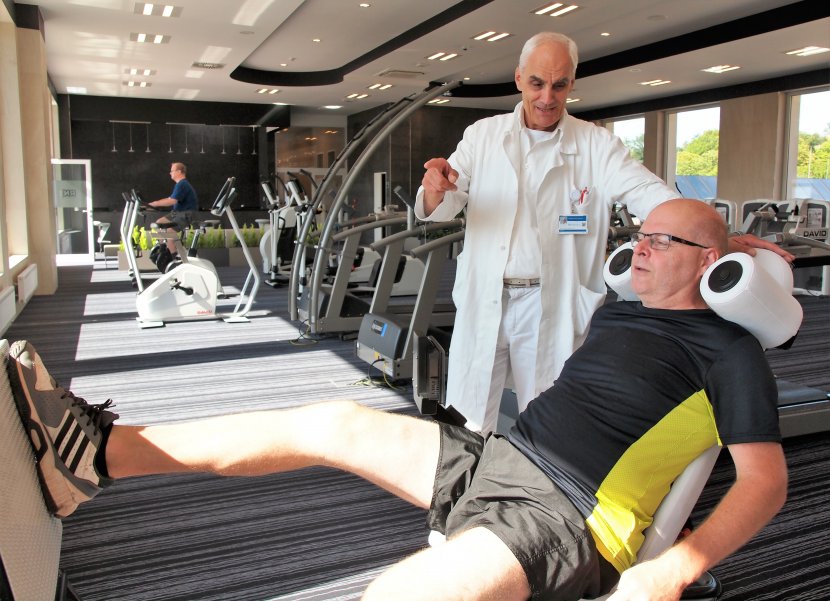
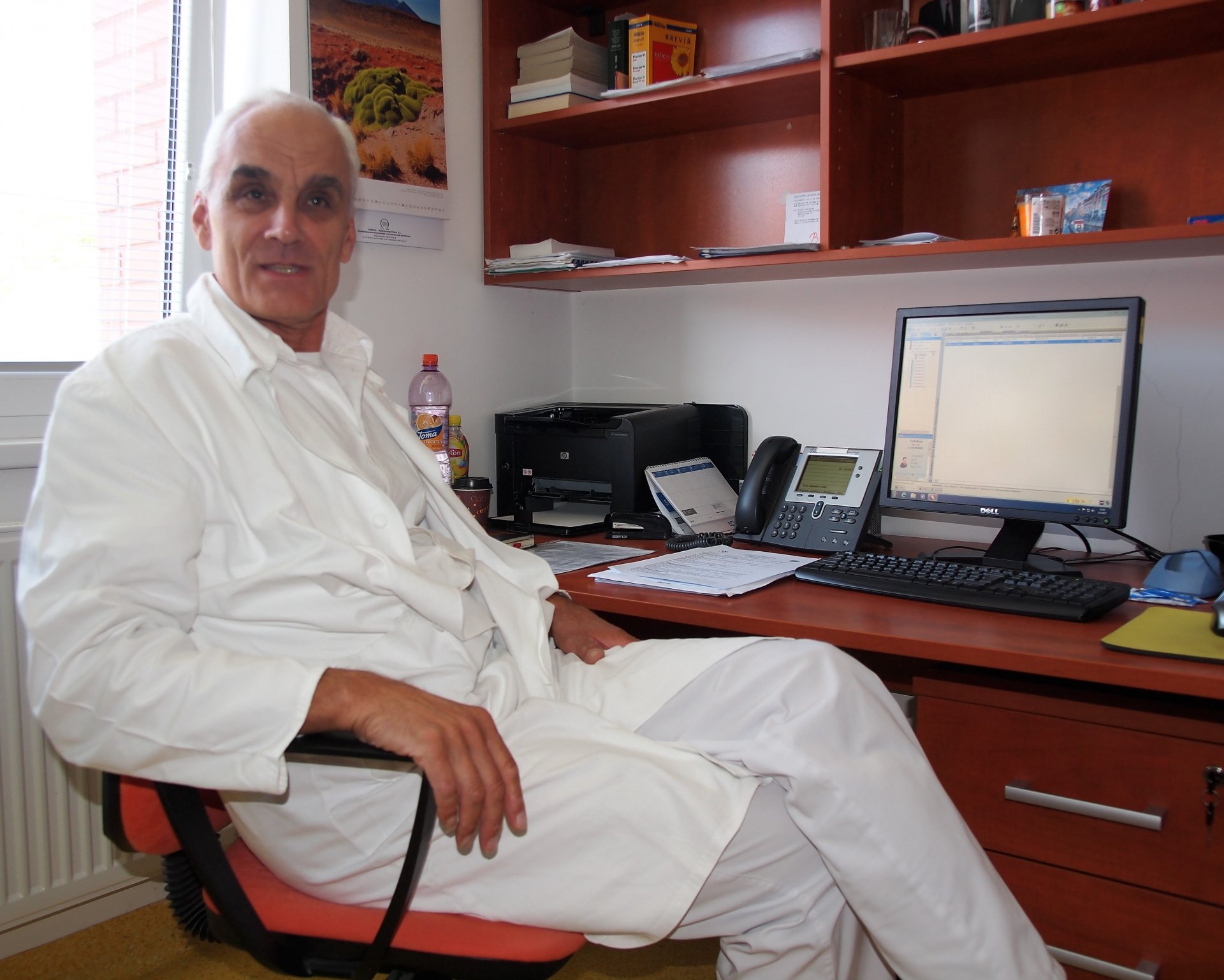
You are the head of a Rehabilitation Centre with a capacity of 150 beds, with such a large number of patients, you must have very demanding rounds.
I wouldn't be able to see all the patients in one day. I go to rounds every day. Always to a certain number of patients. Otherwise it wouldn't be possible.
Which patients do you focus on?
Our rehabilitation centre provides comprehensive early medical rehabilitation to different groups of patients, and a stay with us should follow a patient's stay in an acute care ward once their condition has stabilised. We accept patients mainly from orthopaedic, trauma, neurological, and neurosurgical departments. Most of our patients come after total hip and knee arthroplasty and arthroscopic knee or shoulder surgeries. From the trauma departments, these are mostly elderly patients after proximal femur fractures resulting from falls, but there is also an increasing number of younger patients after osteosyntheses of long bones of the limbs or pelvic fractures. In recent years, there has been an increase in the number of sports injuries and car accidents.
Are you seeing patients from other hospitals?
We work with a large number of hospitals, and the range of hospitals is expanding. In recent years, I have noticed that requests for hospitalisation at our centre are increasing, but our department has limited capacity. For this reason, we are not able to accommodate all applicants. Many patients come to us from hospitals in Prague. Our cooperation with Motol University Hospital works very well. We cooperate with their spondylosurgery department and neurosurgery and neurology clinic. The Na Homolce Hospital also sends a large number of patients to us from its neurosurgical department and, of course, there is a very wide cooperation with the departments of our sister hospital in Hořovice. Patients from the orthopaedic department come to us from there.
What is your team of collaborators like? What kind of experts are there?
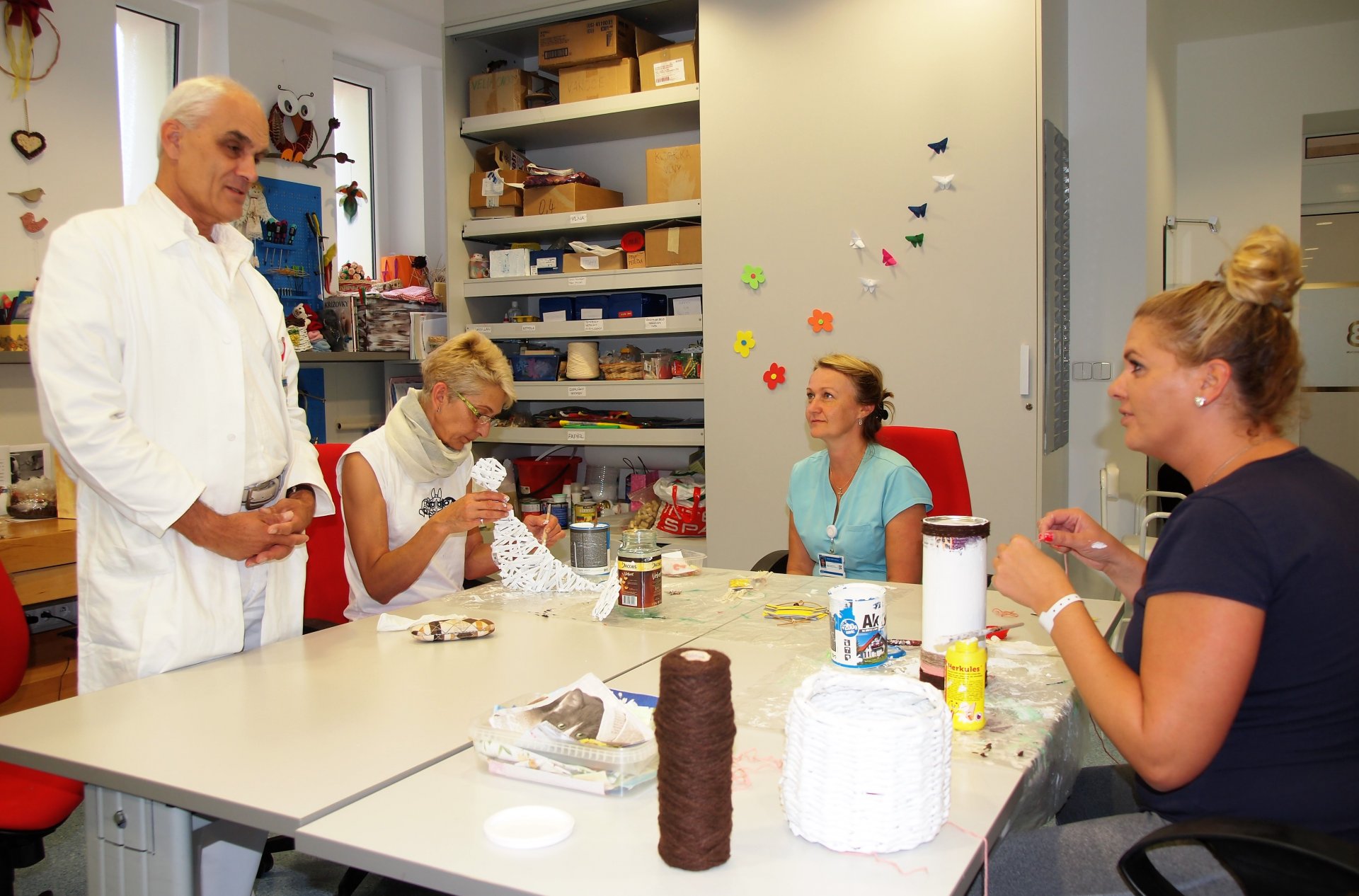
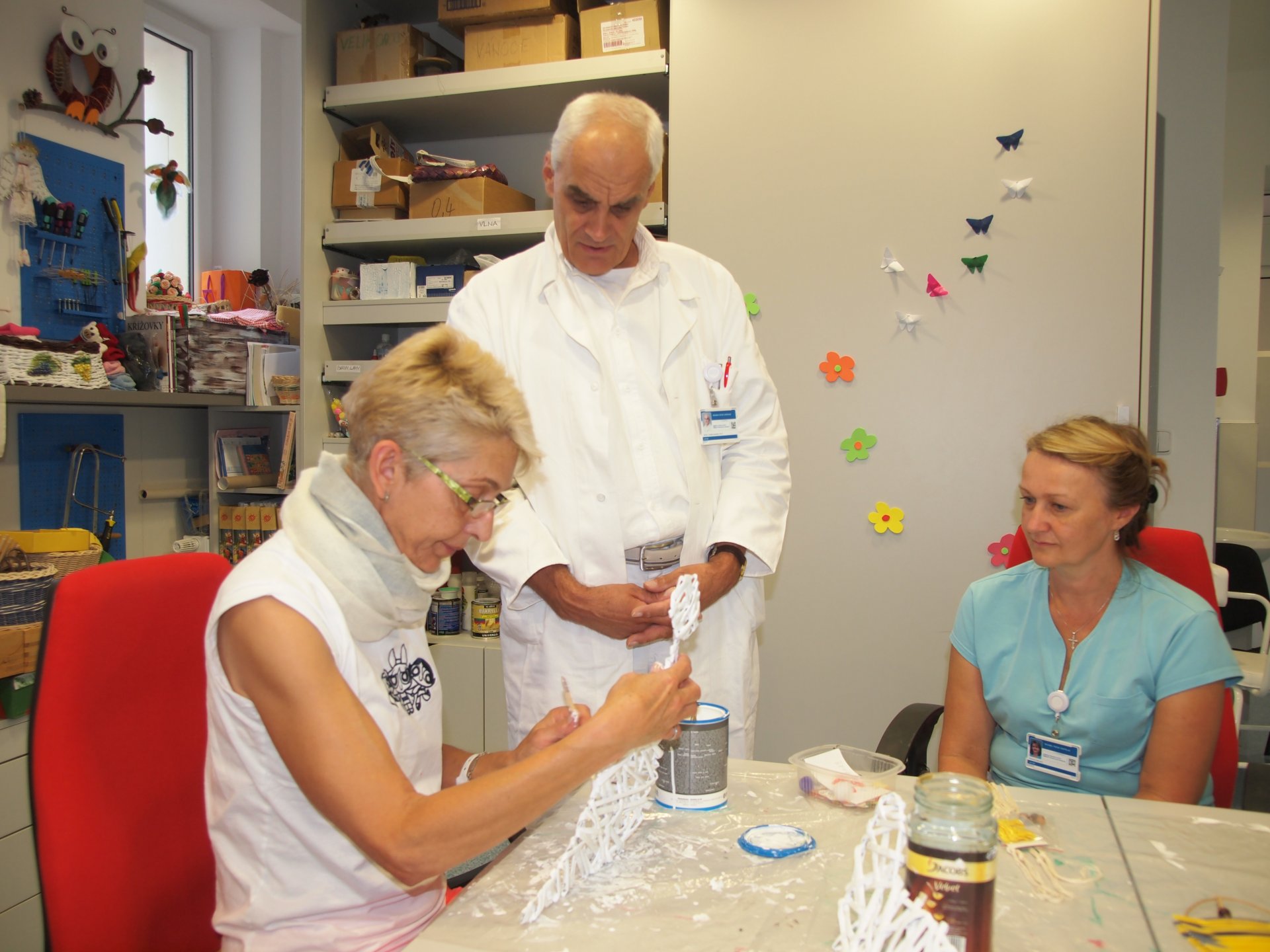
Our patients are cared for by various doctors and specialists. They include mainly rehabilitation doctors, physiotherapists and occupational therapists. A clinical speech therapist and a psychologist are also important members of the team. We also have a prosthetist on staff. However, there are also other staff in our centre, without whose help we cannot do without. Our team is therefore very diverse and its activities are interrelated. We also cooperate with a social worker.
I have heard that your services are also sought out by very well-known personalities, is that true?
Yes, that's true. We have had the disc jockey Imrich Bugár, Josef Laufr, Vlastimil Harapes, Hana Hegerová, the director Maria Poledňáková, and also the recently deceased writer Professor Zdenek Mahler and other well-known people.
What methods do you use to treat patients?
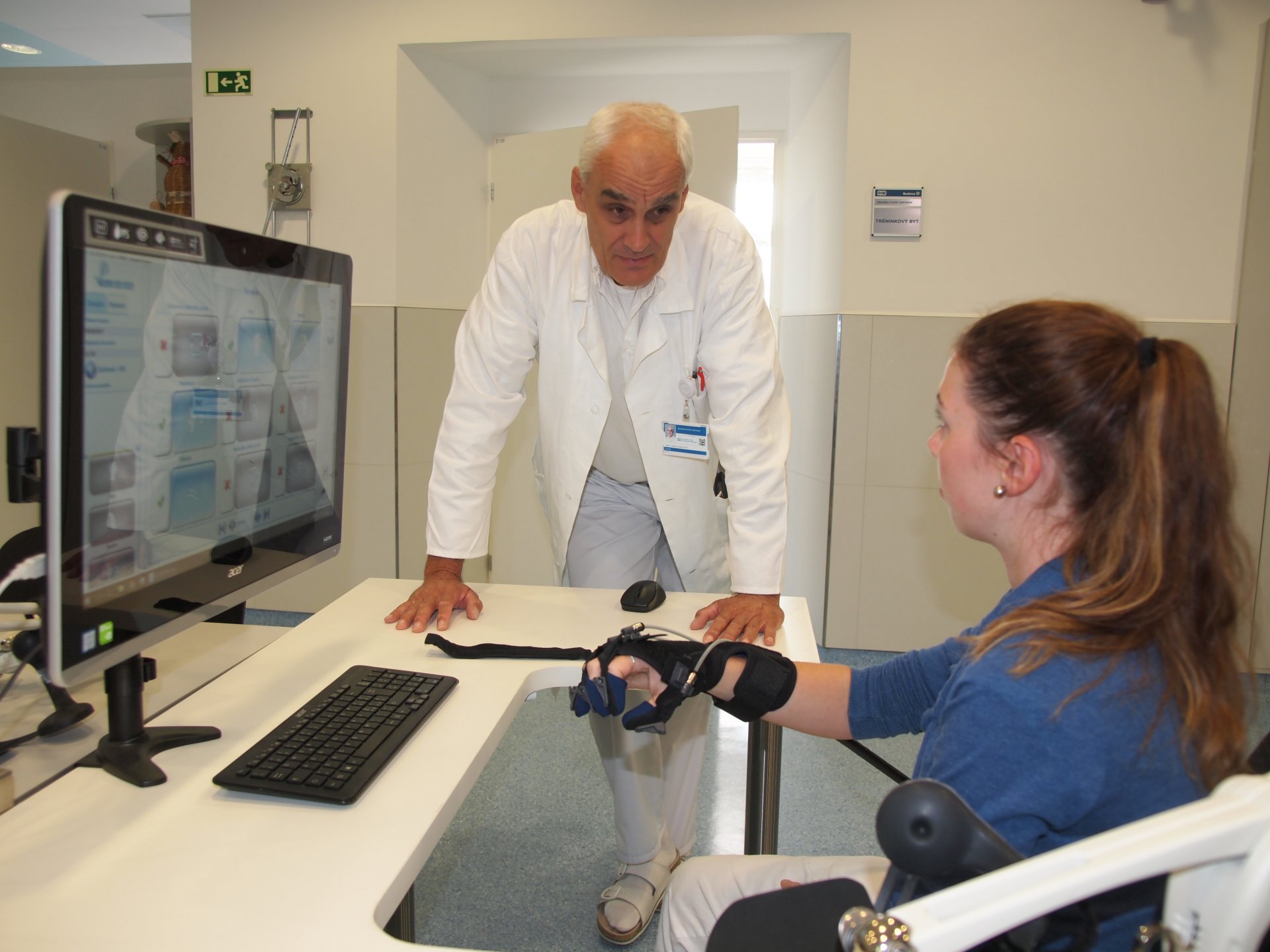
These include physiotherapy, occupational therapy, physical therapy and possibly also hydrotherapy. Within physiotherapy we use both analytical methods and methods based on neurophysiology. In the large gymnasium of our centre, group exercises with different focuses take place. They are designed for patients after endoprostheses, with spinal pain. There are also relaxation yoga exercises, balloon exercises and others. Rehabilitation is facilitated by upper or lower limb motodladhs, verticalization devices, systems using suspension exercises, traction tables, treadmills, motomeds, etc. For practically all diagnoses we use group or individual forms of hydrotherapy such as full-body whirlpool, whirlpool bath for upper or lower limbs, underwater massage, bubble bath, etc. In the large multifunctional hall of our centre, exercises are performed on special fitness equipment.
It is said that elite sport has a great influence on health problems in middle and later life. How do you see it?
I think it is not so clear-cut. Just because someone plays a top sport when they are young doesn't mean that they are bound to have health problems later on, or have them more often than someone who has never played sport or only played sport recreationally. It certainly depends on what kind of elite sport and for how long. If it is a sport that involves, for example, lifting extremely heavy loads, as is the case with weightlifting, almost everyone can be expected to have some negative effect on their musculoskeletal system. Much depends on the innate resistance of the musculoskeletal system, the strength of the joint-ligamentous structures, the quality of the deep stabilization system of the spine and the motor skills of the individual.
If someone doesn't have the innate resilience needed for a sport, are they at risk for health problems?
For example, Jaromir Jagr is a very talented hockey player who has the necessary physical disposition and is sufficiently and all-round resilient. That's why he made it to the NHL and is still active even at his advanced age. While another, similarly physically gifted hockey player has to quit active hockey due to health problems, for example in his teenage years. He simply did not have the necessary stamina or somatic prerequisites for top hockey. It is important that each athlete pursues the optimal sporting activity for him or her. In the event that a child with a severely defective posture begins to engage in intense gymnastics, this will lead to non-physiological overloading of the spine and then subsequent pain. Another problem, in my opinion, is that some sports are performed at a top level at a young age, when the musculoskeletal system is still developing and then more vulnerable.
Can your patients do any recreational sports? What sports would you recommend?
As part of their rehabilitation, we recommend and also teach them rehabilitation exercises. This has a positive effect on their difficulties. With patients who come to us with a problem and play sports, we have to discuss in detail what kind of physical activities they do, whether and how they strengthen. We need to find out what they should avoid. In some patients who did not play sports, the spinal pain only appeared when they started to play sports or weight training intensively without professional guidance. An example is the development of lumbar spine pain due to improperly performed abdominal muscle strengthening. For a healthy lifestyle, endurance sports activities such as running, cycling, swimming, hiking are best suited.
Which sports overload the body and especially the joints?
What is still a suitable load for one person may cause health problems for another. If a sport is practised for a long period of time and at a peak level, the musculoskeletal system can be overloaded or even damaged in certain circumstances. The longer such a sport is practised at peak level, the greater the risk of musculoskeletal damage. Terms such as throwing shoulder, jumping knee, tennis elbow or javelin elbow provide ample evidence of the potential negative impact of certain sports on certain areas of the musculoskeletal system. For example, a professional volleyball player who trains several times a week for many years and dunks very often is constantly overloading the shoulder joint of the dunking limb. This is why many volleyball players have permanent shoulder problems.
What about you? Do you play sports?
In my youth I was involved in track and field, even competitively. Later, I played volleyball. In winter, my wife and I go cross-country skiing in the Jizera Mountains. I also like to mountain bike and play tennis. But now I miss my teammate.
Do you have time for a hobby in your demanding job? What do you do to relax?
I like to go to the theatre and classical music concerts with my wife.
What are you looking forward to?
Now very much for my grandchild. My daughter is expecting a baby.
Ondřej Horáček
The sixty-two-year-old head of the Rehabilitation Centre at Beroun Hospital has been in his current position since 2011. He is married. He graduated from the Faculty of General Medicine of Charles University in 1976 - 1982. He started his medical practice in 1982 - 1985 as a secondary physician at the neurological clinic of Motol University Hospital and then as an outpatient neurologist, also in myoskeletal practice. In 1999, he worked at the Department of Rehabilitation and TVL of Motol University Hospital and Charles University 2nd Faculty of Medicine as a chief physician until 2010. Ondřej Horáček is a Member of the Committee of the Professional Scientific Society of Rehabilitation and Physical Medicine at the Czech Medical Society J. E. Purkyně. He is co-author of the publication Rehabilitation in Clinical Practice, together with Pavel Kolář. It was published in 2009. He has published articles in many professional journals. In 2001 he completed two foreign internships in the USA.
Romana Šimková