Česky
Česky


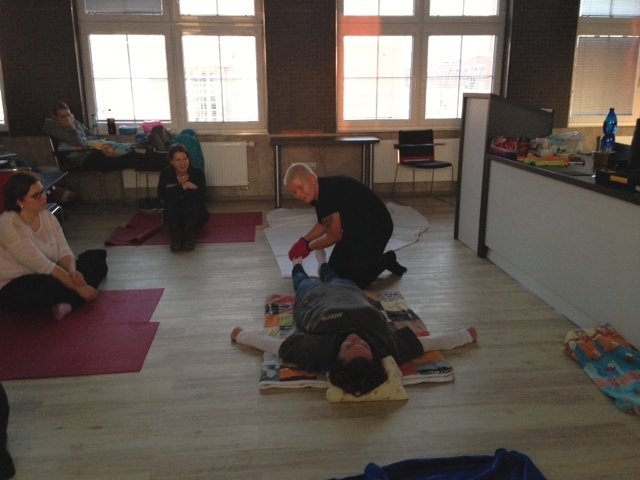
The course was designed for non-medical health professionals involved in health and nursing care. All 24 participants will be honing their knowledge and practical experience in a refresher course this September. Graduates of these certificate courses will gain special competence in the delivery of nursing care in the Basal Stimulation concept.
The lecturer of the course was Bc. Helena Dvořáková, DiS., member of the International Basal Stimulation Association.
Basal Stimulation is a concept of support, care and management of severely ill people developed by Professor Andreas Fröhlich, a special educator, when working with physically and mentally disabled children.
Basal stimulation is individual, taking into account the uniqueness of the person being treated, their experiences and history. It is provided taking into account the age, abilities and condition of the patient. It offers him clear, focused and familiar information (stimuli) about himself or his environment that was elementary (basal) for him. The aim of basal stimulation is to support the individual development of the disabled and severely ill. It is intended for all patients who have impaired or limited ability to perceive, communicate and move. These include, for example, unconscious patients, patients with brain injury, patients with hypoxic brain disability, Alzheimer's disease, hemiplegic patients, apalic patients, dying patients, elderly patients with mobility impairment, disabled or premature babies. Nursing care is structured in concept to support the patient's preserved communication and mobility skills. The concept has developed rehabilitation techniques for perceptual stimulation of the body schema (somatic stimulation), vestibular stimulation, vibratory, tactile-haptic (tactile), gustatory, optical, auditory (auditory) and olfactory (olfactory) stimulation. Basal stimulation is integratable into clinical care (intensive care, neonatology, follow-up care) as well as non-clinical practice (nursing homes, residential care facilities, special schools, hospice and home care). For clients with irreversible changes in their physical and mental state, it significantly supports their quality of life. Basal work only develops in a perfect dialogue, mutual understanding and consideration between the caring staff and the person affected. Working with the individual and integrating their relatives into the nursing process is also a prerequisite.
Basal stimulation is a recognised concept in many European countries and is used in special education and nursing care. For many patients with altered perception it has become an essential part of life.