Česky
Česky


24.6.2014
At present, the spectrum of patients here could be divided into three groups: approximately 40% are orthopaedic patients, i.e. people after various operations, whether arthroscopic or after endoprostheses, mainly of knees and hips, then patients after single and multiple fractures of limbs and complicated injuries. Another 30% or so are people with vertebrogenic problems (spinal pain of various origins, often chronic and root syndromes) and another 30% or so are neurological patients.It should be stressed that in many neurological disorders, when the possibilities of pharmacological therapy have been exhausted, the patient can only be helped by methods of medical rehabilitation (physiotherapy, occupational therapy, physical therapy). Nevertheless, the importance of rehabilitation in neurological diseases is still not appreciated.
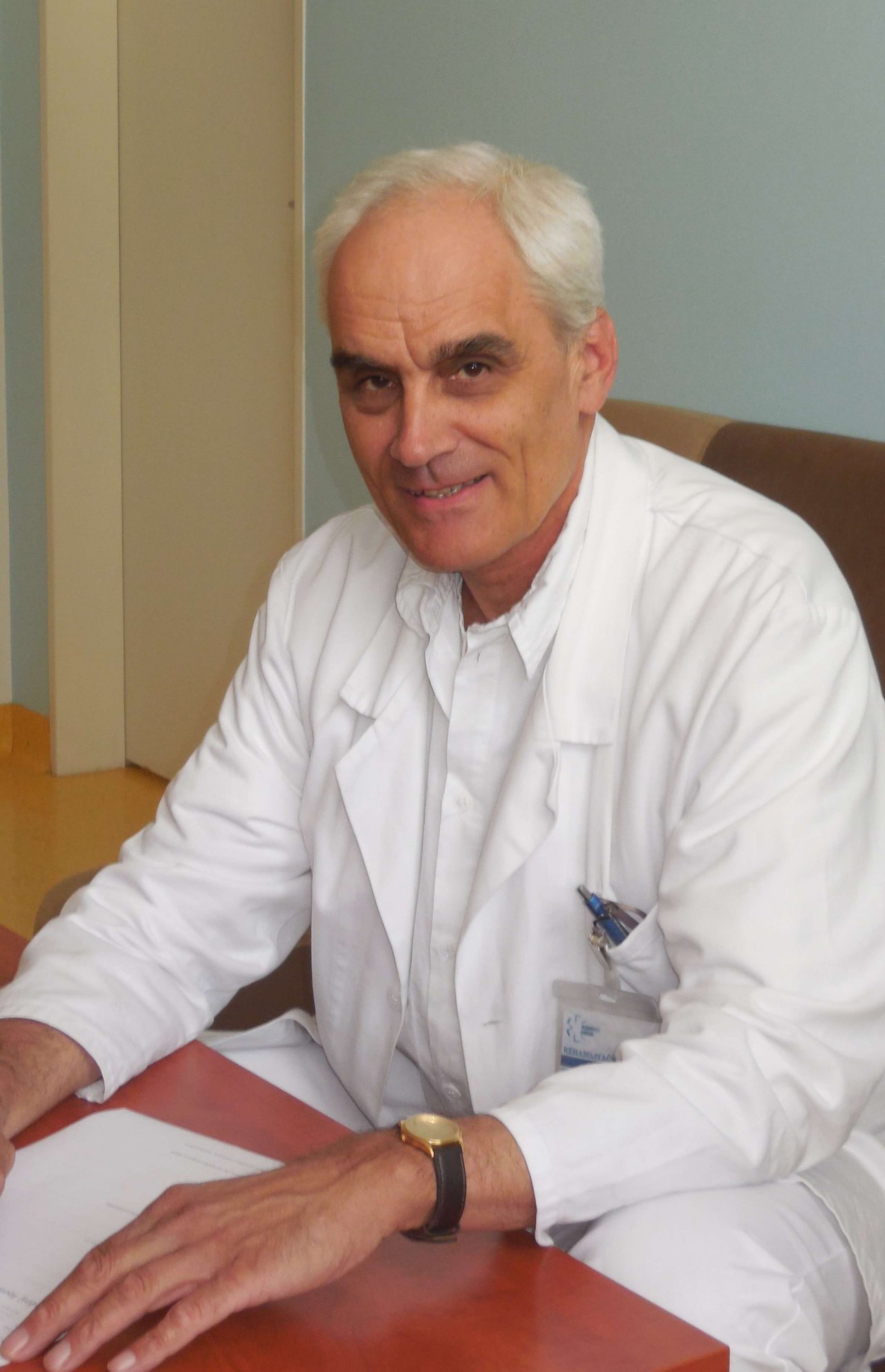
That is why today we will focus on these patients. The most qualified person to give us a lot of information is the head of the Rehabilitation Centre, Ondřej Horáček, MD, PhD, who has specialised not only in rehabilitation and physical medicine, but also in neurology.
"Rehabilitation of neurological patients is probably the most complicated, both in terms of designing a rehabilitation programme and in terms of working with often very severely disabled patients. But nowadays we have such technical equipment and, most importantly, such an experienced team of specialists - doctors, physiotherapists, occupational therapists, psychologists, speech therapists, as well as prosthetists - that we are able to comprehensively rehabilitate basically all neurological diseases.We admit these patients from the neurological wards to our centre, usually after the acute phase of the disease has subsided. Sometimes we also admit very serious and progressive diseases for hospitalisation. And we are very pleased if such a patient improves with us, within the limits of his/her capabilities, of course. It is always worth trying the treatment, even if it sometimes looks hopeless, and the "driving force" behind our efforts is to improve the patient's quality of life. Unfortunately, we cannot cure some neurological diseases yet and it often happens that some facilities no longer want to accept patients in the worsened stage of the disease. But we know very well that daily care and even a slight improvement in the health condition of these people (even if they have been advised that their cure is impossible) helps a lot", says MUDr. Horáček and then begins to analyze the individual diagnoses that occur in the Rehabilitation Centre.
Many of the patients are stroke patients, and they are transferred from our partner hospital in Horovice, from the Motol Hospital, from the Na Homolce Hospital, from the VFN Prague and many others. It is not good news that these patients are now increasingly including young patients. After a certain period of time, roughly 3 to 4 weeks, some of those affected are then transferred for further treatment to other specialised units, especially to subsequent rehabilitation units. "Occasionally, we admit some patients again for treatment, and the therapy is then carried out either during hospitalisation or on an outpatient basis," recalls MUDr. Horáček, the chief physician, adding that he is happy to admit patients after strokes because the therapy is usually effective and these patients belong in the Beroun hospital. But there are many other serious, in most cases progressive neurological diseases where the team of the Rehabilitation Centre in Beroun tries to help, such as patients with multiple sclerosis, which affects many middle-aged people, but often also very young people. These patients have a variety of neurological symptoms and the clinical picture is often very varied and variable, with some patients experiencing attacks, while others have a steady progression of the disease.Patients with Parkinson's disease may also be severely affected, where the main task is to 'get these patients moving', to improve the initiation of movements and reduce muscle tension and encourage the patient's activity. Another common diagnosis is myopathies, i.e. muscle diseases where the muscles are primarily affected.These are manifested by muscle giants often affecting the brachial and trunk muscles, and muscle atrophy is often present, as well as characteristic gait disturbances.Rehabilitation is similar to some extent in the above-mentioned groups of patients - it is aimed at improving the strength and mobility of the weakened limbs, improving the stability and quality of gait, strengthening atrophic muscles or preventing muscle contractures, i.e. in summary, the aim of complex rehabilitation is to alleviate subjective difficulties, improve neurological impairment and improve the patient's self-sufficiency. However, other neurological diagnoses with which people come to the Rehabilitation Centre should also be mentioned, such as polyneuropathies, whether of inflammatory, metabolic or degenerative origin. In these cases, there is acute or chronic involvement of peripheral nerves of varying extent and severity, resulting in the main symptoms: tingling of the limbs, sensitivity disorders and paralysis of the limbs.We have the most patients with hereditary motor and sensory neuropathy(Charcot-Marie-Tooth disease), where, in addition to lower limb paralysis and sensitivity disorders, there are also typical leg deformities that sometimes have to be treated surgically. "I have been treating patients with this disease for more than 14 years and not only follow them on an outpatient basis, but for many of these patients I arrange admission to our centre, where many of their problems can be influenced and resolved.I have known many of these patients for many years, from my many years at the Motol Hospital, and they have been coming to me in the last 3 years in Beroun, and they are patients from different places in the Czech Republic", says Chief Horáček.In another serious diagnosis - polyradiculoneuritis (the so-called Guillain-Barré syndrome, ), in addition to peripheral nerves, the nerve roots are also affected, the patient's disability is more severe than in polyneuropathies. Severe paralysis affecting large muscle groups of the upper and lower limbs is usually present, the patient is often initially immobile, and in the acute phase there may even be respiratory disturbances in some cases due to damage to the phrenic nerve, leading to weakening of the main respiratory muscle - the diaphragm. In the acute phase, the disease requires a stay in the intensive care unit of the neurological department, sometimes patients need artificial pulmonary ventilation and it is always necessary to provide specialised pharmacological therapy. Only after the condition has stabilised is it possible to transfer such a patient to a rehabilitation ward. Rehabilitation must be complex and is usually long-term, lasting many months. The condition of most patients gradually improves and recovery can take a year or more. "Every year we hospitalise around 6-8 patients with this diagnosis, some of whom are severely disabled at first. But even though the rehabilitation is demanding, it is definitely worth paying attention to the patient, because the condition gradually improves and it is certainly a great reward for the entire therapeutic team when a patient who could not, for example, grasp a glass and walk independently is able to walk independently and drink without help after 2 months of treatment," adds prim. There are also patients after brain injuries or tumours, again often very young, who often - in addition to motor disabilities - also have so-called cognitive disorders (attention, concentration, memory disorders). In this case, however, it depends on the extent and severity of the disability.With severe disabilities, the possibilities for rehabilitation are limited, especially if psychological disorders are dominant, because such patients do not cooperate well and well during rehabilitation. Here, the psychologist plays a very important role, alongside other specialists in the team. The same is true for spinal cord injuries, where it is possible to admit patients only in the chronic phase, i.e. in a stable condition, and to follow up on previous treatment in so-called "spinal units". The spinal cord is also associated with a very serious neurodegenerative disease - amyotrophic lateral sclerosis, in which the neurons of the spinal cord and brain stem degenerate. Up to a certain stage of the disability (in simple terms, until the sufferers have more severe breathing difficulties), these patients also appear at the Beroun Centre. Several of them are hospitalised here every year.In addition to the physiotherapist and occupational therapist, the speech therapist plays a very important role here, because these patients have problems with swallowing and speech, and activating the swallowing muscles and improving the motor skills of the affected tongue is very important."Yes, here, as with most previous diagnoses, the progression of the disease cannot be stopped and it is usually only possible to improve or stabilise the condition for a certain period of time," reminds MUDr. Horáček and adds that the greatest reward is to relieve the patients, at least for a time, and even temporarily improve the "quality" of their lives, for which the affected are usually extremely grateful. We agreed that, unfortunately, there are many people who, upon hearing a serious diagnosis (not only neurological), become convinced that they cannot be helped. "It's always worth trying, and when we see progress, even if it is small, it literally energises us for further work," said Chief Horáček, but he also expressed a little concern that after the completion of the construction of the complement of additional services, including modern hydrotherapy, it will not be possible to meet all requests for admission to the centre and sometimes it will be necessary to refuse.So far, this has happened sporadically, e.g. in situations where the request concerns a patient who is immobile and incapacitated and whose severe disability has not improved for several years and cannot improve with a few years' delay since the onset of the disorder (e.g. after a stroke). Or when relatives of a patient who is long-term unfit for work, who has been cared for at home, but who needs nursing care rather than rehabilitation, and the family is no longer able to provide the necessary care at home. The capacity of the centre is more than 100 beds, but if we have, for example, more than 100 beds, we can't have a long-term care centre. In a situation where the ward is practically full, we have to choose between admitting a patient where it is clear in advance that we will not improve his condition during the 3-4 week hospitalisation and admitting a patient where it is very likely that we will help him, then it is understandable that we prefer to admit the one where there is a hope for improvement," said the head of the Rehabilitation Centre, MUDr. And let us summarise the most important attributes for quality rehabilitation treatment. These are: an experienced and skilled team that is constantly educating itself in new procedures and methods, an individual approach to the treatment of each individual, coordination of procedures and their complexity and the synergy of all interested professionals. At the same time, it is certainly the answer to the question for all those who ask why the Rehabilitation Centre of the Rehabilitation Hospital in Beroun is so successful!