Česky
Česky


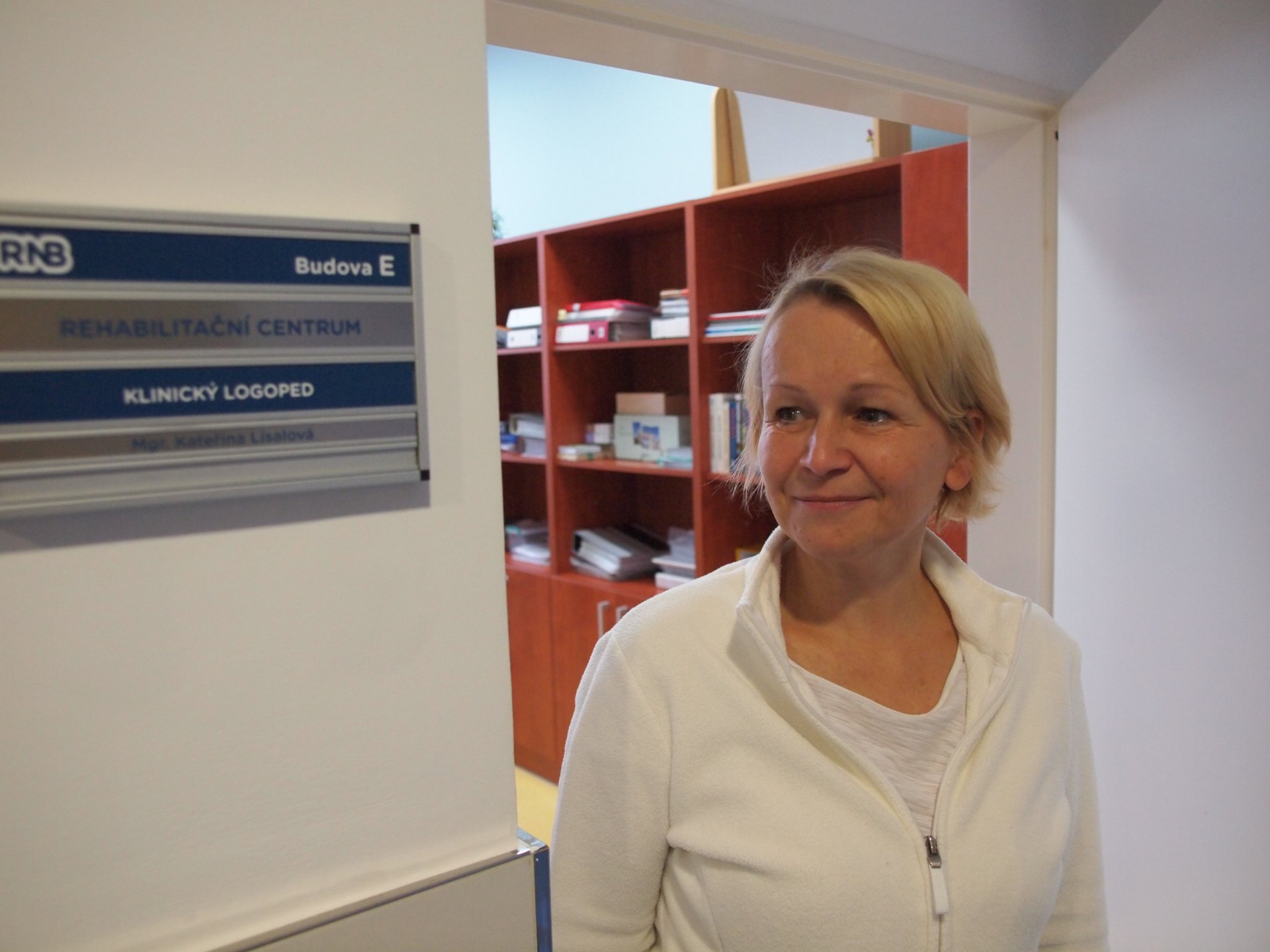
Could you introduce yourself to our patients?
I'm from North Moravia. I graduated from Charles University in Prague with a master's degree in special education. After that I received special training for work in the health care sector and in 1998 I got certified and became a clinical speech therapist. My professional practice took place first at the Phoniatric Clinic in Prague, then I worked at the Rehabilitation Clinic in Malvasinki and since 2011 I have been working at the Rehabilitation Hospital in Beroun.
What is the work of a speech therapist or clinical speech therapist?
I would like to explain the concept of a clinical speech therapist, perhaps so that if necessary, the public would know which specialist to turn to. A clinical speech and language therapist works in an outpatient or inpatient setting and provides therapeutic treatment for a child or adult client. A speech and language therapist working in an educational setting is responsible for educational procedures for people with communication disorders.
The work of a speech and language therapist is usually understood as working with children with speech impairment. Is this true?
Yes, it is. When working with adult patients, I often encounter surprised reactions from patients, family members, and others involved that there is speech therapy for adult patients as well. Sometimes the patients themselves are initially shy and fear a kind of personal dehumanisation. But I think that this fear soon disappears.
Correction of speech defects in children is quite common. But can similar problems be corrected in adulthood?
The most common speech impediment in children is dyslalia (mispronunciation of one or more consonants). Adults may also come to a clinical speech therapy clinic for help to correct a mispronunciation of a consonant, or they may come with speech fluency problems, etc. The success of therapy depends on many circumstances. For example, whether and in what way previous care was conducted, on the patient's motivation. It is clear that in adulthood, for example, certain motor stereotypes are already fixed and success is not always guaranteed. It is different for speech disorders acquired in adulthood. Here, the success of therapy depends on the timeliness and intensity of care.
What kind of patients do you usually deal with in RNB?
Most of the time, these are patients after a stroke (stroke). Speech therapy care is also often indicated for patients after trauma or brain tumours, patients with neurodegenerative diseases such as Parkinson's disease, multiple sclerosis, Huntington's disease, ALS (amyotrophic lateral sclerosis).
How does speech therapy work with patients after stroke? What is the proportion of such patients?
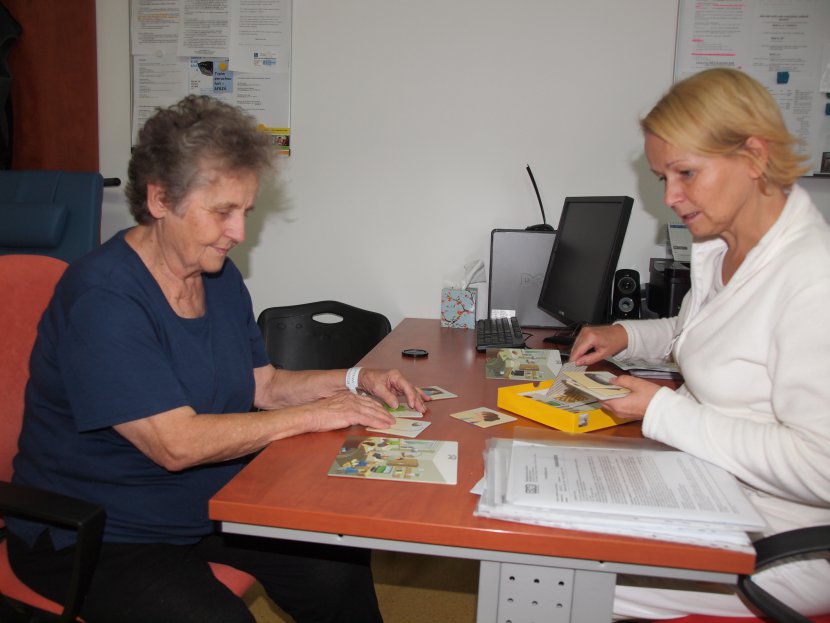
Patients after stroke have 2 types of communication disorders. There is aphasia, which is a disorder of the language system and affects to varying degrees speech, speech production, and speech understanding. The ability to read, including reading comprehension, and the ability to write may also be impaired. The second type of communication disorder is dysarthria. This is a disorder of the motor production of speech. This means that pronunciation, breathing, voice may be affected. These disorders are also often accompanied by a swallowing disorder. At the beginning of therapy, a clinical speech therapist will examine the patient and then determine a treatment plan based on the examination. For language disorders, the speech therapist relies on knowledge of the theoretical functioning of the language system. He or she tries to identify the disturbed components of the language model and uses special procedures to work on restoring speech. But he also relies on the preserved components of speech. The therapy uses picture materials, works with letters, words and text, but by no means is it the same "learning" procedures as for children in school. For this reason it is not recommended to use, for example, syllabaries or materials designed for children. The success of the therapy depends on the lesion and the extent of the disability, on the patient's motivation. The family background and cooperation of the family is also important. Therapy often lasts several months and family support is essential. It should be remembered that speech disorders, whether aphasia or dysarthria, have the greatest impact on social relationships. It not only limits communication with loved ones and friends, but it also limits the person's normal daily routine. It can affect the ability to be fully involved in one's current job, to go shopping, to run errands, etc. The situation is then very frustrating for the patient.
Are there more or less people with speech impediments in recent years? And what is the reason for this trend?
I think it is increasing. Deprivation, diagnosis is improving. In adults, in the context of improving medical care and the level of medicine, there are more and more patients who survive and get "into the hands" of rehabilitation workers. People are also living to an older age and this is linked to the problem of dementia and the incidence of language and cognitive disorders. These patients may also be under the care of clinical speech and language therapists in the near future. As far as children are concerned, I do not know whether I am fully competent to comment on the situation, but I know from my colleagues that, for example, children with autistic spectrum disorder are on the increase.
Do you encounter patients with unusual speech defects in your work?
I have met patients who were blind or hearing impaired and had a stroke. Such a patient is difficult not only to examine but also to plan therapy. The speech therapist tries to come up with some appropriate methods to improve communication, for example, using alternative communication options.
Do you also work with patients who don't speak Czech?
Yes, cooperation is possible. If it is therapy for swallowing disorders, speech motor therapy. Here, the language barrier need not be an obstacle. Correction of vowels can already be tricky, because the way of forming them may differ from "our" procedures. Even with language disorders - aphasia - therapy will have its limits.
Is the speech disorder linked to genetics?
This question relates more to neurodevelopmental speech disorders in children. Genetic factors can influence delayed speech development, hearing defects and dyslalia. However, the speech and social environment remains an important factor in healthy speech development.