Česky
Česky


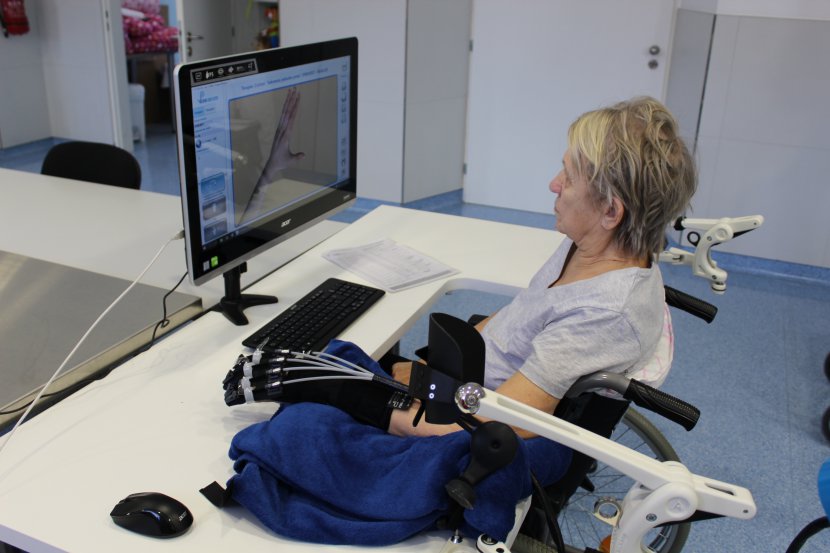
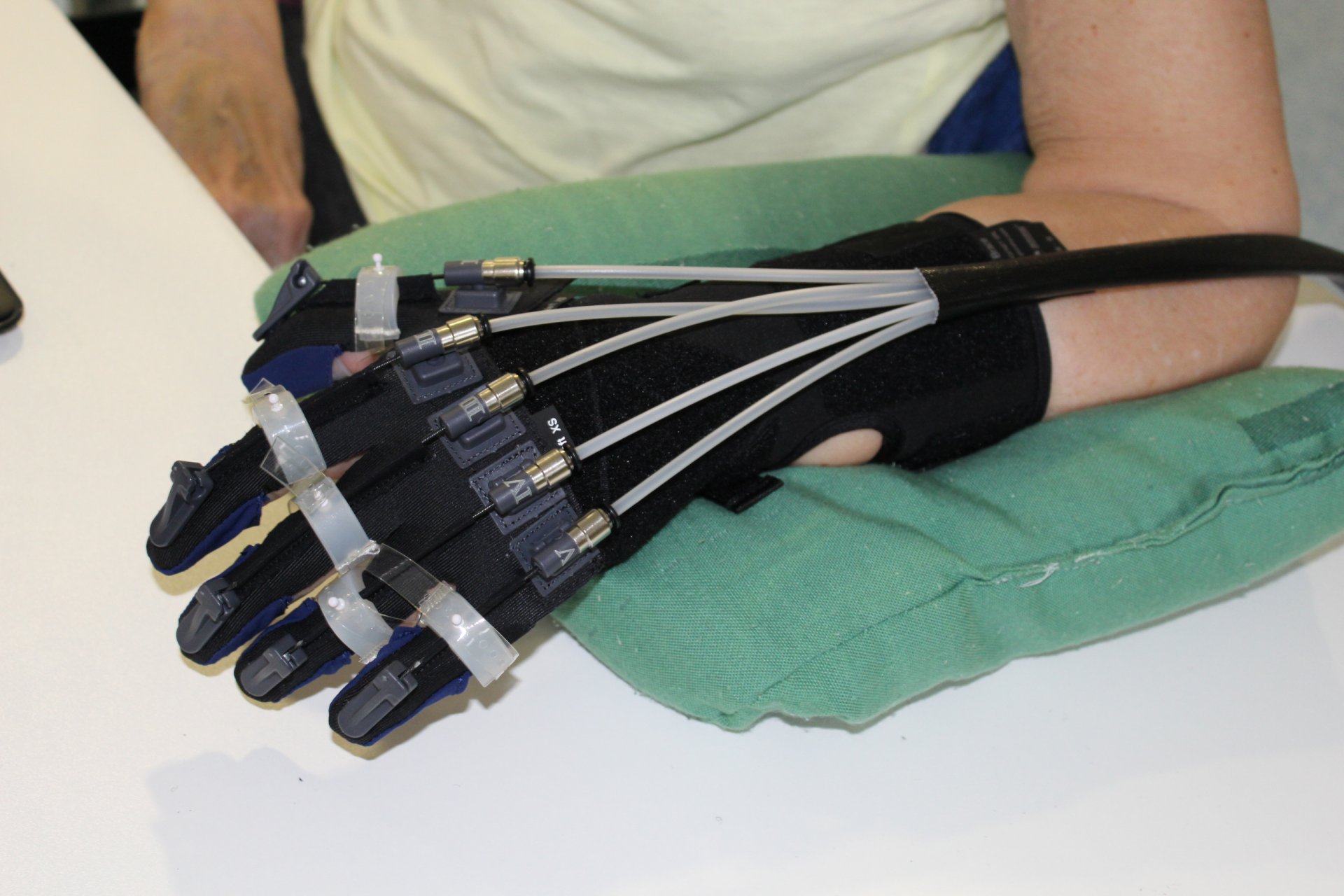
The Gloreha robotic arm has been added to its range of cutting-edge devices, significantly expanding the possibilities of rehabilitation for hand and upper limb disabilities of various kinds. The sophisticated robotic system enables intensive motor exercise of the hand, even when the patient is unable to actively move. "The device uses a robotic glove, supporting the hand's joint mobility and allowing a variety of hand and finger exercises in any position. In addition, it is possible to exercise the entire upper limb thanks to the dynamic support of the arm", explains the mission of this device the head of the Rehabilitation Centre Ondřej Horáček, M.D., Ph.D. Importantly, the patient can monitor the progress of the exercise thanks to visual feedback, where he can see the movements of his own exercising arm on the monitor screen and can correct these movements. Through visual feedback, the device not only promotes the joint mobility of the hand, but also contributes to motor learning through the neuroplasticity of the central nervous system. Different parameters are adjustable on the device: range of movement for each finger, individual exercise length, speed of movement, audiovisual effects and a voice guide during the therapy. There is also a very sophisticated version of the device, which is designed for bimanual therapy, where the movements of the healthy hand are simultaneously performed on the affected hand.
The Gloreha device is designed primarily for hospitalised patients for rehabilitation in the post-acute period for many disorders. "Exercise on the device maintains and increases joint range of motion, reduces pain, swelling and muscle tension, improves proprioception, joint metabolism, blood and lymphatic circulation, improves coordination, dexterity and functional independence, refines fine motor skills, improves visual-spatial orientation," says MUDr. Horáček adds that this makes the device suitable for patients with neurological disorders (e.g. paralysis of the hand after a stroke) or for patients after injuries and surgeries in the upper limb area, where the mobility of the hand or fingers has been restricted.
The first experience with the device at the Rehabilitation Centre in Beroun has been very good and the range of patients for whom the Gloreha device is included in a comprehensive rehabilitation programme is expanding.