Česky
Česky


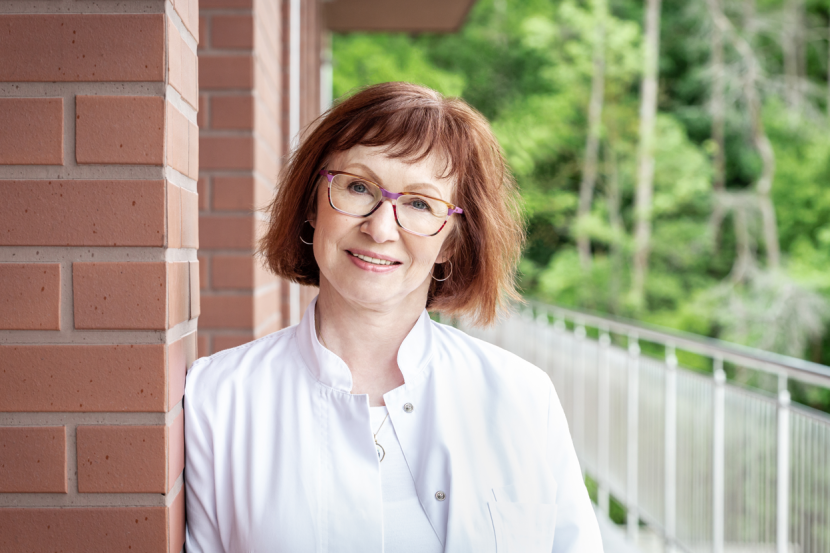
Was rehabilitation always a field you wanted to pursue?
My path was through acute care and then acupuncture. Through it, I discovered that rehabilitation is a nexus of different disciplines and that it looks at the whole person. And I liked that.
What else is typical of rehabilitation?
It's based on teamwork. It's important elsewhere in the hospital too, but here it's explicitly a team issue.
How does that manifest itself?
Patients are first examined by a nurse and a doctor, who sets up a rehabilitation plan. If there are problems early on, there is a discussion with the physiotherapist. Otherwise, the plan is passed on to the physiotherapist and occupational therapist, speech therapist and psychologist. But it is not one-way. The team leader is the physician who receives feedback from everyone who works with the patient.
You've been at the Beroun hospital since 2010. What shifts do you see?
It's made a big difference, it's just been in steps. We started in a small ward with about 25 beds. Now we are in a new building. At the beginning we were worried because we went from a couple of dozen to 153 beds. We wondered how we were going to fill the centre...
What did you do to increase visibility and fill the capacity?
We started with patients who had major joint implants. Gradually, thanks to the chief of surgery, MUDr. Horacek, who came from Motol Hospital, we toured clinics, lectured at congresses. We also started to organize the Beroun Rehabilitation Day. This year was the tenth anniversary year of this national professional event. In the early days of our Rehabilitation Centre, there was still MUDr. Calta, who also contributed a lot to spreading awareness. It was important that there was already an excellent team of nurses and physiotherapists at that time.
What feedback have you had from patients?
Mostly great. People are very positive that we treat them well and that everyone here smiles at them. But of course they appreciate the professionalism and the outcome.
Has the equipment changed over time?
Of course. The procedures that are done in the acute wards have changed, and so have certain types of patients. For example, we didn't have cardiac rehabilitation and respiratory rehabilitation at the beginning.
Do you have an overview of other rehabilitation facilities?
Yes, I have an overview. We know from patients across the country that there are differences in facilities. The rehabilitation field is very small. I think there are a number of good rehab facilities. We share experiences with each other and exchange patients sometimes.
Is there collaboration between institutions?
Yes. For example, at the rehabilitation centre in Motol, which is headed by Professor Kolář, it is explicitly on the basis of cooperation. There is no competition. We also cooperate with the ÚVN, with the Na Homolce Hospital. IKEM sends us cardiology patients. But patients come to us from all over the Czech Republic.
How does the cooperation within the hospital work? What would you highlight the most?
It works very well. I used to work in rehabilitation institutes in Germany. It had a level, but when something very acute happened, for example intubation, an ambulance had to be called. In Beroun, there's an internal medicine doctor and an anaesthesiologist on duty at night. We can afford to take a heavier patient than if we were in the middle of the forest.
What can help patients to be treated successfully?
Motivation and a proactive approach are primary. Without taking responsibility for one's health and having the will to get well, it cannot be done. We can give him help, knowledge, but he has to want it and go for it.
Do you think there is a future in virtual rehabilitation, where people put on glasses and practice according to them?
Virtual reality is very interesting and maybe in occupational therapy we are already using a little bit of it. For example, modern devices that are based on the principle of feedback. The patient can see what he or she is doing on the spot, someone says something to the patient and, as a bonus, virtual reality is added. We can't even imagine where this is going. On the other hand, I think that in rehabilitation, and in medicine in general, it's still important to touch people and see eye-to-eye from time to time. It's a different feeling even for diagnosis than just looking at a TV or a picture.
The work of a chief medical officer is very demanding. How do you rest? You don't take your work home with you?
I do. Every night, I write down the things I have to do in the morning. Exceptionally, patients call me in the evenings. But I try to relax. I like hiking, being outdoors, sometimes hiking in the mountains. Every weekend I try to go on a bigger trip. I have two small dogs that I've hiked with up to Sněžka. I also like to read. And when I can, I try to sleep a lot.
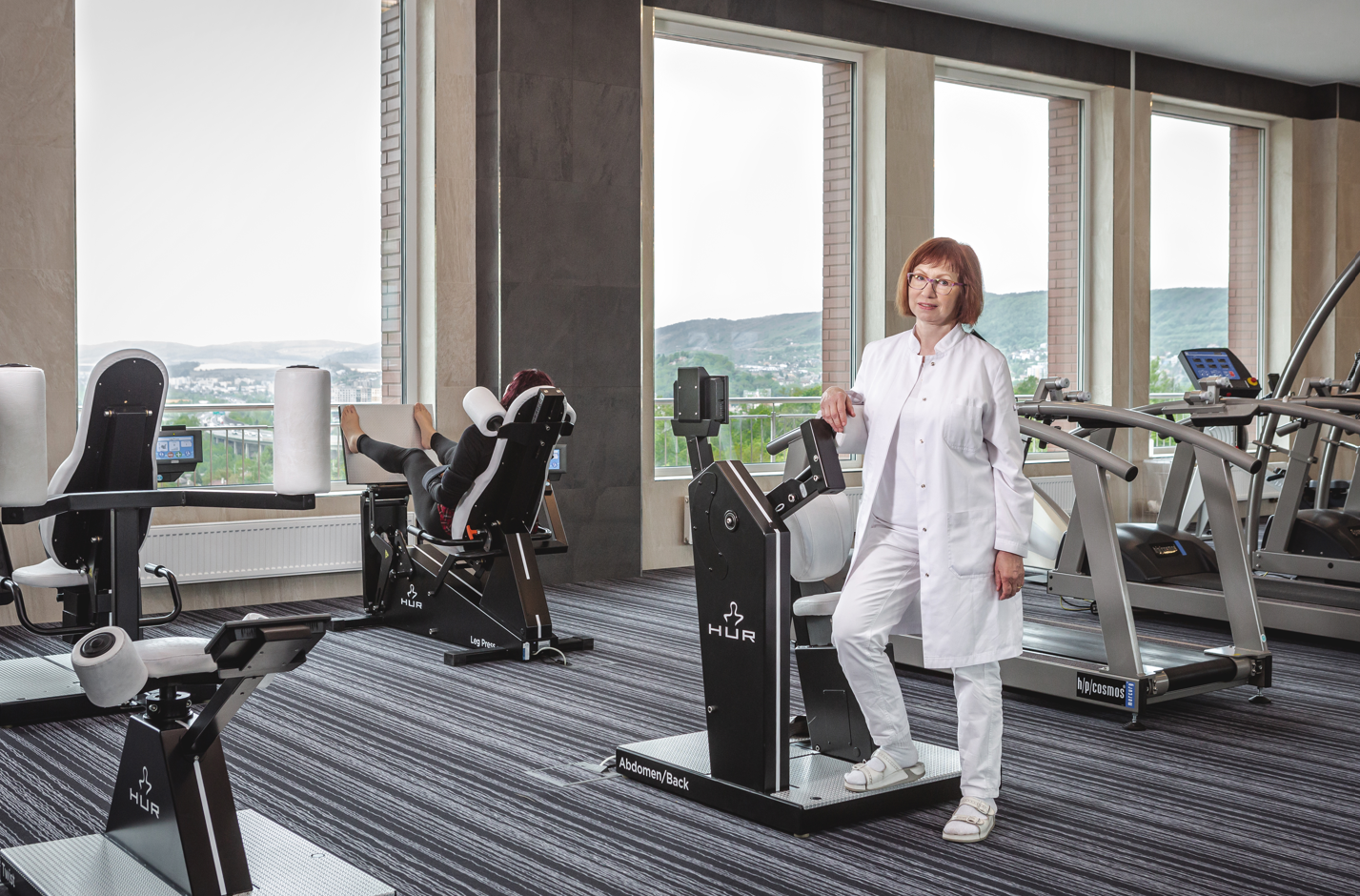
MUDr. Milena Kolářová
In May 2021, she became the head of the Jan Calta Rehabilitation Centre in Beroun. Before joining the Beroun hospital in 2010, she worked at the Motol Hospital, the Thomayer University Hospital and in Germany. She is certified in gynaecology and obstetrics, rehabilitation and physical medicine as well as in algesiology.