Česky
Česky

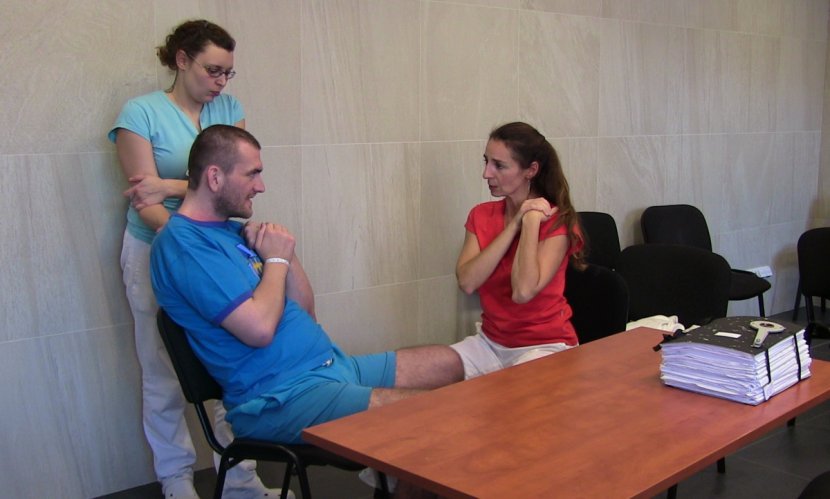
It is a modern concept developed several years ago by a prominent French expert in the field of neurorehabilitation, Prof. Jean-Michel Gracies, who has repeatedly lectured and taught in the Czech Republic. According to J.M. Gracies, the therapeutic concept is designed for patients with so-called central spastic giants, which is a disability that commonly develops especially in patients after strokes or brain injuries and also in multiple sclerosis. Central spastic paralysis is characterised by impaired mobility of the limb, with abnormal increases in tension in the weakened muscles, which gradually shorten, sometimes leading to abnormal posture and pain. J.M. Gracies has introduced an original concept which, as has been shown in studies, has better results in the long term for the aforementioned disability than some traditional rehabilitation methods, although it is advisable to combine it with other methods. The concept is based on a comprehensive analysis of spastic paralysis, which is carried out on the patient by trained staff in so-called "rehabilitation conferences". The analysis is carried out in several steps, with various parameters being assessed in turn during the examination and then recorded on a form. Based on the evaluation of the data obtained, a therapy plan can then be established, based on the specific disability, according to which the patient receives "tailor-made" targeted therapy. This plan includes, in particular, information on which muscles of the paralysed limb should be strengthened, which should be stretched and relaxed, and how these exercises should be carried out. Although the therapy is already started during hospitalisation, the main aim is for the patient to learn to exercise independently and to continue to exercise consistently and over a long period of time in the home environment. As part of the concept, the patient undertakes to perform the prescribed exercises and to record their performance in writing. It is only with a patient who takes this responsible approach to exercise that the concept makes sense. However, the concept is not suitable for everyone. The patient must be able to cooperate adequately, understand everything, be sufficiently persistent, exercise daily and record the progress of the exercises consistently. And this is not possible for some patients with severe neurological disabilities. In the Rehabilitation Centre RN Beroun, the evaluation of selected patients with spastic polio according to the concept of J. M. Gracies is carried out approximately once a week, with the presence of prim. MUDr. O. Horáček, Ph.D. with several trained associates. This team is also connected to the so-called "spasticity centres", which are established in some university hospitals and where selected patients with central paresis are sent for the application of Botulinum toxin. This is injected into the most affected (spastic) muscles, which contributes to their relaxation by means of so-called 'chemodenervation'. This then leads to improved mobility or posture of the limb. However, the condition is that even after the application of Bolulotoxin, targeted therapy according to the concept of J.M. Gracies must be consistently carried out.