Česky
Česky


You have been involved in martial arts for 26 years, 14 of which have been devoted to krav maga - KAPAP. What makes this system unique for you?
What attracted me to it was the specific overlay to reality. A lot of martial arts work on the basis that you learn something and when you have to actually use it, it doesn't happen. But Israelis try to train all the skills so that they can use them in life. Plus it's a lifestyle, KAPAP training makes you think in a certain way about the things around you, about your safety and the safety of your loved ones. KAPAP has given me the confidence in my life that I have a chance to defend myself against basically anything.
What is the relationship between krav maga and KAPAP and what are their basic principles?
The phrase krav maga, or hand-to-hand combat, for Israelis is a label for anything related to self-defense or personal protection. KAPAP, then, is one of the twenty specific systems that exist in Israel, and it focuses on defending yourself against an armed attacker who is threatening you, and you have to get away from the situation. Then, as far as the basics of it, the Israelis often depict it as a triangle, which is based on fitness and fighting technique - and then on top of that, it's connected by psyche, which is extremely important in KAPAP, because the attacker, for example in the case of women, often wins on the psychic level.
What was your seminar like at the Beroun Rehabilitation Hospital? What did you teach the medical staff?
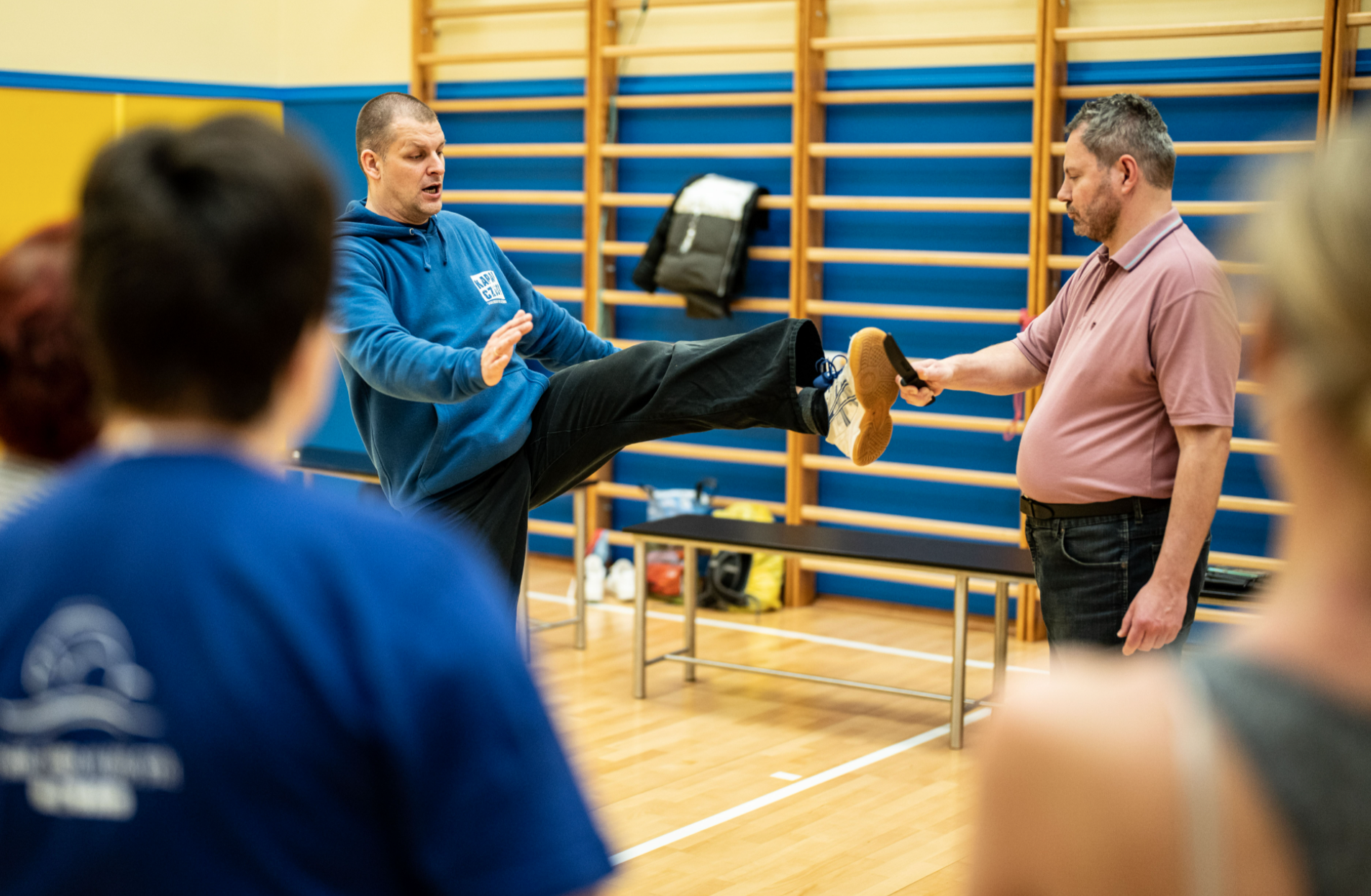
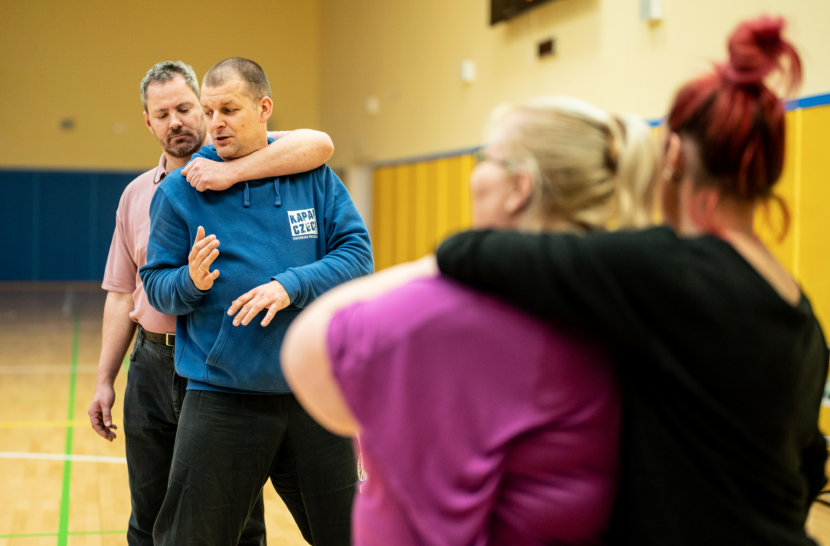
We focused on several typical assaults, such as various chokes and grabs. Specifically for healthcare workers who may encounter, for example, aggressive patients, we find it best to train them to use pressure points for self-defence. After all, they know the human body better than a layman and can use this technique more effectively. By using pressure points, they trigger a nervous reaction and consequently pain, thus paralysing the aggressor if necessary.
The seminar lasted two hours. What can you actually train in such a short time?
Quite frankly, I've been doing martial arts for 26 years and I still don't know everything, so the idea that someone will know all the basics after two hours is naive, just like learning to drive a car or dance in that amount of time. It's more of a taster so people know what KAPAP is all about. However, we always do our seminars in the locations near where we practice so that people can also start with regular workouts. Even in Beroun or Hořovice there is such a possibility.
What general principles from the KAPAP system would you recommend to everyone in case of an emergency?
Probably a simple tactic called USB - run, hide, fight. Fighting should be the last option to deal with the situation. If one has to fight, it should be quickly - i.e. immediately counterattack and get out of the situation. In the fight itself, one should be able to stand in front of the attacker, keep his hands up or take a stable stance. These are basic lessons that people need to learn, and even for a one-off seminar this is possible.