Česky
Česky


The Department of Neurology at Hospital Hořovice in close cooperation with the Rehabilitation Centre of Jan Calta, MD, at the Rehabilitation Hospital Beroun has been successfully running a specialised programme for the treatment of this disease for eight years. Approximately 120 patients, three quarters of whom are men, are now enrolled in this programme on a long-term basis.
In addition, since 2022, the hospital in Hořovice can boast the status of a Regional Centre for the Treatment of Spasticity, joining a network of highly specialised centres where patients find long-term support and gain new hope for a better quality of life.
When the body doesn't listen
Spasticity is usually caused by damage to the cells of the brain or spinal cord that control the function of skeletal muscles. It is part of the overall picture of spastic paresis, or "paralysis" of a part of the body. It most often occurs in connection with stroke, injury, tumour or inflammation of the brain or spinal cord, multiple sclerosis, cerebral palsy or other neurological diseases. It is a condition in which muscles are unnaturally tense, uncoordinated muscle twitches and painful stiffness occur.
"Spasticity is not just about not being able to move an arm or leg, but more importantly about not being able to get to the toilet on their own, not being able to open a bottle or simply not being able to take care of basic things. And that's where we start, with what the patient actually needs to manage on a daily basis. This order from the patient determines the direction of therapy," explains Libuše Brabcová, MD, a physician at the Rehabilitation Hospital Beroun and head of the RNB programme.
We follow the latest trends and follow international standards
Today's modern treatment of spasticity is based on the clinical concept of French professor Jean-Michel Gracies, an internationally renowned expert who has established a comprehensive structured protocol for its evaluation and therapy. This approach is highly functional even in the later stages, i.e. for a longer period of time after the onset of the problem. There are already a number of available expert studies confirming the effectiveness of the concept and its prospects.
Life-changing exercises
One of the two main pillars of successful treatment is targeted active movement therapy.
The basis for success is a motivated and cooperative patient who, with professional support, is willing to actively engage in daily activities and able to exercise regularly on their own. The whole treatment is conducted by "informed consensus", a kind of bilateral contract. The team provides the patient with expert guidance and the patient agrees to carry out the agreed tasks and keep diaries of these. These can be used to monitor even small progress and serve as feedback and motivation for the patient.
The key role is not only a detailed examination, but also the aforementioned identification of the subjectively perceived problem and the setting of a specific, realistic goal that the patient wants to achieve.
"The whole approach is based on multidisciplinary cooperation. During the initial examination, the doctor, physiotherapist and occupational therapist jointly assess the level of self-sufficiency, carry out gait testing, functional ability to use the upper limb and a detailed examination of the individual muscle groups of the lower and upper limbs that are affected by spasticity. This is followed by a joint analysis of the results, selection of therapeutic procedures, determination of the exercise unit and training of the patient. Afterwards, we provide detailed written and pictorial documents and diaries and, if necessary, help in the selection of appropriate compensatory aids," explains Pavla Košková, DiS, head occupational therapist at Beroun Hospital.
Botulinum toxin - the subtle power of precision
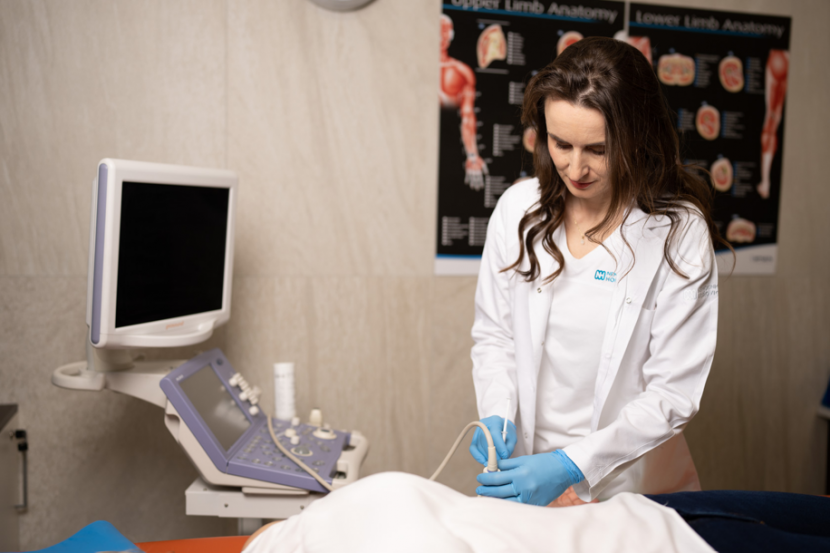
The second essential treatment tool is the application of botulinum toxin - a natural neurotoxin that relaxes spastic muscles. It is injected precisely into the area of greatest difficulty, under the control of ultrasound or EMG (a device for measuring muscle activity - editor's note) and works for about three to four months. The application must be repeated after this time. It is therefore a long-term treatment, whereby a combination of botulinum toxin and special exercises gradually helps the patient to achieve better function of the limb.
"Botulinum toxin helps patients with different types of disorders, from spastic paresis, to cervical dystonia, to hemifacial spasms or blepharospasm. It significantly relieves pain, improves mobility and enhances quality of life," says MUDr. Jana Pastuchová, a neurologist, deputy head of the neurology department at Hospital Hořovice and the main leader of the entire multidisciplinary team .
The outpatient clinic for patients with these problems is also located in the AKESO POLICLINICE in Prague's Nové Butovice, where patients with spasticity are treated by Jan Žák, MD. Currently, the outpatient clinic focuses mainly on patients with dystonic difficulties, i.e. the aforementioned cervical dystonia, hemifacial spasm and other focal dystonias (limitation to one or several muscles - editor's note). In the future, it is planned to cooperate in the complex care of patients with spasticity after brain and spinal cord injury.
The multidisciplinary team that holds together
The results are due to the carefully coordinated collaboration of a broad team of specialists from neurologists, rehabilitation doctors, physiotherapists, occupational therapists and nurses. "It's a complex and long-term work with patients. Full health may not return, but dignity, movement and enjoyment of life can. And every smile, every step, every single lace tied means a victory for us," concludes Dr. Brabcová.
The team of the Spasticity Treatment Programme:
- MUDr. Jana Pastuchová, MUDr. Libuše Brabcová, MUDr. Dušana Bubnová
- Jan Žák, M.D.
- Pavla Košková, DiS, Pavla Dvořáčková, DiS, Jana Preislerová, DiS,
- Mgr. Zuzana Mikešová, Bc. Jan Slepička
- Mgr. Helena Březinová, Monika Biskupová