Česky
Česky


According to your words, the Zvířecí pohoda shelter was an obvious choice as soon as you saw it for the first time. What makes it so different from the others, why did you decide to practice hippotherapy there?
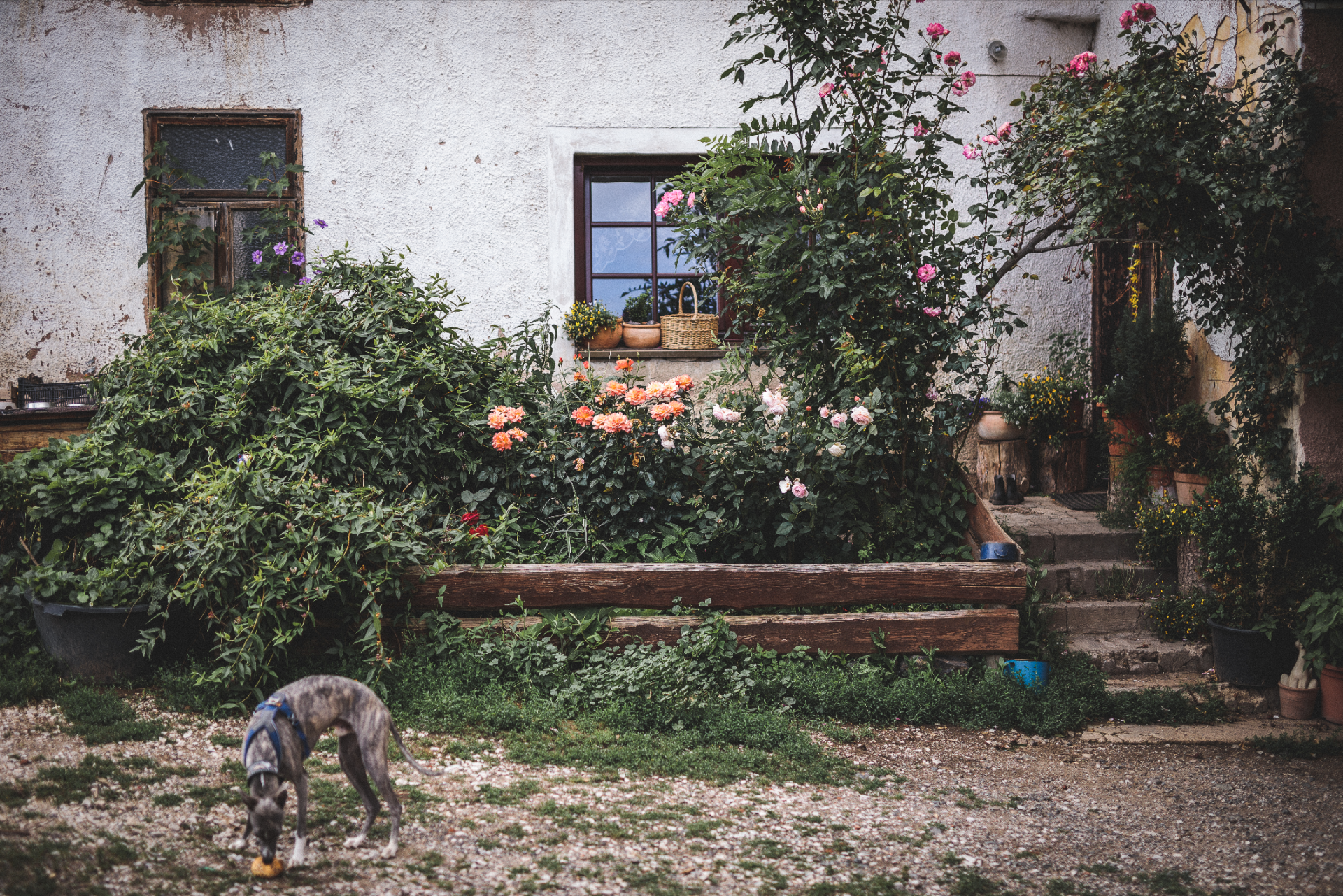
I guess it was the love for all living things that permeates everywhere on this farm, the great empathy for animals and people. For example, the dogs don't live in kennels here, but they run around the garden and people from the neighbourhood can go for walks with them. Old horses enjoy a well-deserved retirement here. In general, the owners take care of all the animals that can be found in the vicinity of Bzová or Žebrák, whether it is a cat, a deer, a dog or a turtle.
And the love of horses itself, did that come right away too? When did it turn into the desire to do hippotherapy?
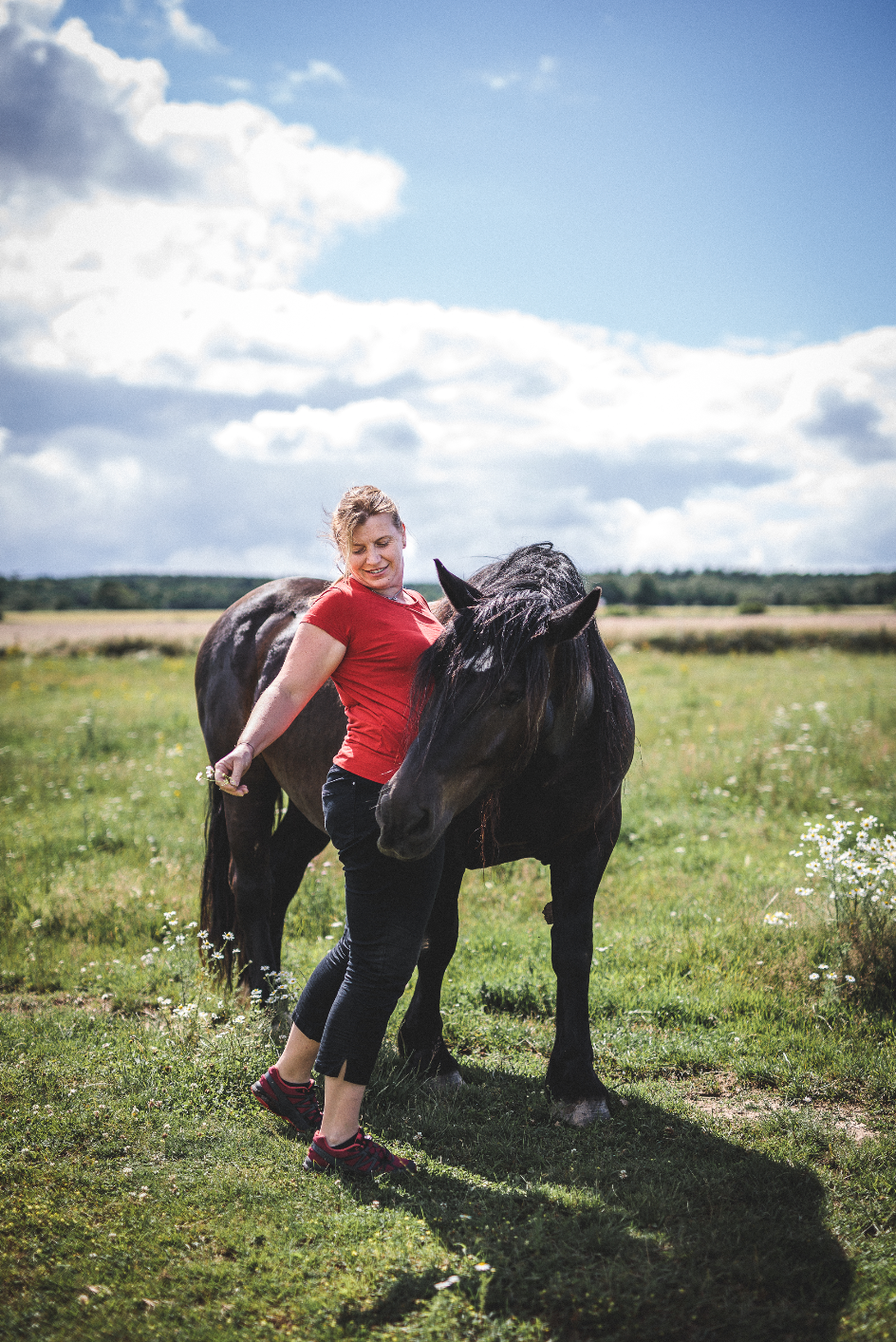
I've loved horses since I was a child, but it was hippotherapy that brought me closer to them. At first I didn't think that this method could help me in my work as a physiotherapist, but then a nurse I worked with led me to this idea and I was absolutely thrilled. I studied hippotherapy at the hippotherapy centre at the Bohnice Psychiatric Hospital in 2004 and gradually looked for a way to do it myself. Nine years ago I first stepped on the floor of Animal Wellbeing. My colleague Veronika and I run the treatment there under the Czech Hipporehabilitation Society and we took an occupational therapist who otherwise works at Hospital Hořovice.
The spectrum of health problems that hippotherapy can treat is very wide, but can you say which clients seek you out most often?
At the moment it is mainly hypotonic children, of which there are many, children with scoliosis or cerebral palsy, and then autistic children. In addition, we are one of the few centres that also takes adults because we have special horses for that - cold-blooded horses. For adults, hippotherapy helps after a severe injury or a minor stroke.
Do you also work with other clients with psychological disorders?
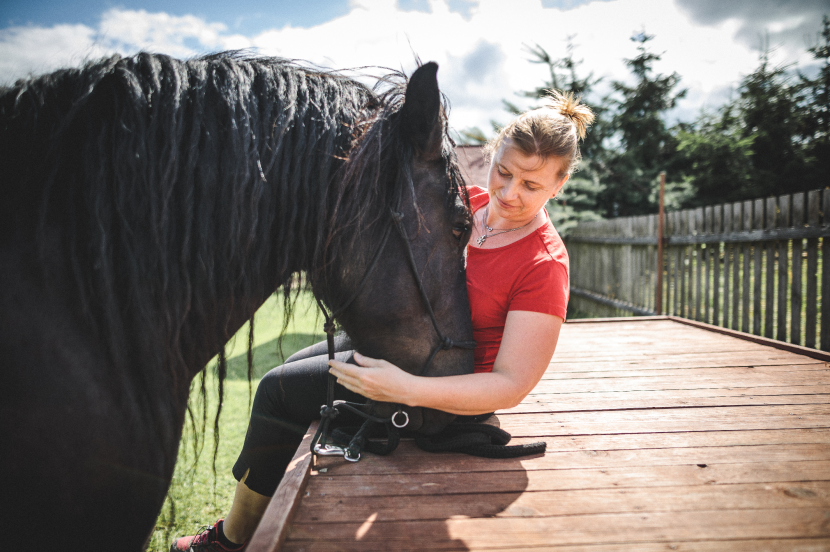
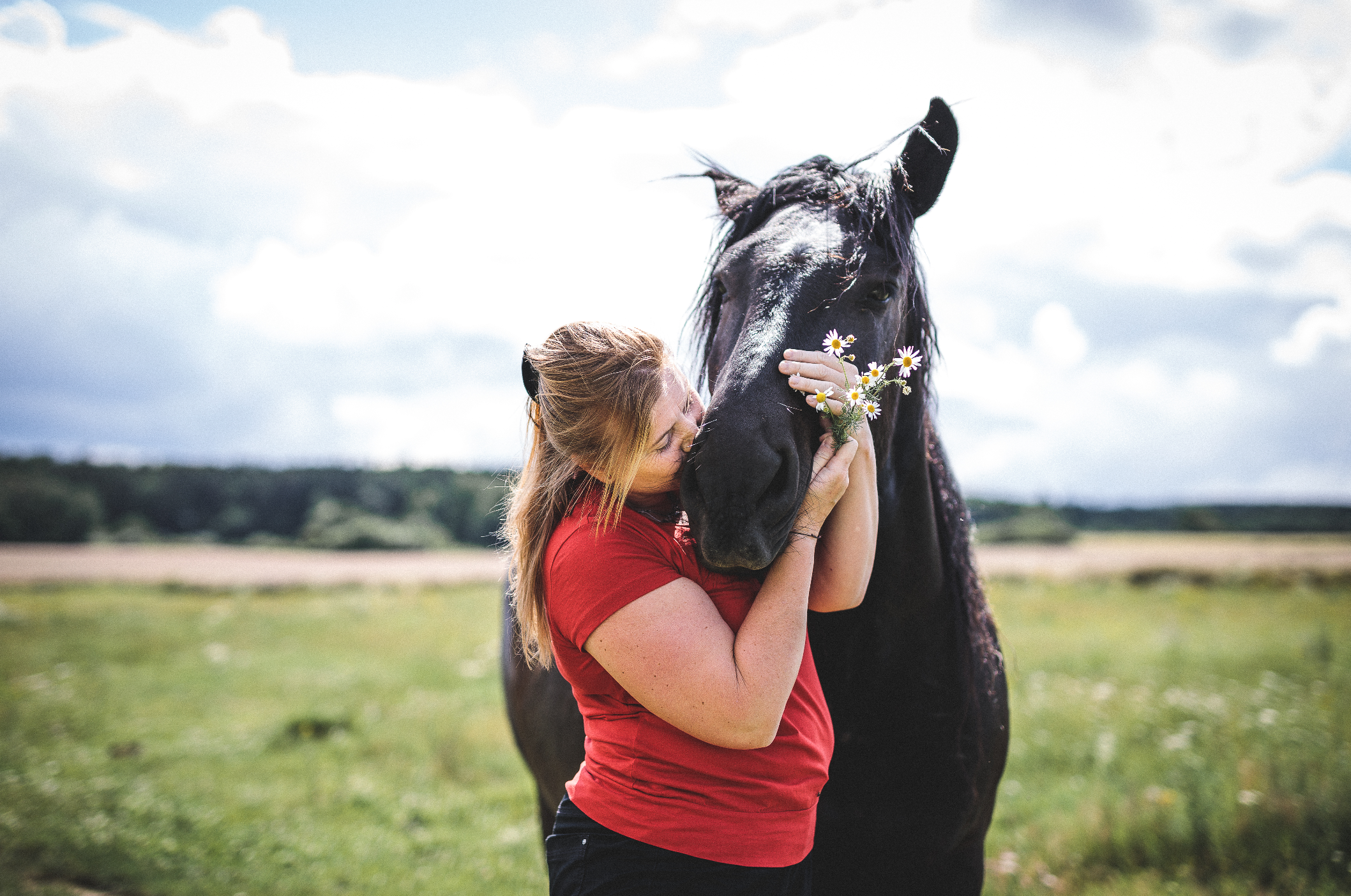
Not yet, except for children with autism, but of course horses have a good psychological effect on all clients. Sometimes the animal acts as a mediator between the child and the parent, whom the child trusts and receives feedback from. The horse can be your teacher and your psychologist, and if you tune in to it, it gives you everything back. Interestingly, horses have empathy for disabled children, treat them a little differently than able-bodied riders, and don't try any mischief on them.
It's probably hard to choose like that, but can you think of any particular treatment that you felt the most touched, satisfied after?
That would be Luke, who has Down's syndrome. At first he wouldn't sit on a horse or exercise, and he was like an earthworm, making mischief. But then he started exercising and now he can sit upright for the whole lesson. We also had an adult patient from Rehabilitation Hospital Beroun who was wheelchair-bound, and we made her dream come true. We got her on a horse, and when I saw the joy in her eyes that she was walking and moving because the horse actually replaces her legs, it was incredible. Or a mother of an autistic little boy will tell you that his digestion has improved. We've also worked with a young lady in her teens who came into the office writhing and uncertain, her head tucked between her shoulders like a tortoise, and then when you see her blossom and exercise like a beauty on horseback, you think, that's exactly why I'm doing this. It's mostly the incredible energy of the place itself, the horse, and that transfers to the happy rider above, even though they have to work.
A lesson is usually twenty minutes long, so how demanding is it for the client?
It's a chore and no parent can imagine. Everyone will tell you, they're just sitting there, but we plan on giving parents a demonstration so they can go try it for twenty minutes "just" sitting and practising under my dressage (laughs).
You work as a physiotherapist at Rehabilitation Hospital Beroun. If you were to compare classical physiotherapy with hippotherapy, what does this method bring in addition?
You often need both. I can't supervise a child on horseback in such detail as in an ambulance, but on the other hand there is the freedom and the beautiful environment with animals. There are goats grazing, horses snorting, dogs barking, a cat running around... People definitely feel more comfortable there than in the surgery. Moreover, the horses' gait and warmth are unique in some ways and, for example, often irreplaceable for children with neurological diseases.
So most of your clients have first passed through Rehabilitation Hospital Beroun?
Our clients tend to come from children's outpatient clinics or from child neurologists from the hospital in Horovice. I have mostly adult patients, so I don't deal with children in my outpatient clinic. For me, it's more the other way around, I have a bigger child riding and then he comes to my outpatient clinic, or he goes to my colleague who does paediatric rehabilitation.
Is hippotherapy now accepted as an equal method of rehabilitation in the medical environment, or do you encounter mistrust among your older colleagues?
It is already perceived positively. My colleagues who treat children are very knowledgeable about hippotherapy and reach out to me when needed. From Hospital Hořovice, where we work with children more, we have a lot of clients, and the doctors there perceive hippotherapy as a pleasant form of rehabilitation, for example in cases where the child cannot cope with the exercises in the outpatient clinic. They are neurologists, rehabilitation doctors, but also psychologists. Health insurance companies do not yet reimburse hippotherapy, but they should start to add something to the treatment of cerebral palsy patients. However, it is still in its infancy.
Coming back to your work at the hospital in Beroun, how helpful are they in such a time-consuming side activity?
The management is 100% accommodating. As I arrange it, I have it, and I book patients according to my working hours. On the other hand, the hospital knows that I will help them whenever I can and it is needed.
Does physiotherapy have an impact on other areas of your life? I'm also referring to the fact that you've also been running Pilates classes for over ten years.
Yes, physiotherapy is really for life and it affects me everywhere. The Pilates I do is a mixture influenced by the physiotherapy or rehabilitation methods I have been through and had to incorporate into my practice. I just can't let people exercise the wrong way anymore, like my own daughter after athletic training, for example, which often drives me crazy and I try to minimise its effects. In short, I see everything in my environment through physical therapy.
PETRA BRAMBOROVÁ
After graduating from high school, she studied physiotherapy at the 3rd Medical Faculty of Charles University, then completed a five-year long-distance study at the Faculty of Health and Social Sciences of the University of South Bohemia, specialising in rehabilitation-psychosocial care for disabled children, adults and the elderly. She has been working as a physiotherapist at the Rehabilitation Hospital Beroun since 2009. Apart from work, she enjoys wandering in the mountains and being with her children.