Česky
Česky


Accurate diagnosis is essential
The Parkinson's care programme is designed to cover as many aspects of the disease as possible
and ensure an individual approach to each patient. It involves specialists from the ranks of physicians, physiotherapists, speech therapists, occupational therapists, psychologists and nutritional therapists. The first contact for a patient with Parkinson's disease at the Beroun hospital is usually the rehabilitation doctor and head of the rehabilitation team, Vlasta Bernášková, MD: "The patient comes to my office most often on the recommendation of his or her treating neurologist. In such a case, he comes for targeted rehabilitation. Sometimes we detect Parkinson's syndrome with a subsequent diagnosis of Parkinson's disease in the context of inpatient care, where the patient is hospitalized and rehabilitated initially with a different diagnosis. Often, the main problem of these patients is pain, which they present unsuccessfully to various specialists. And it really happens that only here, during a longer stay, do we think of this diagnosis and, on the basis of a specific examination, confirm it and set up the appropriate initial therapy," describes the first contact with parkinsonian patients.
The creeping first symptoms and the slow development of the disease
In her practice, she sees both mild and more severe cases, and in her words, it is not always the elderly who are affected, but quite the opposite. Patients under 40 are no exception. The previously accepted idea of an elderly, stooped and trembling patient no longer applies and certainly should not be the rule when making a diagnosis. The symptoms of this disease are very creeping and non-specific. There may be sleep disturbances, a large percentage of parkinsonian patients are treated in sleep laboratories, mood changes, especially depression, digestive disturbances, non-specific pain or loss of smell. The disease can develop slowly, most often taking 5 to 7 years. The common form of Parkinson's disease then breaks out between the ages of 50 and 60. "In theory, this means that we have a relatively long period of time in which we can slow down the development of the disease, preventing the rapid onset of late symptoms and eliminating the number of patients who reach the late stage of the disease. Of course, this is not dogma; among other things, it depends on the origin of the disease. But it is still one of our goals," says Dr. Bernášková. And the origin of the disease is still unclear. It may be a multifactorial aetiology, with genetic stress playing a major role, but also environmental pollution, especially possible pesticide contamination of the soil, is coming to the fore.
The rehabilitation programme is tailored to the patient's needs as much as possible
In the rehabilitation programme itself, each patient is monitored by a multidisciplinary team and the programme is adapted to the patient's needs. Often, another family member or other caregiver enters the program with the patient, and depending on the severity of the disease and other circumstances, such as the ability to commute, specialists set up outpatient or inpatient therapy. "As mentioned, a team of physicians, physiotherapists, occupational therapists, a clinical psychologist, a speech therapist and a nutritionist work with the patient. The patient has all of this in one place, he doesn't have to go anywhere externally and I would say that is a huge advantage of our centre. Of course, our team also cooperates with the treating neurologist, especially in terms of setting up medication, which goes hand in hand with rehabilitation in successful treatment," says Vlasta Bernášková.
Exercise and aerobic-strengthening training play a key role
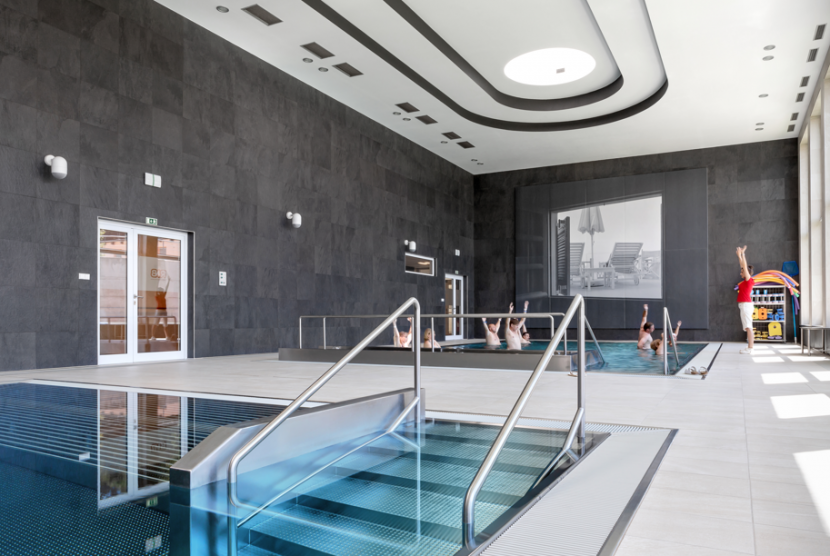
Rehabilitation and exercise are of the utmost importance here, because they help to neuroprotect cells that have not yet been affected by the disease and thus - together with the right medication - keep the patient in a satisfactory condition. As explained by the physiotherapist of the Beroun hospital who specializes in parkinsonian patients , Bc. Janis Lukáš, Cert. "With occupational therapists and physiotherapists we focus on individual needs, but we also work in groups. Our emphasis is on promoting self-sufficiency in daily activities, improving mobility and preventing falls. If the patient's health permits, we involve them in group physiotherapy in aerobic-strengthening circuit training at an individually set maximum load. Individual physiotherapy then focuses mainly on walking, stability and, in the advanced phase of the disease, transfers. We emphasize training of the individual phases of the stride and gradual lengthening of the stride, lifting of the knees and flexion of the upper limbs during walking. If necessary, we also focus on selecting appropriate strategies to break freezing. In some cases, rhythmic elements such as music or rhythmic vocal expression may be used. Stiffness and pain in the back and joints, which significantly limit the patient's quality of life, are also frequently addressed."
Occupational therapy and cognitive rehabilitation using software programs
Group or individual occupational therapy, which focuses on training fine motor and graphomotor skills, is also of great importance in the rehabilitation of patients with Parkinson's disease. Individual occupational therapy can focus on training cognitive functions in addition to training in activities of daily living and mobility support, including the use of computer-based cognitive rehabilitation. Last but not least, the occupational therapist also provides advice on the selection of appropriate compensatory aids. "As part of the programme at our rehabilitation centre, the patient can also benefit from hydrotherapy, electrotherapy and other treatments on offer at the hospital. In order to make the therapy as effective as possible, physical activity needs to be carried out regularly and constantly. This means that patients are encouraged to continue exercising at home as part of their therapy," says Bc. Patricie Burajová.
Speech therapy is an integral part of rehabilitation
Speech therapy has another irreplaceable place in the care of patients with Parkinson's disease. "Approximately 75-90% of patients with Parkinson's disease experience speech and voice disorders (dysarthria) during the progression of the disease, which are manifested by monotony, reduced volume, impaired articulation and changes in speech rate. Another common problem is dysphagia (swallowing disorder), which increases the risk of aspiration (inhalation of food, for example) and subsequent complications," explains Mgr. Mgr. Kateřina Lísalová. Properly conducted breathing, voice and articulation therapy, together with targeted swallowing rehabilitation, can significantly improve the quality of life of patients, support their communication skills and reduce the health risks associated with dysphagia. Individual and group approaches provide comprehensive support and enable patients to effectively manage everyday communication challenges. Regular speech therapy intervention and active patient involvement are key to success in the treatment of speech and swallowing disorders in Parkinson's disease.
Psychological support is also essential
It is not uncommon for patients to be overwhelmed by this diagnosis, especially if they are young and active. This is when comprehensive psychological help comes in to support the patient not only during hospitalisation but also in outpatient settings. "We can provide patients with crisis intervention to stabilise their psychological state, psychotherapeutic support covering topics related to different aspects of the illness, training in relaxation techniques and strategies to relieve stress. Patients are often afraid of losing their jobs, for example, and in this context may experience increased stress, anxiety and depression. Older people are also afraid of losing social contacts and connections. Progressive Parkinson's disease can also manifest itself in impaired memory, thinking and attention. In this case, it is possible to carry out a specialised neuropsychological examination as part of psychological care and to individually set up a suitable form of cognitive brain training," adds psychologist Vladimíra Plzáková, PhD, adding that the programme also offers psychological assistance to family members and carers who are also greatly affected by this diagnosis.
They are great fighters
Despite the severity of the disease and its gradual deterioration, these patients are extraordinary fighters, according to Dr Vlasta Bernášková. "It is almost unbelievable how strong and grateful these patients are. They do not feel sorry for themselves, on the contrary, they try very hard and cooperate to the maximum in the treatment. They deserve great admiration for this," the doctor adds.
An afternoon dedicated to Parkinson's disease
Comprehensive care for patients with Parkinson's disease is the name of the event that will take place on 10 April at 2 pm in the Multifunctional Hall of the Rehabilitation Hospital Beroun. The lecture blocks will present the disease as such, a case study of a patient with Parkinson's disease, the role of a doctor, physiotherapist, speech therapist, occupational therapist, psychologist and nutritional therapist. The event is intended for the professional public, patients and all those interested in this topic.
Details of the event can be found here.
Multidisciplinary team of the rehabilitation programme for parkinsonics at the Rehabilitation Hospital Beroun:
- Vlasta Bernášková, MD, team leader, rehabilitation physician
- Bc. Janis Lukáš, Cert. Janis Lukas, MDT., Bc. Jiřina Fröhlichová, Cert. MDT, physiotherapists
- Bc. Patricie Burajová, occupational therapist
- Mgr. Kateřina Lísalová, speech therapist
- PhDr. Vadimíra Plzáková, clinical psychologist
- Emma Dobešová, DiS., nutritionist