Česky
Česky


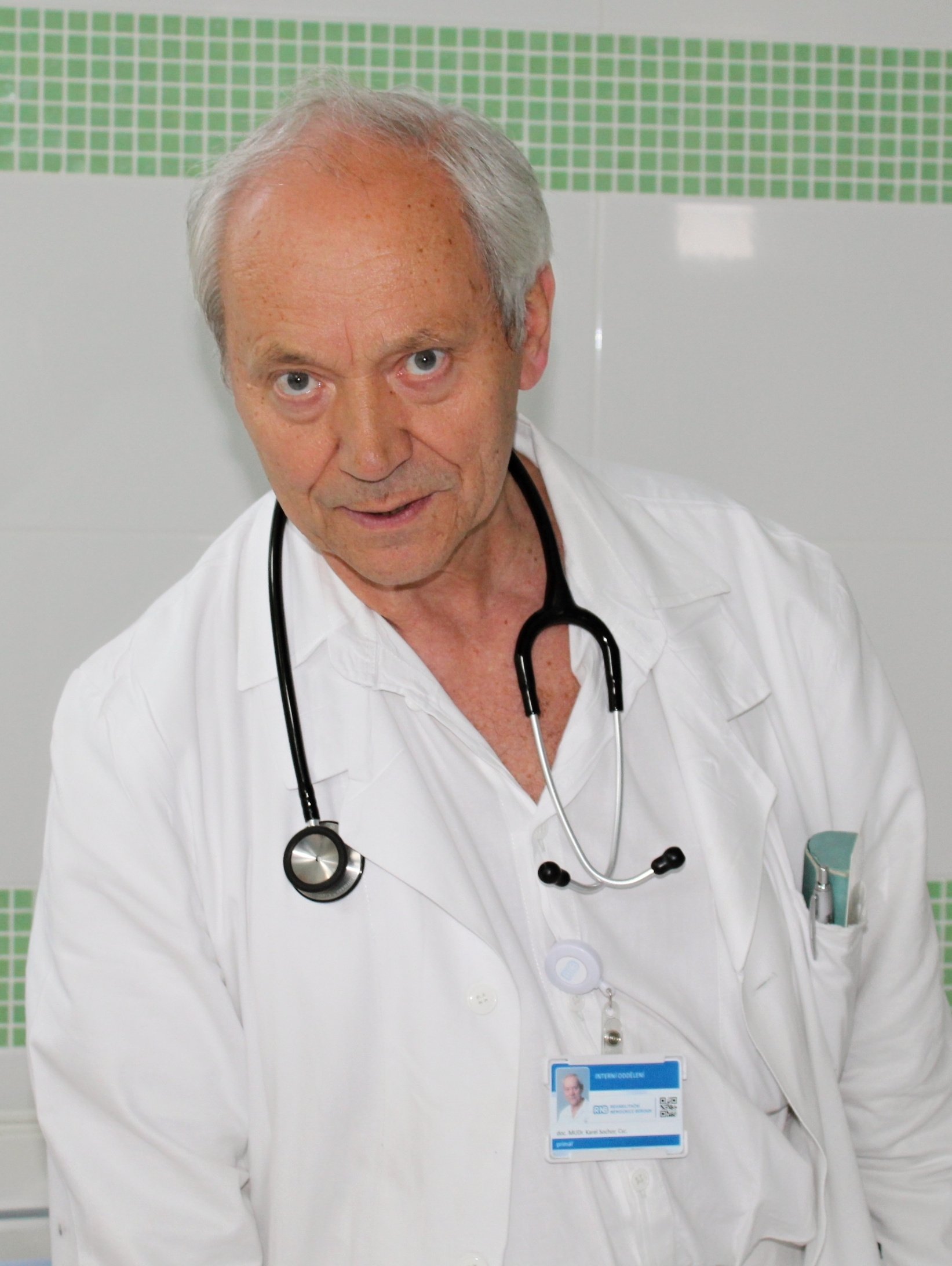
Mr. Chief, was the choice to become a doctor clear from your childhood?
You might be surprised, but it wasn't. From childhood I was attracted to cars (let's remember that it was the 1950s and 1960s, when cars were not a common item here in Czechoslovakia), and because I was an excellent student at an eleven-year high school (similar to a grammar school), so in the 11th grade I applied to the Faculty of Mechanical Engineering at the Czech Technical University in Prague (majoring in automotive engineering), despite the disapproval of my parents, especially my mother, and also my class teacher. Finally, the day before the deadline for submitting applications to universities, I succumbed to the pressure of my mother but also of my classmate (she had a brother who was a doctor) and I took the original application from my class professor and filled out a new one, where I wrote the Medical Faculty of Hygiene of Charles University in Prague (today's 3rd Medical Faculty of Charles University in Prague) in the first place. At that time it was the only medical faculty in Czechoslovakia with a preventive orientation, with an emphasis on hygiene and epidemiology and infectious diseases, because although I fulfilled the requirements in the interview, I had no experience (at that time this faculty required more mature candidates and I was less than 17 years old at graduation), so I was accepted into the so-called zero year, during which I worked as a librarian in the State Medical Library in Prague in the Medical House. Then, after 6 years of full-time study, I successfully graduated from the faculty.
How do you remember your beginnings after graduation and why did you choose internal medicine or cardiology?
I must preface that I chose the said medical faculty deliberately, because before my studies I had no courage at all to devote myself to the treatment of patients, but rather to scientific questions in the field of hygiene or epidemiology. In the course of my studies, especially during my internships at the faculty clinics, I changed my interest to the diagnosis and treatment of diseases that I had seen in the internal medicine clinics, and so after graduation I sought employment in the hospital. But there was a new government resolution forbidding the recruitment of graduates of our faculty outside the field of sanitary and epidemiological services, and so I ended up working at the district sanitary station in Beroun, where I joined after graduation. Fortunately, after a month I was called up for compulsory one-year military service, hoping that somehow it would turn out favourably and I would return to the internship in Beroun. But the dream of a young doctor did not come true, so I joined the internal ward Na Míčánkách, first belonging to the Department of Internal Medicine in Prague and later as an independent inpatient ward, whose head(prof. Prokšan) was a direct disciple of the famous first republican prof. Charvát - a long-time head of the internal medicine clinic of the VFN Prague. My chief was a passionate doctor, especially for acute cardiology (he founded in 1973 a coronary unit, not only stationary but also mobile), who cheered on us young people and led me to modern treatment methods, especially in cardiology, e.g. myocardial infarction. Gradually, I passed the first and second degree attestation examinations in internal medicine, after which I defended my candidate's thesis on cardiology and later habilitated in this field as well. But I must not forget that my role model from my studies was the renowned cardiologist (but also internist) Professor Vratislav Jonáš, whom I admired as a student during my internships for his comprehensive, broad view of patients (not only the heart!). This idea has accompanied me throughout my professional life so far, and I try to follow it for the sake of the patients, despite the undoubtedly necessary specialisation (after all, for example, cardiology has been a separate attestation field for many years now, and not an extension to internal medicine, etc.).
How do you manage to follow the developments in your field?
I have to admit that it is getting more and more difficult, because the explosion of new diagnostic and therapeutic findings or methods is really very much especially in cardiology. In particular, I try to be in personal contact with some of the experts from the Cardiac Centres, especially the Hospital Na Homolce and IKEM, I attend professional seminars, conferences or congresses and last but not least, I study the literature, including foreign ones. I am a member of the Jan E. Purkyně Czech Society of Internal Medicine, and as a member of the Czech Society of Cardiology I also receive news presented by the ESC-European Society of Cardiology, whose congresses I attended every year until recently. I try to bring my closest colleagues to these contacts, which, thanks to the support of the management of the Beroun hospital, is also successful.
Mr. Chief, you have been the head of the Beroun internal medicine department for many years. Can you summarise what has changed in the hospital and the internal medicine department in that time?
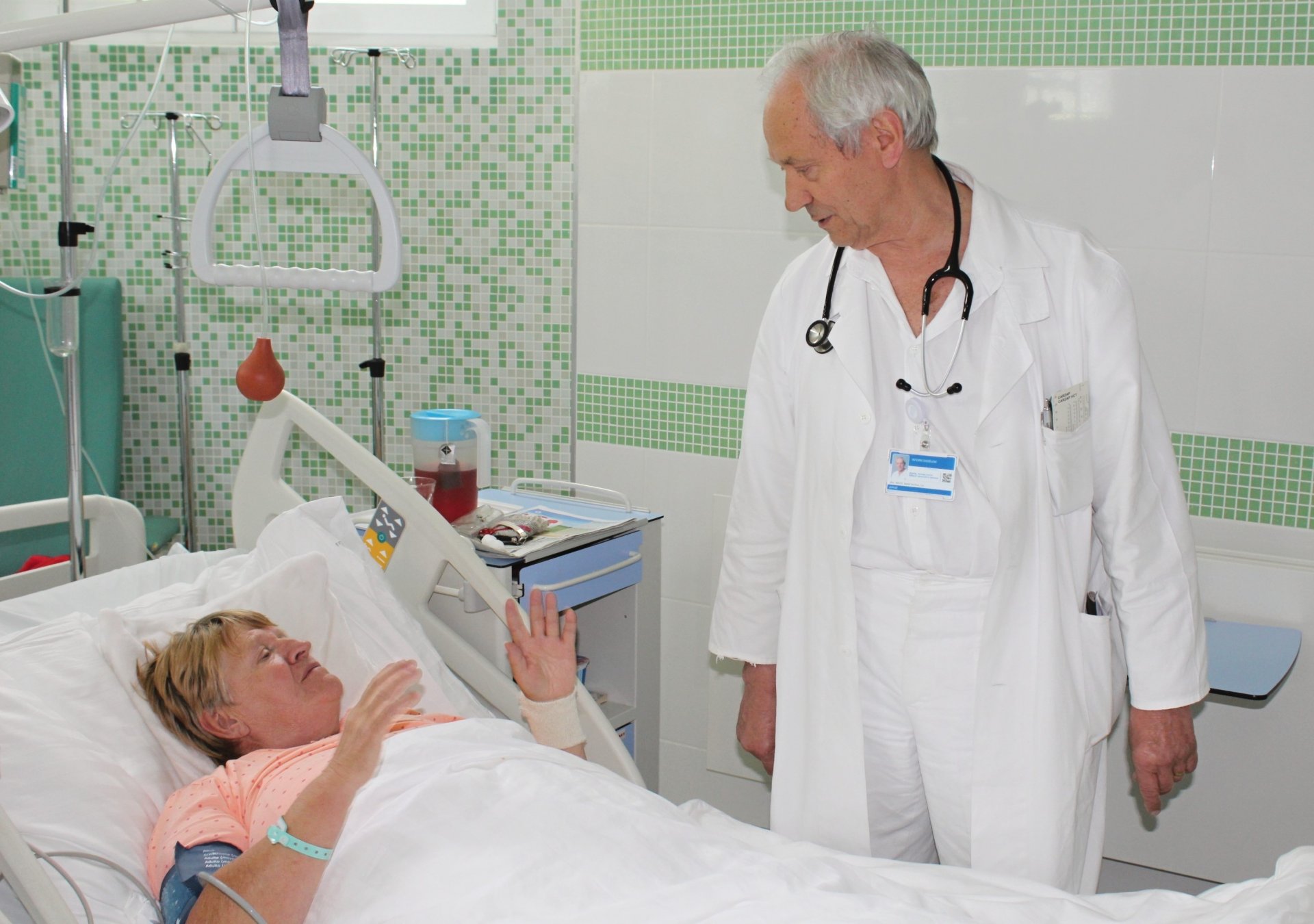
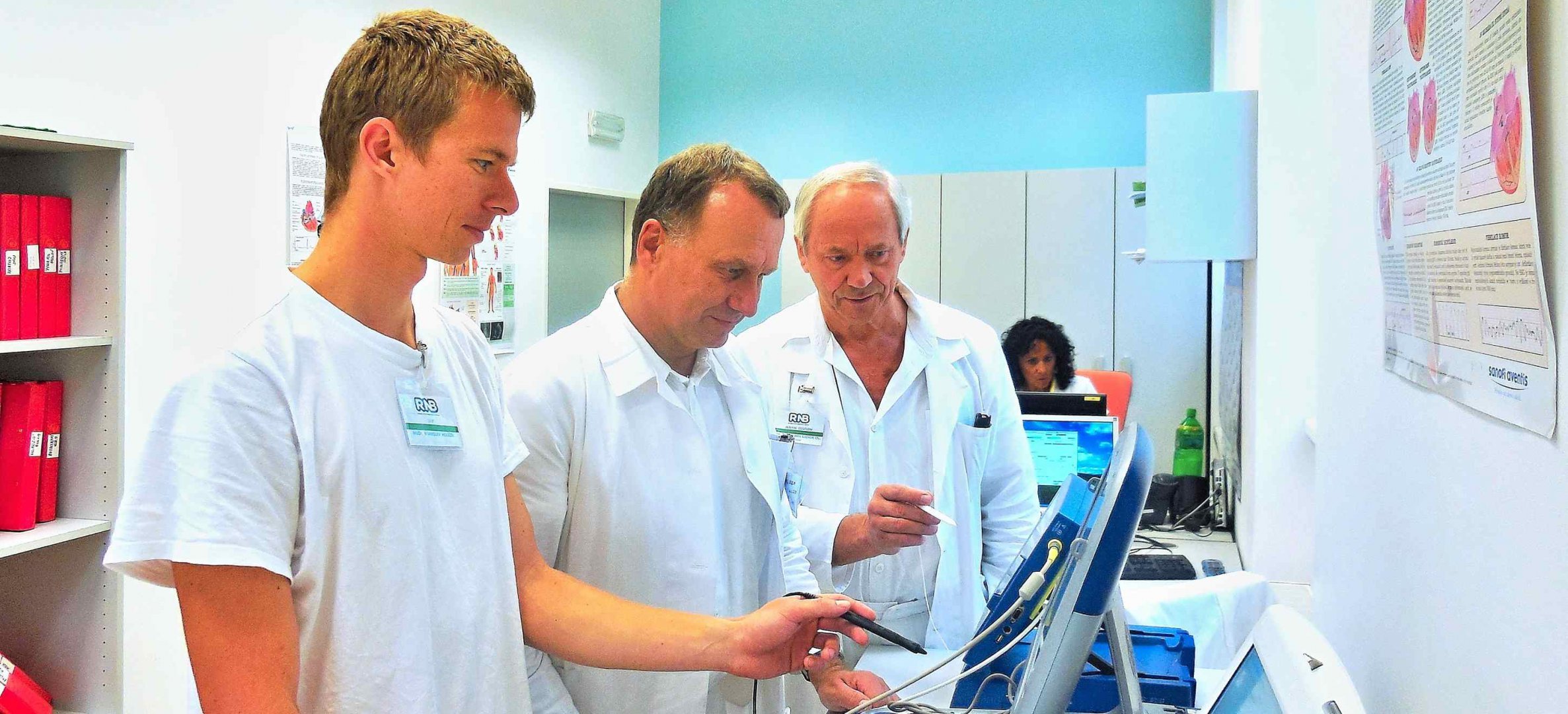
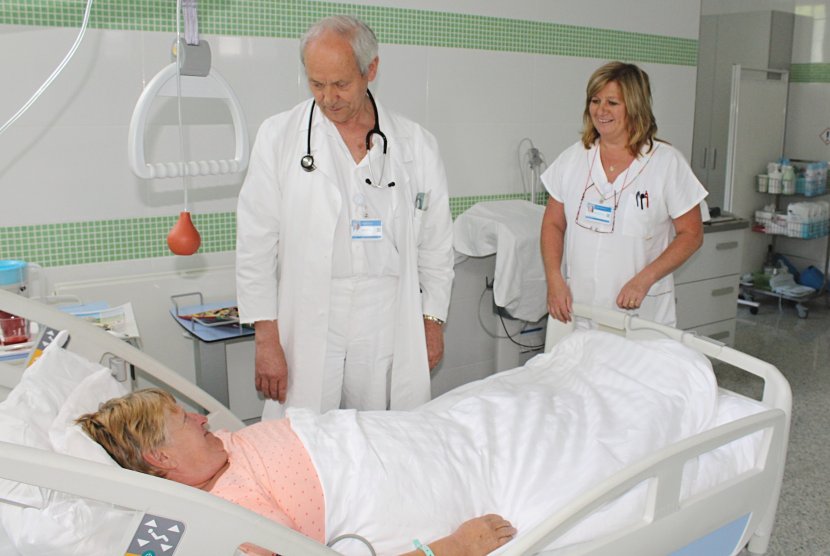
With the arrival of the new owner Ing. Sotirios Zavalianis and his colleagues, a lot has changed in the last 10 years in the whole hospital, at first sight. Above all, the internal medicine team has made a dream come true - in 2009 we moved to completely newly renovated premises, which is highly appreciated by our patients and positively evaluated by all employees. We have taken advantage of the owner's opportunity to equip our department with the latest equipment and technology, including IT, developing specialist outpatient clinics not only in terms of specialty (cardiology, gastroenterology, hepatology, pneumology, endocrinology, diabetology), but also extending office hours from morning to evening, despite a nationwide catastrophic shortage of staff (nurses and doctors). With qualified doctors and non-medical staff, we provide round-the-clock (365 days a year) acute care to our patients in inpatient - intensive care (ICU) and standard care, as well as in the acute outpatient clinic. We are also available on a consultative basis to other patients throughout the hospital. I also consider it a bit of a personal achievement that years ago we were among the first non-faculty and non-Prague departments to actively participate in the introduction of state-of-the-art treatment of acute myocardial infarction by direct angioplasty - today this treatment method is quite common. Thanks to the help of the Cardiocentre of Na Homolce Hospital, some of our specialist doctors have also been performing checks of implanted pacemakers in our cardiac pacemaker clinic for several years in patients from the Beroun district and possibly also the Prague West district.
The high quality of the entire hospital is evidenced by a number of awards, especially the successful completion of national accreditation. Last but not least, the construction of the Jan Calta Rehabilitation Centre, which provides comprehensive rehabilitation care in both outpatient and inpatient facilities, as well as a day surgery department with arthroscopic operations and, last year, the reconstruction and expansion of the aftercare department. The modern parking area certainly contributes to the comfort of visitors and patients. The renovated park, equipped for the rehabilitation of all clients and visitors, has a very positive effect.
What are the current priorities of your department and what do you see as its strengths?
I would like to emphasize the need to further deepen the qualifications of medical and non-medical staff as a prerequisite for further improving the quality of diagnostic, therapeutic and nursing care. These include in particular professional internships and stays at leading clinical institutions, further active participation of our department in international studies and, given the nature of the Rehabilitation Hospital Beroun, the continuation of successful cooperation with the IKEM Cardiac Centre (Prof. MUDr. Pirk), specifically with the transfer of some of their patients after cardiac surgery to cardiological and complex rehabilitation care. So far, the findings from this newly initiated cooperation are very positive, especially from the patients. We will also continue to provide acute care to the inhabitants of the catchment area (Beroun and its surroundings, including part of the Prague West district), not only thanks to qualified staff, but also thanks to the equipment of the inpatient part (ICU - intensive care unit), monitored beds in the standard ward and the possibility of telemetric (i.e. remote) monitoring of cardiac activity. It can be safely said that thanks to the long-standing close cooperation with the Cardiac Centre of the Na Homolce Hospital, the most modern care is provided for our patients with cardiovascular diseases. In the last year, we have also been expanding the quality of diagnostics and treatment of patients with lung diseases (Na Homolce Hospital) and digestive diseases (Internal Medicine Clinic of Motol Hospital) in cooperation with faculty departments, and with regard to the increasing incidence of diabetes and thyroid diseases in particular, we have also been working with the Endocrinology Institute in Prague.
How do you manage to ensure interdisciplinary cooperation in Beroun?
As an internist and cardiologist, I consider interdisciplinary cooperation to be a prerequisite for successful diagnostic and therapeutic care. In our conditions - at the Rehabilitation Hospital Beroun - we operate as a monoprimary care in the field of acute care. This functioning is possible only thanks to the very close cooperation with the Hořovice Hospital, especially the departments of surgery, ARO, urology, gynaecology, and imaging (especially CT). Our department is also limited by the number of beds, so direct connection to the aftercare department in our hospital is important for us, where our patients are then further treated and possibly also examined. And I would also like to mention that - probably thanks to the fact that many of the young GPs from Beroun started in our internal medicine department - there is very good cooperation with GPs, including their participation in the emergency services at the hospital.
Mr. Chief Medical Officer, do you manage to reconcile your work and personal life?
This is a question that is more suited to my family....(my wife and both adult children are health professionals, of whom my son is an internist - he has worked in a hospital for 20 years). It is true that when I was a young doctor I spent a lot of time in the hospital (as I like to tell my young colleagues, I actually lived in the hospital). In fact, I think you can learn a lot more practical skills that way. I have medicine and internal medicine with cardiology as my long-time hobby (besides my love for cars - my first own car was a Škoda 1201 ambulance from Motol Hospital in 1970!). Thanks to the understanding of my family, I have always been able to devote myself fully to medicine. Nevertheless, I tried and still try to relax in other ways than working as a doctor, whether it is swimming or walking now with my grandchildren in the Krkonoše Mountains or travelling by car in the Czech Republic, in summer and autumn staying by the sea, especially in Cyprus, Greece or on long car trips in Europe, especially in France.