Česky
Česky


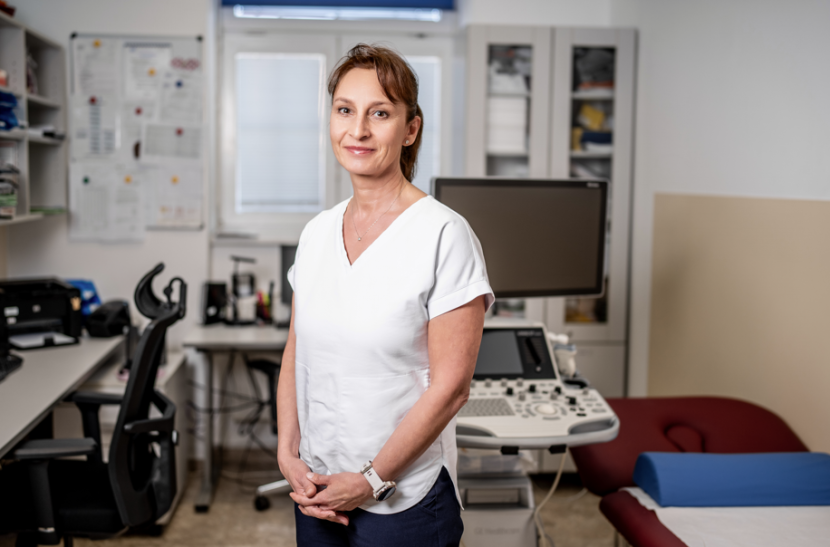
Freediving is not exactly a common sport, let alone a hobby. How did you get into it?
As an aquababe, I've been close to the water since I was little and spent almost every day in the pool. Later, when I was studying rehabilitation at the Faculty of Physical Education and Sport before medical school, diving was an elective subject I signed up for. That's where I met my future husband Martin, who at that time was involved in instrument diving. Then years later, by then we were married, he came along and said he liked breath-hold diving too. He took a course and got so into it that he is now a professional freediving instructor; so is our older daughter, who also competes and is slowly starting to attack the world's top with her performance. And the younger one just dives to 36 meters without training. I enjoy freediving mainly as a hobby. I like to use that skill on snorkelling holidays, when I can dive to greater depths without equipment and enjoy the water world without the burden of scuba gear. So we all fell for it in the end (smile).
How do you train for freediving?
I have experience with holding my breath underwater from when I was doing synchronized swimming. So I had excellent training. The key is to be able to overcome your own feeling of lack of air. And at the same time, if you want to dive deeper, you have to be able to balance the pressure in your ears. There are special techniques that need to be practiced. Working with pressure has always sort of worked for me, but I've now reached my own limit in this regard. So I've got to practice or I probably won't get any deeper.
To what depth have you dived the most?
So far I've dived to 36 metres. That was at the Y-40 centre in Italy, where there is a special pool in the form of a tube that is 42 metres long. I think I could have made it to the end, but I was worried about my sinuses. The bottom of this pool is a kind of personal benchmark I would like to reach.
How does a dive like this work?
For the first ten metres or so, you have to pull yourself up on a rope. Then, once you overcome certain water pressures, you get into the freefall phase, which is actually the best part of the whole dive. But then again, it's more work to get back up and the freediver has to be prepared for that.
You mentioned that you like to free dive in the sea on holiday. Describe what you feel when you do that?
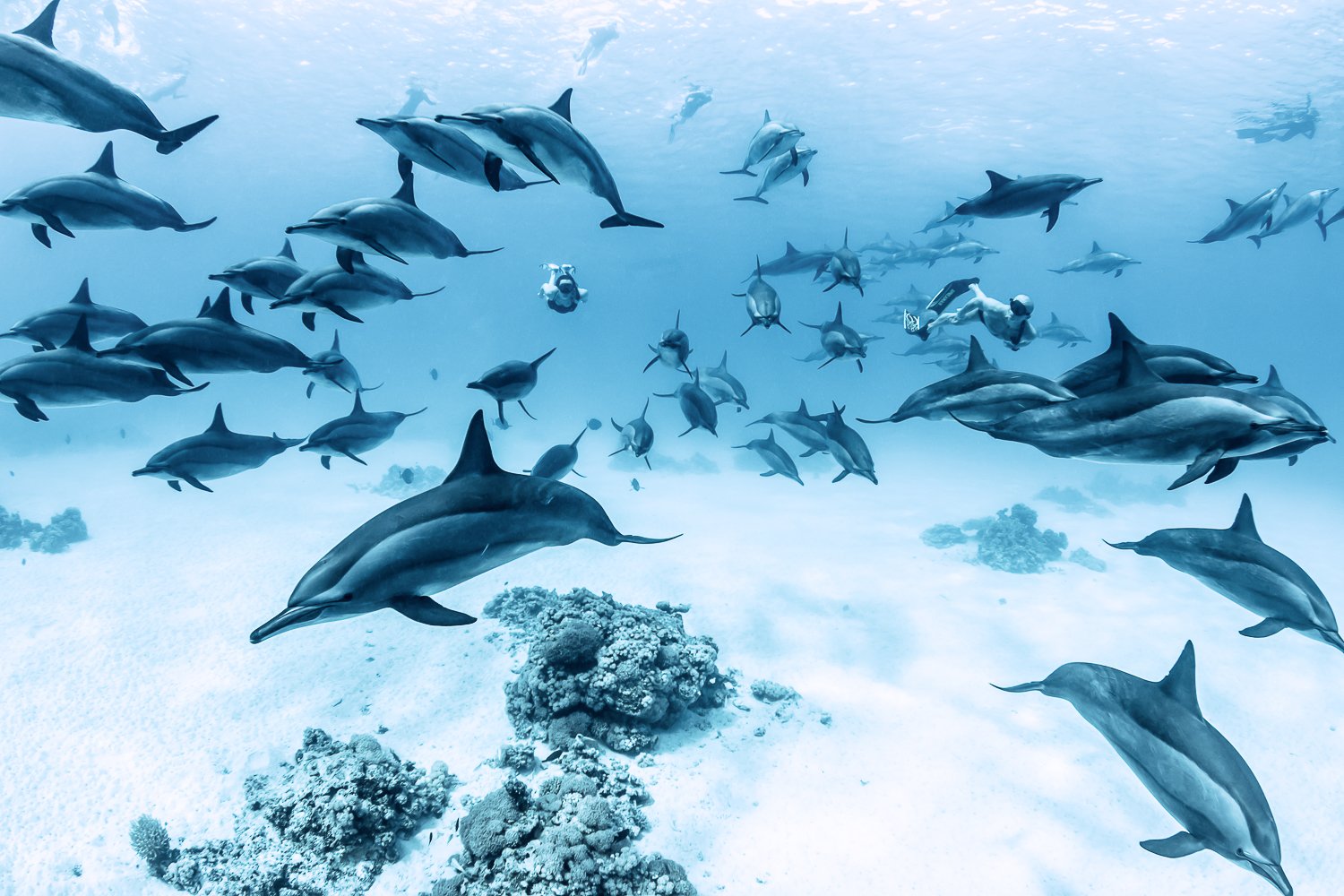
It's an incredible feeling of freedom, which I love. Once you're in the underwater world, you're surrounded by silence, incredible calm, a feeling of weightlessness and an endless blue colour. What you feel in that moment is probably indescribable, it has to be experienced (smile).
It must be almost like a form of mental therapy.
Yes, because when you are down there and a turtle or a school of fish, for example, flies past you, you think of nothing but the here and now. So it's a kind of relaxation, where you take a break from your everyday worries and problems because you simply don't think about them. Often, freediving is mistaken for an adrenaline sport because of the incredible performances of freedivers. However, it has nothing to do with adrenaline. On the contrary, one needs to remain calm and relaxed to avoid panic and hurt oneself. The moment you are underwater, it is necessary to concentrate only on yourself, your breath, your body, and completely eliminate distractions.
And if you look at freediving through the eyes of a doctor, how can it be beneficial to your health?
It's a movement in the water, which in itself has a beneficial effect on the body. Otherwise, it's a sport like any other that requires good physical fitness, and freedivers use many other physical activities to improve it. In turn, elements of yoga help to strengthen concentration and breathing techniques. They must also adapt their training to their diet to feel good underwater. Physique and breath holding can be well trained in our pools and we travel to deep pools around Europe or to the sea for pressure balancing exercises. The more you have trained, the more of the underwater world you can then enjoy, because you can dive deeper and for longer. If you learn to respect the limits of your body, freediving is a really safe sport, safer than instrument diving. It gives you the ability to feel your body better and to work effectively with your mind. It often becomes a lifestyle because it can completely absorb you (smile).
I imagine that in the colourful underwater world one can also have an adrenaline rush. Do you have any such experience?
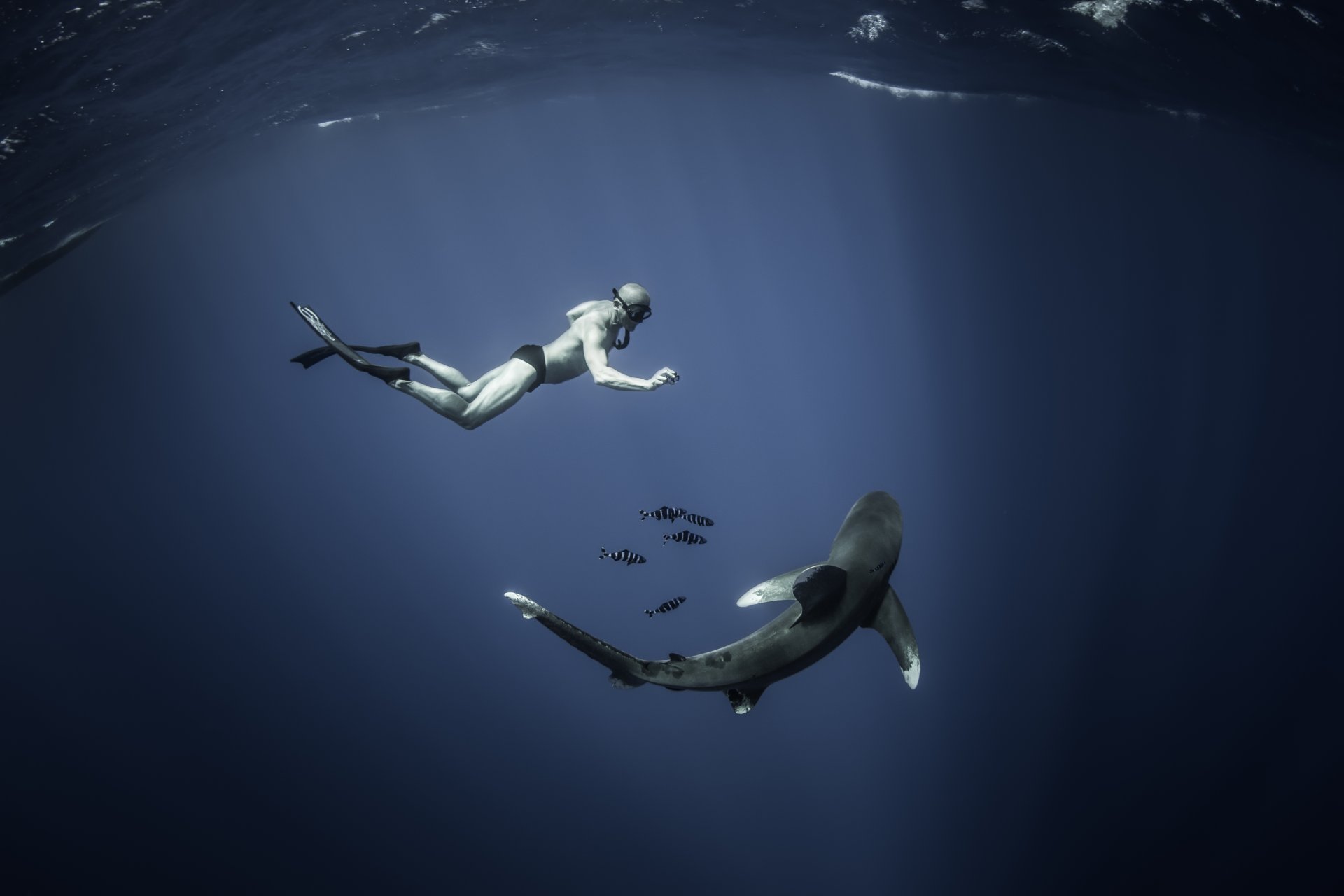
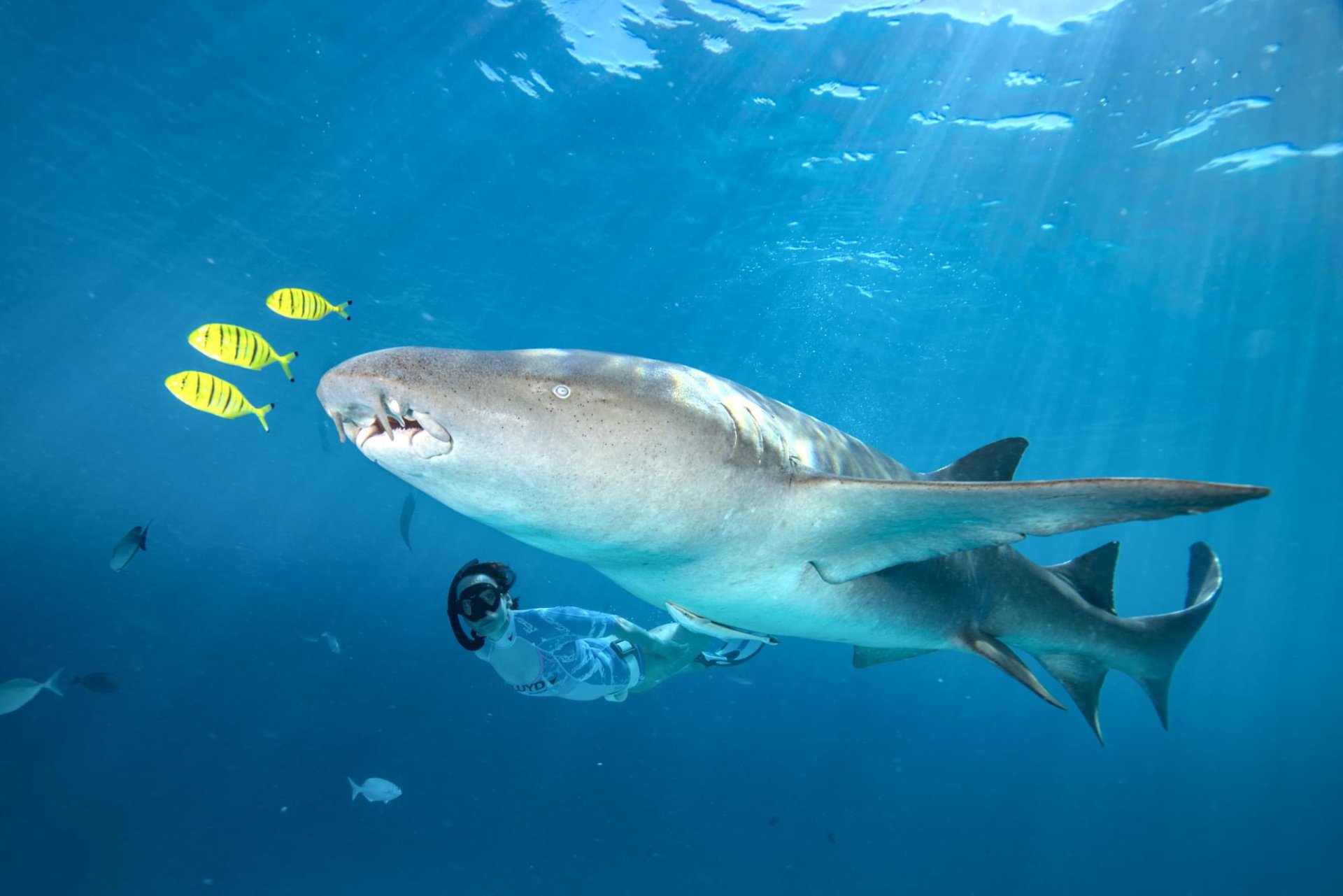
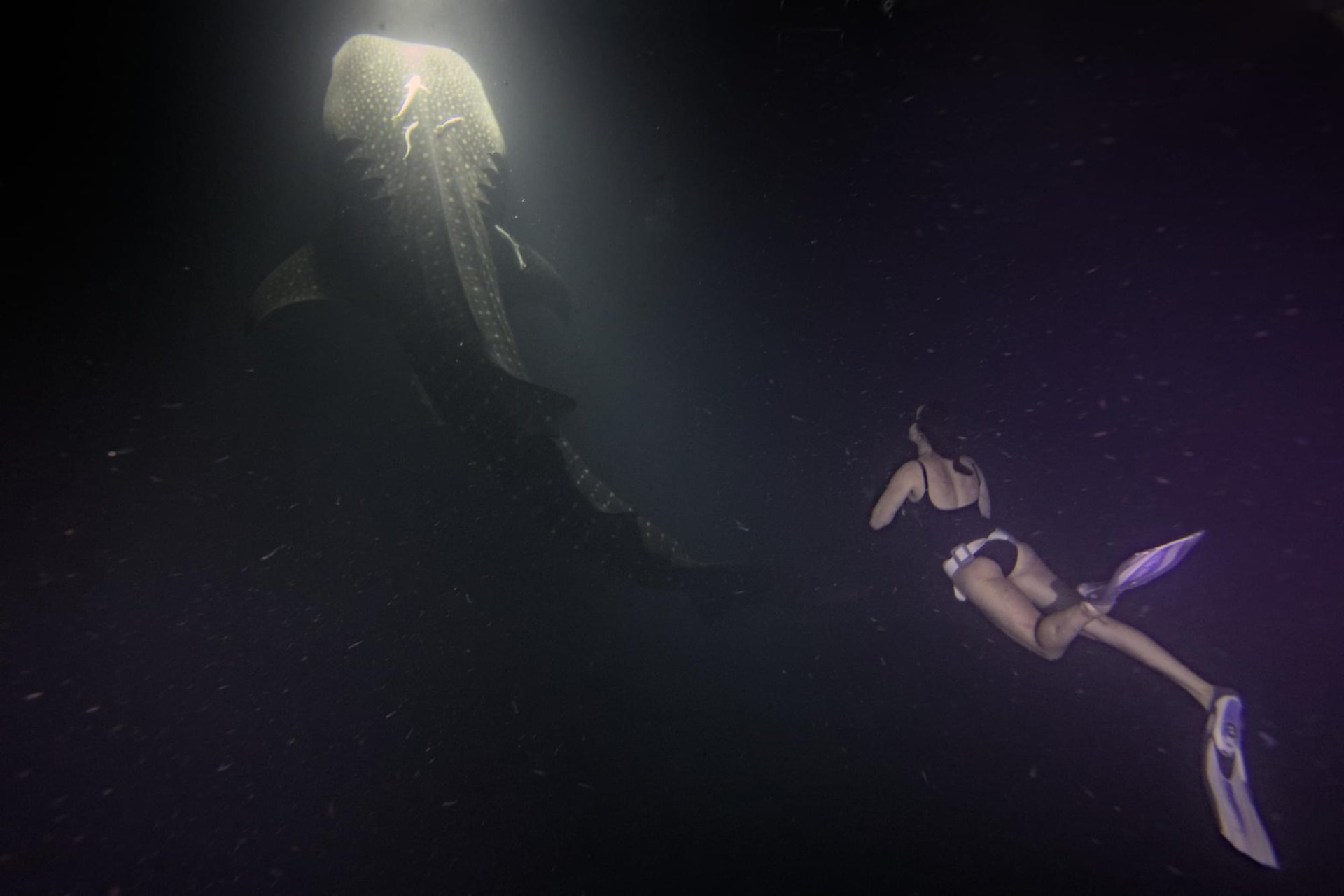
When we were on a boat in Egypt, our photographer friend Václav Krpelík saw a longfin shark moving nearby. My husband immediately took his gear, jumped into the water and Vasek followed him. I figured the guys knew what they were doing, so I took the plunge too. As soon as we swam a short distance from the boat, we realized that the shark wasn't alone. His buddy also came up from the depths and they both started doing laps around us. This was my first encounter with such a big shark and I must admit I was very scared. The boys were calm. Whereupon my husband noticed I was scared so he motioned for me to calmly swim back to the boat. For one thing, it was not good that I was so stressed out, but more importantly, a shark can sense that you are afraid. And that's not good. I've dived with sharks a few more times after this experience - for example, in the Maldives, where they literally have shark safaris. It's an amazing overcoming of self, but otherwise I don't really seek it out. In general, though, it's definitely wise to approach diving in the underwater world with respect, because you're just there to visit.
Is there a dream site you've been wanting to dive?
A couple of years ago my husband was in the Cenotes in Mexico. It's a complex of flooded caves where, among other things, salt water mixes with fresh water. I definitely want to go there one day.
Wishing the doctor many more amazing dives, unforgettable underwater experiences and beautiful photos. May she also achieve the coveted record.