Česky
Česky


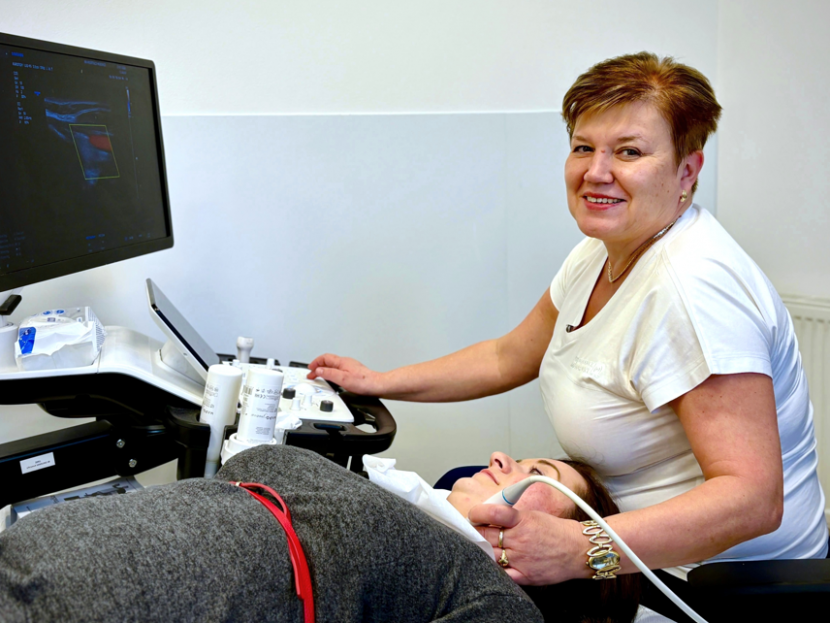
The Hořovice Hospital, which is part of the AKESO healthcare holding, has been classified as a healthcare facility providing highly specialized acute care for stroke patients since the beginning of 2026. Obtaining the status of an Ict Centre is the result of long-term professional development, systematic investments and close cooperation across the entire hospital.
"The Ict Centre is a specialised unit that focuses on rapid diagnosis and comprehensive treatment of patients with acute stroke in order to minimise its consequences," explains Stanislava Adámková, MD, Head of the Neurology Department.
Time is of the essence
Stroke, popularly known as stroke, is one of the most serious acute conditions in medicine. Worldwide, it is the third most common cause of death and the most common cause of disability in adulthood. In the Czech Republic, stroke affects more than 26,000 people each year, with thousands of patients dying from its complications.
"CMP is very challenging in the acute phase in terms of how quickly we start treating the patient. The sooner the patient is diagnosed and treated, the better the chances that the consequences of the stroke will be minimised," emphasises MUDr. Adámková.
It is for this reason that a network of stroke and complex cerebrovascular centres has been established in the Czech Republic to ensure the shortest possible travel distance and immediate access to specialised treatment.
A significant milestone for the hospital and the region
Obtaining the status of an Ict Centre is a confirmation of the high professional level of Hořovice Hospital and its ability to provide continuous, highly coordinated care for patients in acute life-threatening situations.
"We perceive the acquisition of the status of the Ict Centre as a significant milestone in the development not only of the Neurology Department but of the entire Hořovice Hospital. It is the result of long-term work of the entire team and a commitment for the future - to provide patients with top-quality, safe and affordable care in one of the most demanding segments of acute medicine," says the Chief Operating Officer of Hořovice Hospital Mgr. Jiří Pichlík, DiS.
The status of the Ict Centre means an extension of the spectrum of acute neurological care not only for patients from the Beroun district, but also for parts of the Central Bohemia and Pilsen regions.
Long way to the status
The road to obtaining the status of the Ict Centre was not easy. Preparations took many years and involved meeting strict personnel, organisational and technical criteria.
"It's not just about having enough certified neurologists, but also radiologists, internists, intensivists, specialist nurses, orderlies and other specialists who must be available 24/7," says the head of the Neurology Department.
At the same time, the hospital must have modern instrumentation - especially CT brain scans, angiography, magnetic resonance imaging and ultrasound - and continuity of acute and follow-up rehabilitation care.
Team and multidisciplinary care
Stroke is an urgent, life-threatening condition that can result from either cerebral anaemia (ischaemic stroke) or bleeding into the brain (haemorrhagic stroke). Time is a critical factor, particularly in ischaemic strokes.
"In indicated cases, the patient can be treated with systemic thrombolysis, which dissolves the blood clot, or mechanical recanalisation of the closed artery. For this treatment to be effective, it must be started within 4.5 hours of the onset of symptoms," explains MUDr. Adámková.
That is why the Ict Centre places maximum emphasis on rapid diagnosis, in which the treating neurologist has the decisive say. However, an integral part of the care is also the interplay between the ambulance service, the emergency room, the radiologist, nurses and paramedics. The care of the stroke patient is designed as a team and multidisciplinary, with the aim of minimising the effects of the disease and enabling the patient to return to normal life as best as possible.
Continuity of care and rehabilitation
Early and targeted rehabilitation is a part of stroke care. Patients are started as soon as possible after their condition has stabilised, often within 24 hours. For patients with persistent functionally limiting deficits, after stabilisation of the health condition, subsequent intensive complex rehabilitation care is indicated at the beds of the Rehabilitation Hospital Beroun, which is also part of the AKESO holding. This care is intended mainly for patients in a stable neurological and internal condition with impairment of mobility, self-sufficiency and communication.
"Starting early rehabilitation is absolutely crucial for patients after a stroke. At Beroun Rehabilitation Hospital we provide patients with comprehensive care from physiotherapists, occupational therapists, speech therapists and clinical psychologists. Our goal is the patient's early recovery and return to normal life. We also have a number of modern technologies that are a great support in rehabilitation," adds the head of the Rehabilitation Centre of the Beroun Hospital , MUDr. Milena Kolářová.
Other follow-up care is also focused on the treatment of subsequent stroke conditions, including spasticity. This is characterised by increased muscle tension, which causes stiffness, restriction of movement, pain and muscle contractures, and at the same time significantly impairs the patient's nursing care options and ability to self-care.
That is why the Hořovice Hospital has created a specialized Spasticity Centre under the leadership of Jana Pastuchová, MD, which focuses on the diagnosis and treatment of this condition and helps patients to improve their quality of life not only after a stroke.
Don't underestimate the warning signs
The most common symptoms of stroke include sudden paralysis of one half of the body, speech impairment, visual disturbances or sudden loss of sensation. People often underestimate these symptoms, even though time plays a crucial role. "If these problems occur, it is essential to call the emergency medical services immediately on 155. Do not wait for it to pass and do not drive yourself to the hospital," warns MUDr. Adámková.
"We live in a time of high demands on performance and pace of life, but the real value is elsewhere. If you suspect a stroke, do not hesitate to call for help - it is better to call twice unnecessarily than not at all."