Česky
Česky


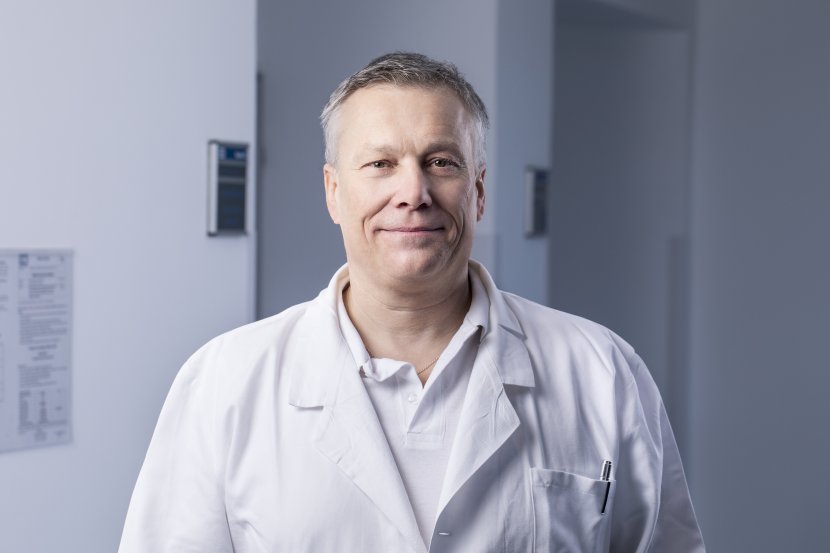
From conservation to emergency medicine
MUDr. Martin Kral's interest in medicine arose by chance. He originally set out to study hygiene. However, after the zero year of his studies, fate took him to the coronary ICU, where he experienced emergency medicine live for the first time. "I realised that the reality of hygiene was far from my imagination and I enjoyed medicine. And the decision was made," he recalls with a smile. After graduating in general medicine, his career path gradually turned towards emergency care and anaesthesiology.
He joined the Beroun hospital in 1993. He gained experience in other workplaces, but remained loyal to Beroun. Over the years, he has also worked at the Beroun hospital as the head doctor of the emergency service and his ability to make quick decisions is still with him today. When the ambulance service was separated from the ARO, the choice was clear. ARO became not only a professional challenge for him, but also a matter of the heart.
Anaesthesia begins long before the procedure
The ARO department at Beroun Rehabilitation Hospital does not have its own inpatient section, but provides complete anaesthetic care within the Day Care Centre. In addition to the administration of anaesthesia itself, the pre-operative preparation of the patient plays a crucial role.
The anaesthesiologist's work begins long before the patient lies on the operating table. "We need to know the pre-operative exam from the internist, complete lab results, medications being taken, any allergies or chronic illnesses. From all this, we draw up an individual plan to ensure the highest possible safety of the procedure. The doctors also assess whether the procedure is suitable for the patient in a day surgery mode," explains Dr. King, MD.
For patients with complicated medical conditions, the opinion of other specialists is needed - for example, a cardiologist, pulmonary doctor or diabetologist. For more complex procedures, such as total endoprostheses, a so-called pre-anesthetic examination is performed. During this examination, the ARO doctor performs a detailed assessment of the medical condition and selects the appropriate type of anaesthesia.
The patient has a choice of
The type of anaesthesia depends on the length of the procedure, its nature and also on the patient's wishes, if his or her medical condition allows it.
"The patient has a choice. Together we look for the best solution that is both safe and comfortable for the patient. For shorter procedures, we do not offer general anaesthesia, but instead perform them under general anaesthesia. For short procedures, we provide anaesthesia only at the patient's express request or for medical reasons. Every anaesthetic carries with it certain limitations, risks and side effects, such as nausea, vomiting or a feeling of daze," says MUDr. Král.
Patient fear and apprehension are part of most surgical procedures. Beroun doctors approach it with understanding. An important part of the preparation is also the conversation with the patient just before he or she goes to the operating room. "The anaesthesiologist has to be a bit of a psychologist as well. Know how to talk to the patient, how to calm him down. If a person feels stressed and under pressure, it can affect the physical reaction of the body and complications will arise. The subconscious mind is very powerful. That ' s why we talk to patients, explain what's ahead and look for ways to make it as easy as possible for them," adds the senior doctor.
Alert day and night
The ARO department does not end its work with the last operation of the day. The department provides what is known as inpatient emergency service, i.e. round-the-clock emergency care for the entire hospital facility, 24 hours a day, 7 days a week. In addition to theatre work, doctors intervene in life-threatening conditions in any ward - from cardiac arrest to pulmonary embolism to severe trauma or epileptic seizures.
"We are there when it comes to minutes. We secure airways, stabilize circulation, conduct resuscitations. We're happy when we're bored, it means no one needs us," he says with a smile.
Working in the anaesthesia and resuscitation department requires not only expertise but also a specific type of personality. Decisions are made in seconds, often without the possibility of delay or long thought. According to MUDr. Kral, doctors often choose their specialty by nature, and the ARO attracts those who can handle tense situations and like a certain adrenaline rush. "For example, internists are thoughtful, reflective, they put everything together like a mosaic. I admire that, but it's not our style. For us, the immediate and correct move is what makes the difference. That kind of nature is essential in our field," he explains. The ability to make quick and calm decisions, he says, translates into everyday life. In crisis situations, he reacts without hesitation, whether they take place inside or outside the hospital.
The ARO doctor is like air: invisible but indispensable
In conclusion, MUDr. King sums up the philosophy of his profession: "The ARO doctor should be like air. Invisible but indispensable. I hope that most people will never see us, yet we are here to protect their health and life. We stand behind the safety of every procedure and are ready to intervene at any time."