Česky
Česky


Faithful simulation of natural gait
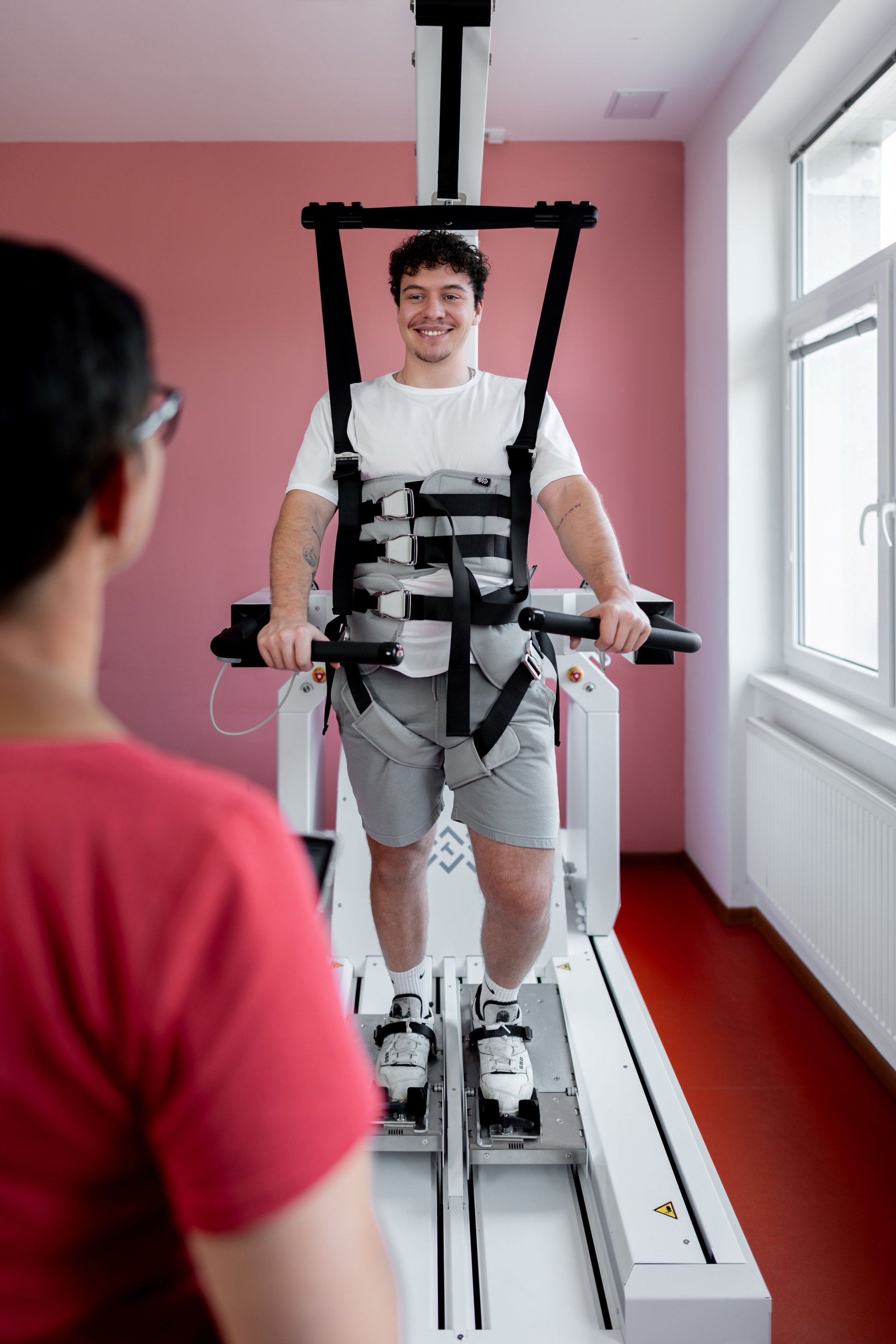
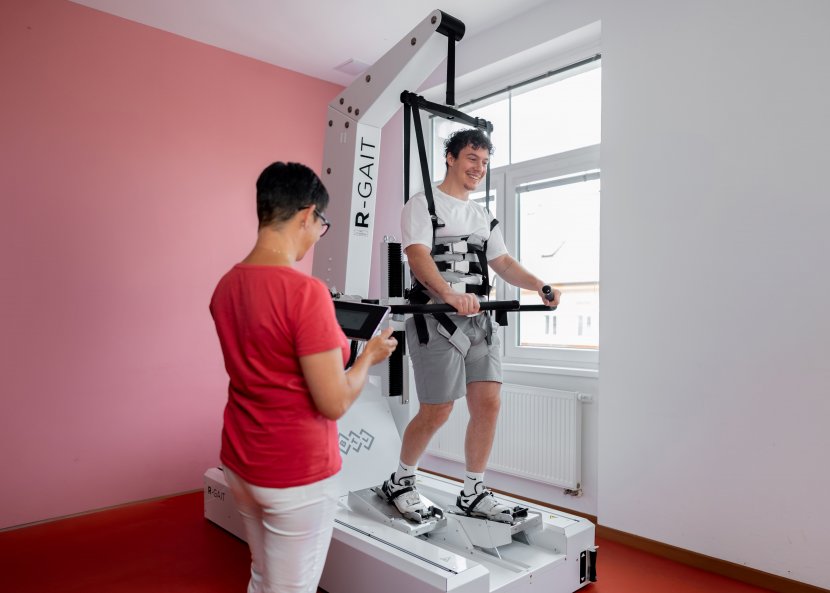
The uniqueness of R-GAIT is that it simulates movement on several levels at once. There are platforms under the feet that mimic their natural rolling, while a system in the pelvic area creates lateral swings and weight transfer exactly as it occurs in normal walking.
Precise adjustment and instant feedback
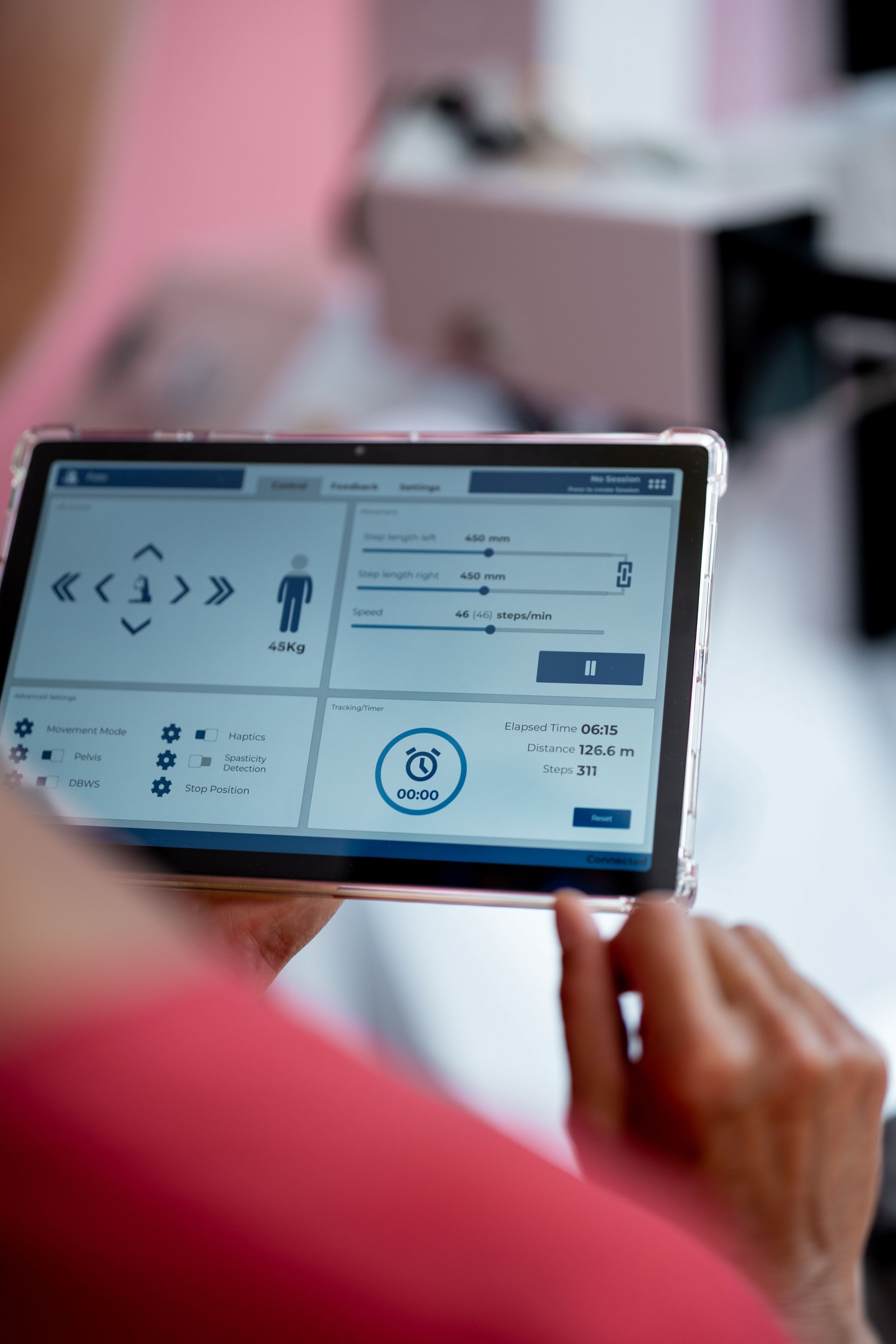
"A big advantage of the device is the ability to make very precise adjustments to the therapy. We can adjust the stride length or walking speed according to the patient's current abilities. The system also includes feedback elements. The device shows us the patient's activity, the load on the foot and the centre of gravity deviation in percentages. Thanks to this, we can continuously evaluate the gait training," explains Mgr. Hana Hančarová.
The safety of the gait simulation is ensured by the spasticity detection function, which prevents possible injury to the patient. The therapy can also include haptic stimulation, where the platforms under the feet have a vibrating function, which provides the patient with an important sensory perception.
For both neurological and orthopaedic diagnoses
Therapy using R-GAIT is suitable for a wide range of patients. This includes conditions following stroke, spinal cord injury, Parkinson's disease, multiple sclerosis, cerebral palsy, conditions following polytrauma or lower limb orthopaedic surgery. "In these patients, we especially observe improvements in stability, gait rhythm and involvement of the weakened limb. Improvement in locomotion, gait is thus a great joy for us, especially in patients with a not very favourable prognosis." says Hana Hančarová.
Benefits for the brain and body
The key to success is so-called neuroplasticity, the brain's ability to create new neural connections. In order for the brain to relearn the correct movement pattern, it needs hundreds and thousands of repetitions. During a 30-minute therapy session, the patient performs 800 to 1,500 quality steps in cooperation with R-GAIT, which is virtually impossible to achieve with conventional manual guidance by a physiotherapist. To complete the therapy, the patient must be able to remain standing (even with support) for at least 10 minutes.
Fears are replaced by enthusiasm
The first encounter with a robot can be awe-inspiring. Some patients are initially fearful of unfamiliar technology. "But once they find that they are safely secured and the device guides their movement very naturally, the fears quickly disappear. Often they ask the very next day when they will go into the robot again," smiles the physiotherapist.
A robot as a partner, not a replacement
Although R-GAIT is a fascinating machine, it is only a tool in the hands of a specialist. "The role of the physiotherapist is irreplaceable. We build a relationship with the patient based on trust, we are his partner and advisor on the way to the goal he has set. The robot helps us with technique and intensity, but it is no substitute for human support and professional judgement," concludes Hančarová.
Since the introduction of this technology at RNB, several dozen patients have already successfully undergone therapy on the R-GAIT and have been helped by this modern method to take the most important steps in their recovery.