Česky
Česky


Patients can find all of these methods of dealing with varicose veins at the Rehabilitation Hospital Beroun, where surgical procedures are performed as outpatient procedures within the framework of day surgery, after which patients leave the operating theatre straight home. In the case of independent sclerotherapy, it is an outpatient procedure offered in our venous surgery outpatient clinics.
Laser ablation as the method of first choice
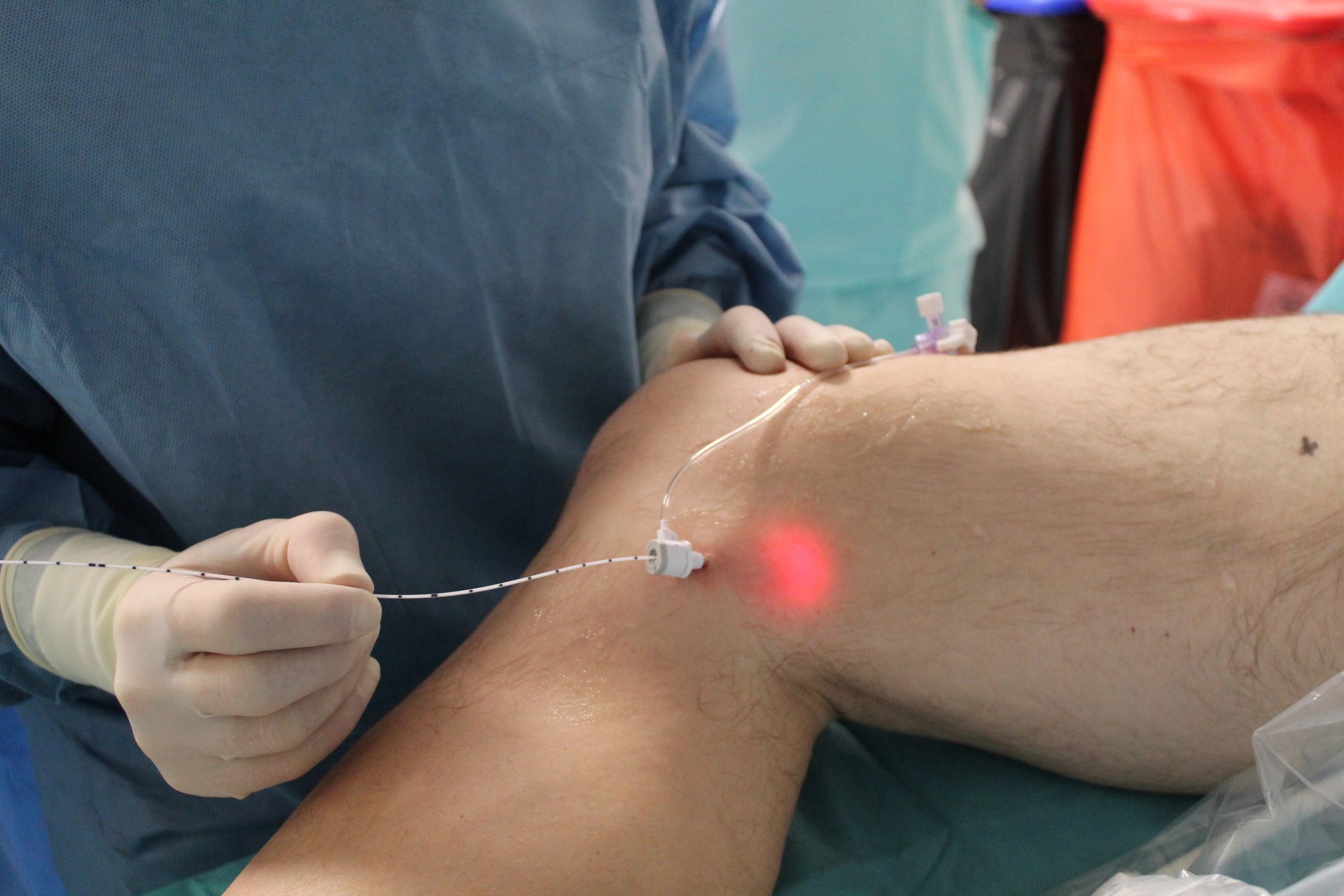
The mainstay of modern surgical treatment of varicose veins is laser ablation, currently the number one method recommended by the European Society for Vascular Surgery. At the Beroun Rehabilitation Hospital, up to 80% of patients are treated with this minimally invasive method.
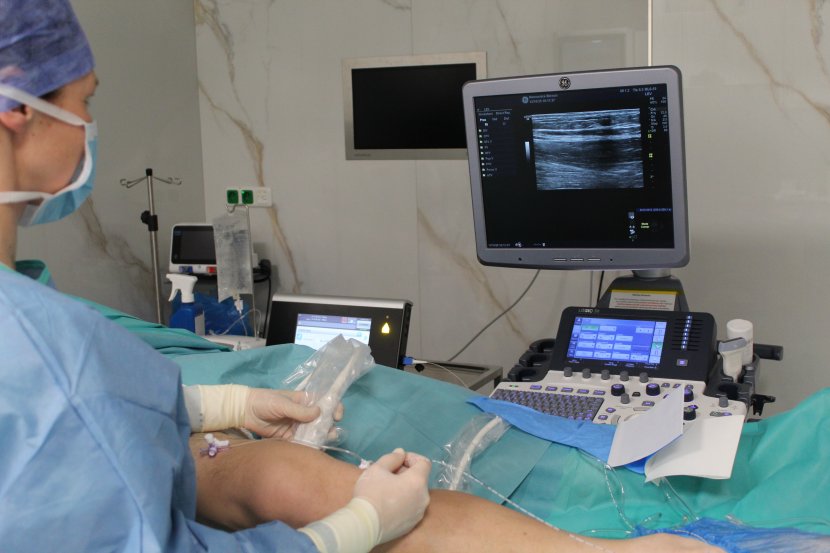
"The procedure is carried out under local anaesthesia and is controlled by ultrasound at all times. From a tiny puncture, we use a laser fibre to reach the beginning of the affected vein, anaesthetize its surroundings and gradually close the vein from the inside while gradually pulling the fibre out by applying high temperature. Thanks to ultrasound, we know exactly where we are moving and we close only the affected sections, while leaving the healthy parts of the veins," says Jana Valešová, M.D., a specialist in vascular surgery at the Rehabilitation Hospital Beroun.
Miniphlebectomy: treatment of visible tortuous veins
Another minimally invasive procedure is miniflebectomy, which is used either alone or in combination with laser ablation.
"We use the laser when the main superficial vein trunks are affected. The laser cannot be used on their branches, which appear as tortuous veins visible under the skin. We then treat these veins with a mini-phlebectomy," explains Jana Valešová. This method is also performed under local anaesthesia, whereby the affected veins are gently removed from the tiny punctures using special hooks. The wounds are very small, healing is fast and the cosmetic effect is significantly better than with conventional surgery.
Fast recovery and return to normal life
A major advantage of modern surgical methods is the shorter recovery time. "Recovery after minimally invasive procedures usually takes around one week. Patients return to normal daily activities and sports very quickly. On the day of surgery, we recommend a normal routine of short walks and, most importantly, sufficient drinking, which is important as a prevention of thrombosis," says the doctor.
State-of-the-art foam sclerotherapy
Another gentle treatment method is sclerotisation, which is performed alone or as an adjunct after previous minimally invasive surgeries, depending on the findings. It involves the injection of a special substance in the form of a solution or a more effective and gentle foam. It is mainly used for smaller veins and whiskers (very thin veins), but it is definitely not always an aesthetic issue. There are cases where it can also be used to prevent or treat a tibial ulcer.
According to Dr. Valešová, foam sclerotherapy is currently the most widely used. This significantly reduces side effects, such as hyperpigmentation (darkening of the skin over the treated vein), redness or increased soreness. Another advantage is that it is often not even necessary to wear compression stockings after treatment of very small veins."
Varicose veins are a chronic problem
The treatment of varicose veins is always individual and the long-term nature of the disease must be taken into account.
"No method is a definitive cure. Varicose veins are a manifestation of chronic venous insufficiency - we remove the currently affected veins, but it cannot be ruled out that new changes will appear in the future, especially if there is a genetic predisposition," points out Dr. Valesova.
Indication clinic - the initial step to treatment
Patients with suspected varicose veins can visit the specialised venous surgery outpatient clinic at AKESO POLIKLINICE in Prague's Nové Butovice or the outpatient clinic at the Rehabilitation Hospital Beroun. The outpatient clinics are open to all patients with varicose veins, no referral from a general practitioner or other specialist is required. The basis of the initial examination is an ultrasound, which allows to precisely determine the extent of vein involvement and to plan the next course of action accordingly - either conservative treatment or one of the mentioned minimally invasive solutions.
How to make an appointment?
You can make an appointment for venous surgery at the AKESO POLICLINICE by calling 233 555 000.
To make an appointment at the venous surgery clinic at the Rehabilitation Hospital Beroun, please call 311 745 000.
You do not need an application form or a referral.