Česky
Česky


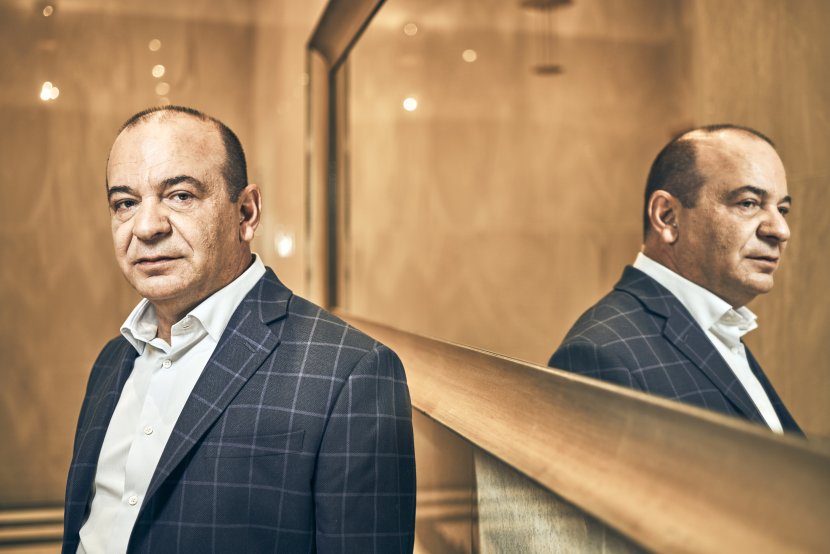
Do you go to the doctors often?
I'm very afraid of doctors, so I try not to be sick. I haven't needed our services for the last few years except for the dentist and preventive checkups. So far, I seem to be in decent shape.
Your company's headquarters are in the western part of Prague, you also opened a new diagnostic and outpatient center near there in Nové Butovice in the spring, and your hospitals are mostly west of Prague as well. Is that a coincidence?
We try to make our activities in Prague geographically consistent. We have now also bought a fairly large building in this area where we will gradually build a new polyclinic. Although polyclinic is probably not the right name to describe what is to be built here. We want to show that even outpatient care can be conceived in a different way than is usual here today. Of course, this building will also house conventional surgeries, but we will put emphasis on digital interconnection of individual surgeries, minimising the administrative burden on doctors and introducing a number of new technologies, including telemedicine. To this end, we are also developing new software. We have therefore created a new large team of capable people to deal with digitalisation. The new polyclinic will be paperless, and our polyclinic in Nové Butovice is already working in a similar way.
What does it mean - a paperless clinic?
One of the big problems in the healthcare sector is that many of the papers with information are carried by the patient, who becomes a messenger between different facilities. Today's technology allows documents to be passed around in a completely different way than having someone running back and forth to see if a paper is missing.
There is a huge interest in medical school. In Beroun, it has increased about fivefold.
But what if a person comes to your clinic for a specialised examination and needs to give the results to their district doctor? In general, the digital connection and transfer of information in the Czech health care system is not working very well yet.
There are big efforts to change this. It still has some weaknesses and there will always be weaknesses. But let us not forget that one of the priorities of the European Union is computerisation and data security. Quite a lot of money is going into this.
A psychiatric clinic, the Centre for Mental Rehabilitation, is being built on the premises of your hospital in Beroun. When you started the construction work, you said that you now want to focus on the soul as well as the body and that you want to look at health in a holistic way. Does this mean that you now want to move more in the direction of holistic medicine?
Many years ago, I considered a holistic medicine clinic. Then we started looking more at trends in Europe and said we should rather practice holistic medicine across disciplines. All facilities should look at the whole person. We provide medical services in about 80 percent of the disciplines that focus on the body, but we have a huge deficit in mental health care. In the Czech Republic, money has not been invested in this sector for a long time. The hospitals are not in a very good state. Psychiatric patients deserve a better environment. We should not be ashamed of people with mental health problems and marginalise them. Society pretends they do not exist, even though there are more than 30 per cent of us in the country who suffer from some kind of psychological problem. And I am afraid that this is not the final number.
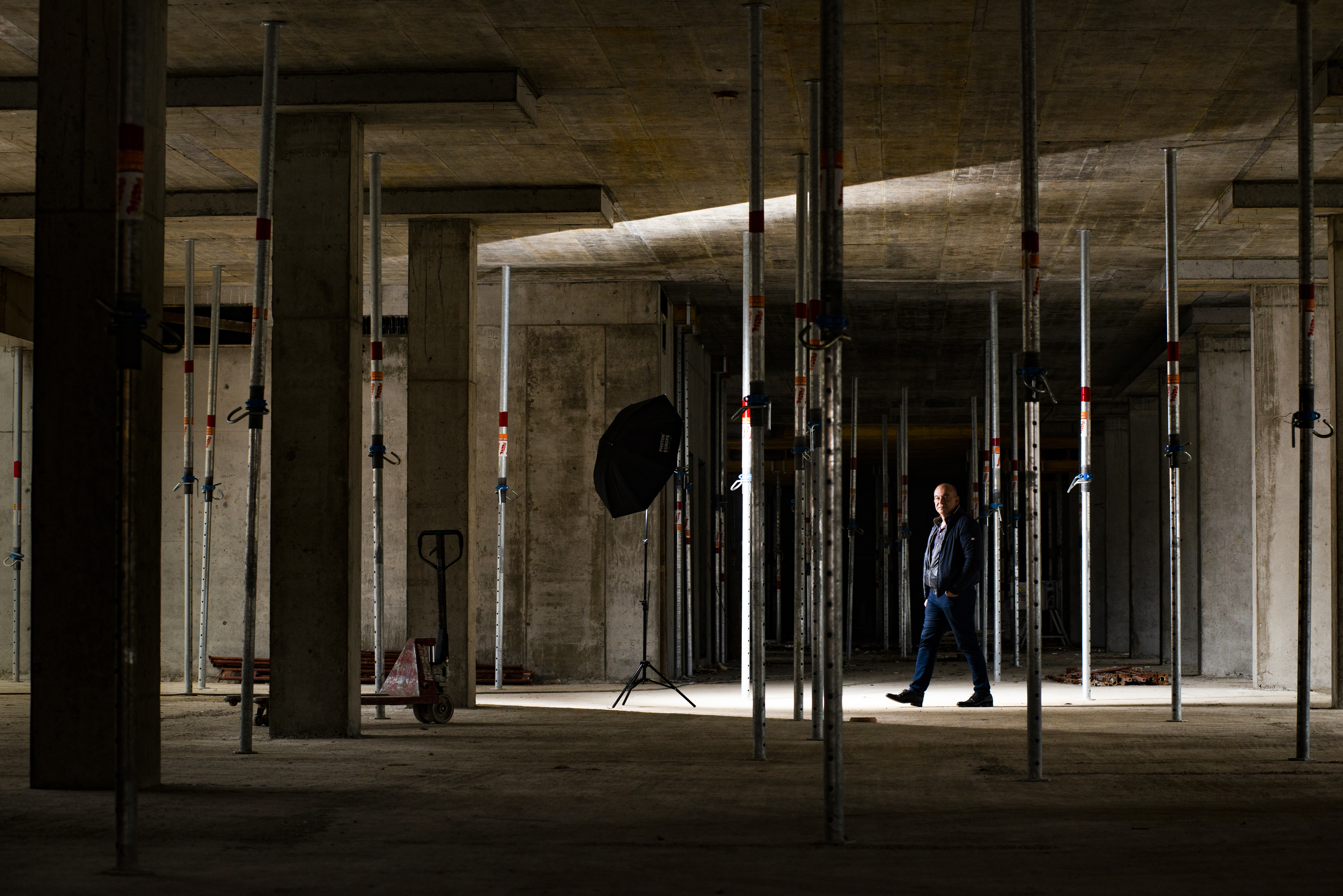
You yourself have experience of being in a psychiatric hospital in Bohnice. Is the construction of your Mental Rehabilitation Centre related to the fact that you were dissatisfied with the conditions there?
Such projects should not be done on the basis of subjective experience alone. Of course, I am more sensitive to this issue, but it was not the main impetus for building our psychiatric center, nor am I building it to treat myself there. But it is true that my personal experiences have contributed to the fact that we do things differently.
May I ask what you were treated for?
I suffered from phobias. The mental pressure was probably too much for me and my head couldn't take it.
In the coronavirus pandemic, most people were locked in their homes and more people are suffering from mental health problems now because of that. Is it a good thing that this subject is now being talked about more?
Yes, it is. The coronavirus has had another positive benefit - society has realised that it needs a good healthcare system. It also looks at health care workers differently now. In addition, there is a huge interest in attending medical schools. In Beroun, about five times more than before the pandemic.
In the Czech Republic, psychological problems are taboo, whereas in the USA, for example, everyone has their own psychologist. Why is that?
It's a question of culture. In America, social ties have been broken and the role of the family is declining. Therefore, they tend to solve psychological problems with professionals, whereas in other societies people solve them through family, friends or acquaintances. In the Czech Republic, people are still ashamed to talk about psychological problems and hide them. There is a lack of awareness in this area, which is why we want to help here, for example through online counselling and other tools.
More is being built on the Beroun hospital grounds. What is it?
We are completing a kindergarten for 60 children with a large garden. It will be for the children of our employees only. We have also completed the construction of new operating theatres, new patient rooms and a morgue. There will also be dignified rooms for the farewell of the dead. We will also expand the centre for arthroscopic procedures (endoscopic method used mainly for joint diseases and injuries - ed.), which is currently the largest in the country. We perform four and a half thousand operations here annually. We are also planning to expand our offer to include hand or foot surgeries and, in the future, also one-day spinal microsurgery.
I do not agree with the attitude of 'you are poor, so you die, you are rich, so we try to save you'. We do one medicine, the same for everyone.
Another major construction project is underway at your hospital in Hořovice, which is about to double in size. What led you to such a big expansion?
In Hořovice, we have a big overflow of patients. We want to invest billions of crowns here. We had already worked on the Hořovice expansion project before the coronavirus, and when we almost had the building permit, we reacted to the new situation because we realised that the world and the Czech Republic were not prepared for this pandemic. That's why we redesigned the project into a hospital that will be ready. I don't want to bring bad news, but if I look at history, pandemics like this one occur cyclically. Our hospital will function normally in a "peacetime" period, but we will be able to respond operationally and we can turn it into an infectious pandemic hospital very quickly.
Do you have any agreement with the state to allow them to use your hospital during a possible pandemic?
We are working on such an agreement. We are preparing a memorandum of cooperation with the leadership of the Central Bohemia Region and also the Pilsen Region, so that we have a common crisis plan and set out the details of how the hospital could operate in the context of the whole region if a pandemic were to occur again.
Former Health Minister Roman Prymula also helped you with the pandemic hospital project. According to Deník N, he has already left the project. What did your cooperation look like?
Sometimes a person has an excellent idea, but he has to get feedback if he is not the only one who thinks it is excellent. That's why we invited several experts to look at the project and say whether it makes sense and fulfils the scientific assumptions. One of them was Professor Prymula. We are still consulting him on the pandemic hospital project, because he is one of the greatest experts this republic has.
He now heads the hospital of your competitor Agel in Ricany.
I don't feel that Mr Chrenek is a competitor. We provide services in other localities and I cannot say that there is any fierce competition in the health sector.
When will your current construction projects be completed?
We are opening the nursery in Beroun within the next month, and the new operating theatres and day surgery building as well. We will open the mental rehabilitation centre in autumn 2023 and have approximately 30 other projects in the pipeline. For example, the new central intake should be ready next year. We will also expand the administration building in a similar timeframe. And to make matters worse, we are expanding our field of activity - we will be building new data centres in Hořovice and Beroun. We hope to complete and put them into operation in a year and a half at most.
Over the next four years, the investment will amount to almost six billion crowns, of which four billion will be financed by loans. Is the need for business adrenaline driving you to take out such loans and further expand the holding?
No, we are trying to create a functional entity, a demonstration of how healthcare could work, to make it safe, efficient, accessible and pleasant for patients. For others to see, we need to make that demonstration a reality, and that requires some investment.
When you have completed all this, will the functional whole be ready?
I cannot say today. But we don't have the imperialistic inclinations, nor the power, nor the expertise to expand this unit to more and more places.
In the pandemic, normal operations stopped and everything was focused on fighting the covid. How did that affect you?
We only stopped operations when the order came down. Otherwise, we operated normally, which is why our "production" dropped only 10 percent last year. Society didn't realise too much that although we were preventing people from dying from coronavirus, people were dying from other diseases.
You say your performance was down by a tenth last year, but in your 2019 annual report you say you had consolidated revenues of 3.3 billion kronor in 2019, and on the website you present a turnover for 2020 of four billion, which would be a year-on-year increase of about a fifth.
One thing is the production in the hospitals, but we have grown in the meantime because we have added more companies to the holding, so our consolidated results last year are for a larger volume of companies. This year, we will have growth again because we have bought more companies and added more operations, so I expect that for 2021 our revenues will be more than 4.5 billion crowns.
What companies have you bought?
For example, we have added a distribution company, Mediservis, which we entered with equity. We also added other outpatient healthcare providers to our portfolio.
You came to the Czech Republic in 1984 as part of a program to support poor students. You managed to graduate from the University of Economics and became an entrepreneur. Is your life unfolding as you planned it?
No, it hasn't. I wanted to plan, but I never did. My whole life has been a series of coincidences that I have accepted. If something seemed good, I did it. It's an absolute coincidence that I entered the health care industry.
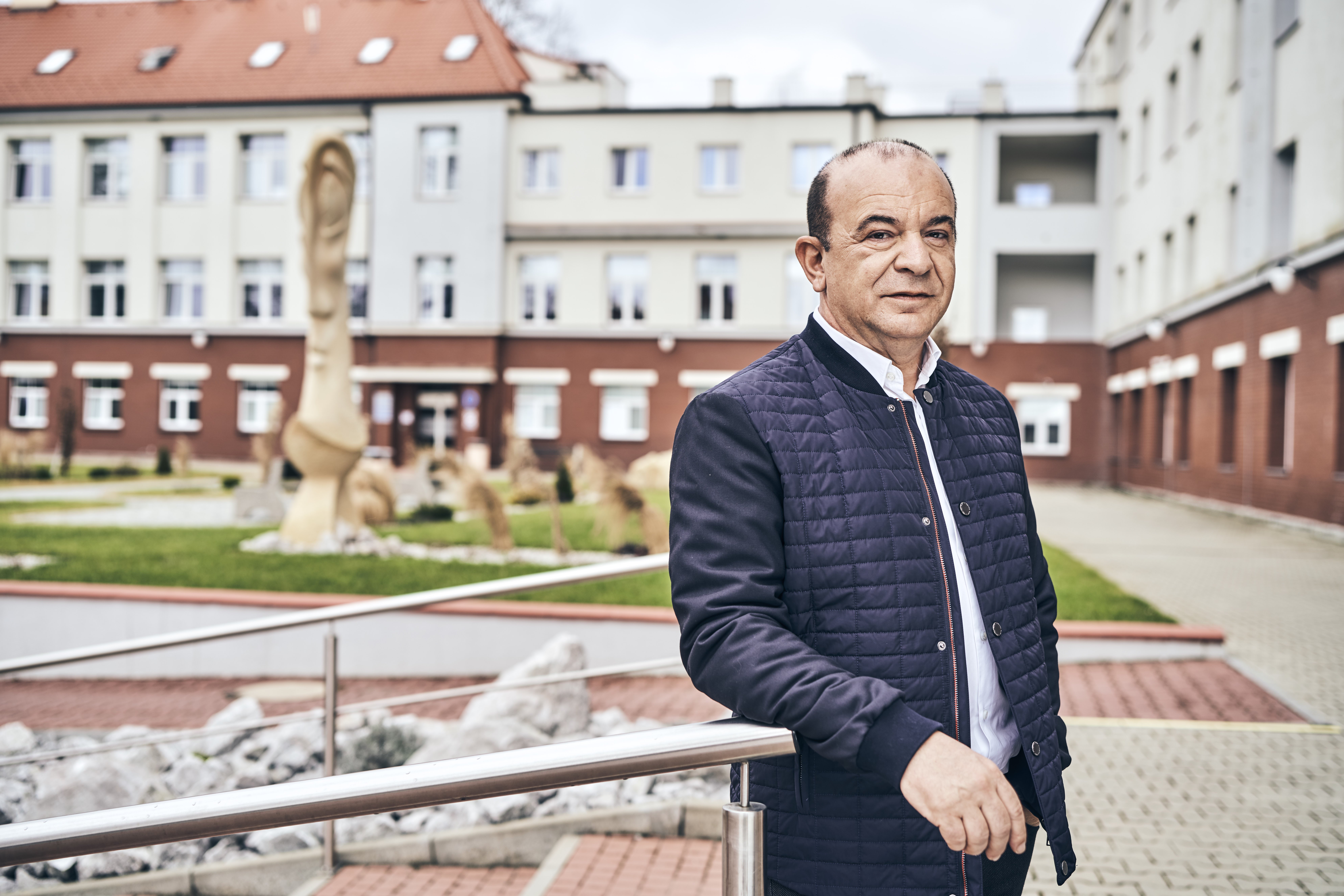
In 1989 you had to go to Greece to join the army and then you came back to the Czech Republic and worked for a food and cosmetics company. You didn't want to stay there?
We were even named best distribution company of the year. When I did this job, I did it properly, but it didn't fulfill me. I immediately jumped at the opportunity to change my focus. A friend of mine was selling a stake in a clinic in Prague 4 around 1998, and I bought it and saw a deeper purpose in providing healthcare services.
The new clinic in Beroun will be paperless, and our clinic in Nové Butovice is already operating in the same way.
Was it a handicap for you not to have a background in healthcare?
Of course. I knew absolutely nothing about its functioning. But I have the opinion that all things have basically the same logic. Healthcare is also about providing services, and they have to be high quality, safe, accessible and efficient. You just have to respect the specifics of that service. I don't do anything myself. My colleagues are great experts on the subject and we build what we build based on their recommendations.
The main moment in the development of your company was the privatisation of the hospitals in Hořovice and Beroun in 2007. How did you finance it then?
My ambitions were bigger. We submitted privatisation projects for almost all the hospitals that were up for grabs at the time, and in the end we got two of them. I had some of my own money, but that was the minimum. I got loans from Komerční banka.
Have you managed to pay them back?
I had a plan that I would be credit-free at 55. I almost achieved it, but now I can't do without it, so I have another milestone - I'll be credit-free when I'm 65. I hope I can keep my word this time so the kids don't have to pay for me.
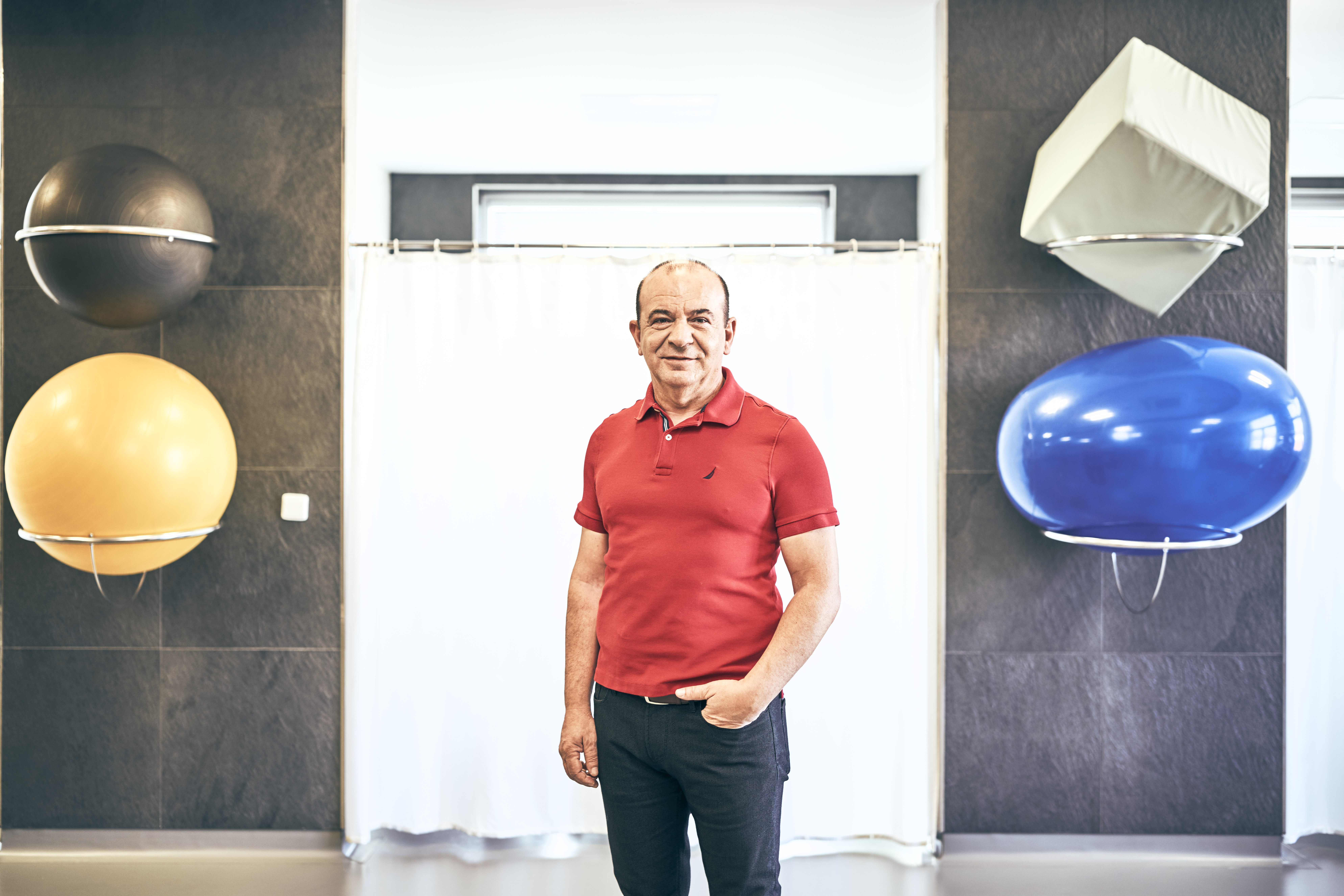
"It's undignified that someone has to call friends, beg or bring gifts when they need medical care or a procedure," Sotirios says.
For years, there has been a debate in the Czech Republic about whether people should be able to pay extra for better medical care, or whether there should be total egalitarianism. What do you think?
I don't mind at all that someone has a Mercedes and someone has a Fabia, but before God and in terms of health we should be equal. We provide services free of charge under public health insurance, but some people want better food, some want a bigger room and can pay extra. But I do not agree with the "you are poor so you die, you are rich so we try to save you" attitude. That's why even where we offer some paid services, we say we can only do one medicine, the same for everyone.
But in the Czech Republic, medicine is "two-speed". People often seek quality doctors through friends and unofficially pay for it.
This should gradually change. It is undignified that someone has to call friends, beg or bring gifts when they need medical care or a procedure.
People don't get to your hospitals through acquaintances?
People aren't perfect, so it can happen. But we're trying to eliminate that attitude.
They say that the Czech health care system is financially unsustainable, there is no money in it. Should there be a greater participation of patients in its financing?
The easiest thing to do is to pump more and more money into the system and, if that is not possible, to increase the income from private sources. Any moron can do that. But how to set up the system so that the money is used efficiently? I say there is enough money in the system for health care and it could be sustainable. Our employees have five to sixteen percent better payment conditions than in other facilities, on the other hand their efficiency and commitment is much higher. People need to know that there are good intentions behind what they do. I still believe that people are better than how they show up.
Even your deployment is still high. What's in it for you? Are you relaxing in any way?
All my life, I've had this idea of the world being perfect. I think everything has to be as perfect as possible. So I've built a perfect prison around myself and I'm a willing prisoner. I'm always wanting to escape, but I always come back. I think it will stay that way. Almost all the profits I have made over the years up to now have been invested back, especially in hospitals. Apart from three flats and a car, I don't have very extensive assets.
Source.