Česky
Česky


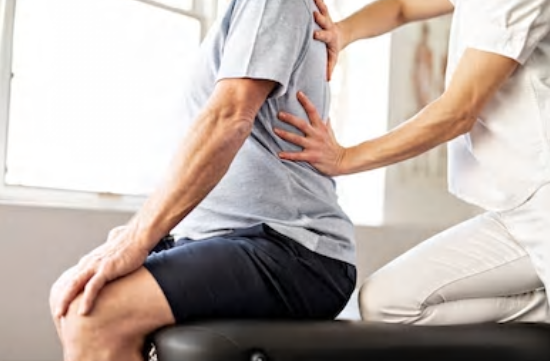
Rehabilitation is a relatively broad field, which is related to many other areas and therefore the various specialists in the field are complementary. And, as the doctor explains, the number of people complaining of musculoskeletal pain has definitely increased recently.
One often hears that the modern sedentary lifestyle is taking its toll in the form of a painful back. Can you confirm this from your experience? Is the number of patients experiencing such problems increasing or has it stayed roughly the same in recent years?
I can confirm from my experience that for some patients, sedentary lifestyle is definitely a contributing factor to back pain. In most cases, it is not the only reason, as several factors often combine in the development of back pain. However, a sedentary lifestyle contributes to other and more serious health problems. Lack of exercise is found, for example, in patients with hypertension or diabetes. Otherwise, back pain is by no means decreasing, but rather the opposite trend is being observed. Despite the fact that the public is already quite well informed about the necessity of a proper lifestyle, appropriate exercise regime and the importance of preventive exercise, we have opened a Nutrition Counselling Centre in our hospital. The Nutrition Clinic provides expert consultation in the field of therapeutic nutrition, including evaluation of the patient's dietary habits. The counselling is for all those who want to do something about themselves. It aims to improve, maintain or promote the client's health while providing its clients with an individual, professional and above all human approach.
What do people most often come to you with, what kind of pain do they complain about?
Within our field we often deal with patients especially after orthopaedic surgeries, after injuries to the musculoskeletal system but also patients with neurological disorders. However, most of our patients present with musculoskeletal pain, especially spinal pain of various kinds. Patients with spinal pain represent a very diverse group - we deal with both acute and chronic spinal pain, some patients have pain as a result of "banal" spinal blockage without any spinal joint or disc involvement. Some patients have pain as a result of prolapsed intervertebral discs, which sometimes compress the nerve root, resulting in so-called sciatica (technically radicular syndrome). We also have a lot of patients with pain in the large joints - that is, shoulders, knees and hips.
People often think that they can just get a massage once in a while and the problem will go away. But in your experience, are they willing to change their lifestyle, go to the gym...?
It's true that sometimes a patient comes in with a certain idea of the treatments they should have. There are indeed those who think that a massage will solve everything and that's why they demand it. Massage sometimes makes sense and it is a good complementary method for some patients to relieve muscle tension and improve blood circulation, but we can hardly cure someone with massage alone. Moreover, for some patients massage is not appropriate and may even make the patient worse. I admit that I am not entirely thrilled when the first thing a patient tells me is that they need a massage.
Why aren't you excited about that?
It shows that the patient prefers a passive approach to dealing with their pain, but it also shows that they have a distorted view of the origin of their difficulties. I find it much easier to work with, and I am very pleased when a patient wants to be active in therapy and comes in asking us to teach them how to exercise properly. I literally "cheer" that, because it is the right approach. Otherwise, changing lifestyle is not easy, usually it can only be done to a certain extent. The hardest thing is to be consistent and persevere, for example when it comes to regular exercise. And only some disciplined individuals can do that.
What are the "common" preventive solutions that a person could incorporate into his or her life to avoid back and general musculoskeletal problems?
There is no simple answer to this. In fact, there are no general common preventive measures that are applicable to everyone. This has to be addressed individually with the individual patient. It depends on the patient's movement patterns, the working conditions, for example, whether he has a suitable work chair, whether he plays any sports and which ones, whether he exercises and how he does it. The individual mobility of the spine is taken into account. What is appropriate for a patient with an inherently less mobile spine is not appropriate for a patient with excessive spinal mobility. In general, the spine should not be overloaded, but this means something different for everyone. For one patient it means not sitting at a PC for 12 hours, for another patient it means not working for 2 hours with your hands above your head, for another patient it means not doing 60 sit-ups in the morning. It's really highly individual. Very generally, it can be said that the spine is not well affected by jolts - jumps, impacts from height - lifting heavy loads in forced positions, prolonged work in a prone position, long car journeys, or cold.
Movement is undoubtedly an important part of life. But do people come to you from the other end of the spectrum - when do they exercise so intensely that it brings them other problems? What are some of the things they're dealing with?
Yes, these patients come to us and there are not a few of them. It's quite common for a patient's difficulties to start following some sporting activity that is not suitable for them because it overloads the musculoskeletal system. Sometimes it is not immediately obvious. In the last year I have had two patients, middle-aged women, complaining of low back pain. Neither of them had suffered from spinal pain before. At first it wasn't clear what was behind it, but later we realized that there was some connection between the development of the pain and the new sporting activity they had taken up. In one case it was yoga, in the other case it was strengthening rhythmic exercises in forced postures. I examined more golfers, a lot of volleyball players and tennis players. In some cases, the difficulties were due to a single overload, but with recurrences of difficulties, sometimes the only sensible way is to quit the sport. This must be particularly closely monitored in children. It is important to ensure that the child plays a sport appropriate to his or her physical disposition, otherwise permanent damage to the child's organism may result.
What was your path to the field?
I started as a neurologist, I have my first and second certification in neurology. My first teacher, whom I remember fondly, was Professor Martin Bojar. But I was always interested in musculoskeletal issues, so I was increasingly attracted to the field of rehabilitation, which deals a lot with the musculoskeletal system. My third certificate is in the field of rehabilitation. The development of rehabilitation in the Czech Republic was mainly contributed to by two famous personalities of world renown: Professor Karel Lewit and Professor Vladimír Janda. These personalities also influenced me a lot and I consider them my teachers. Professor Pavel Kolář, with whom I had the opportunity to cooperate and who is one of the leading personalities of contemporary Czech and European rehabilitation, was also important for my professional development.
Does the field constantly have new trends to follow and learn about, or has everything already been discovered?
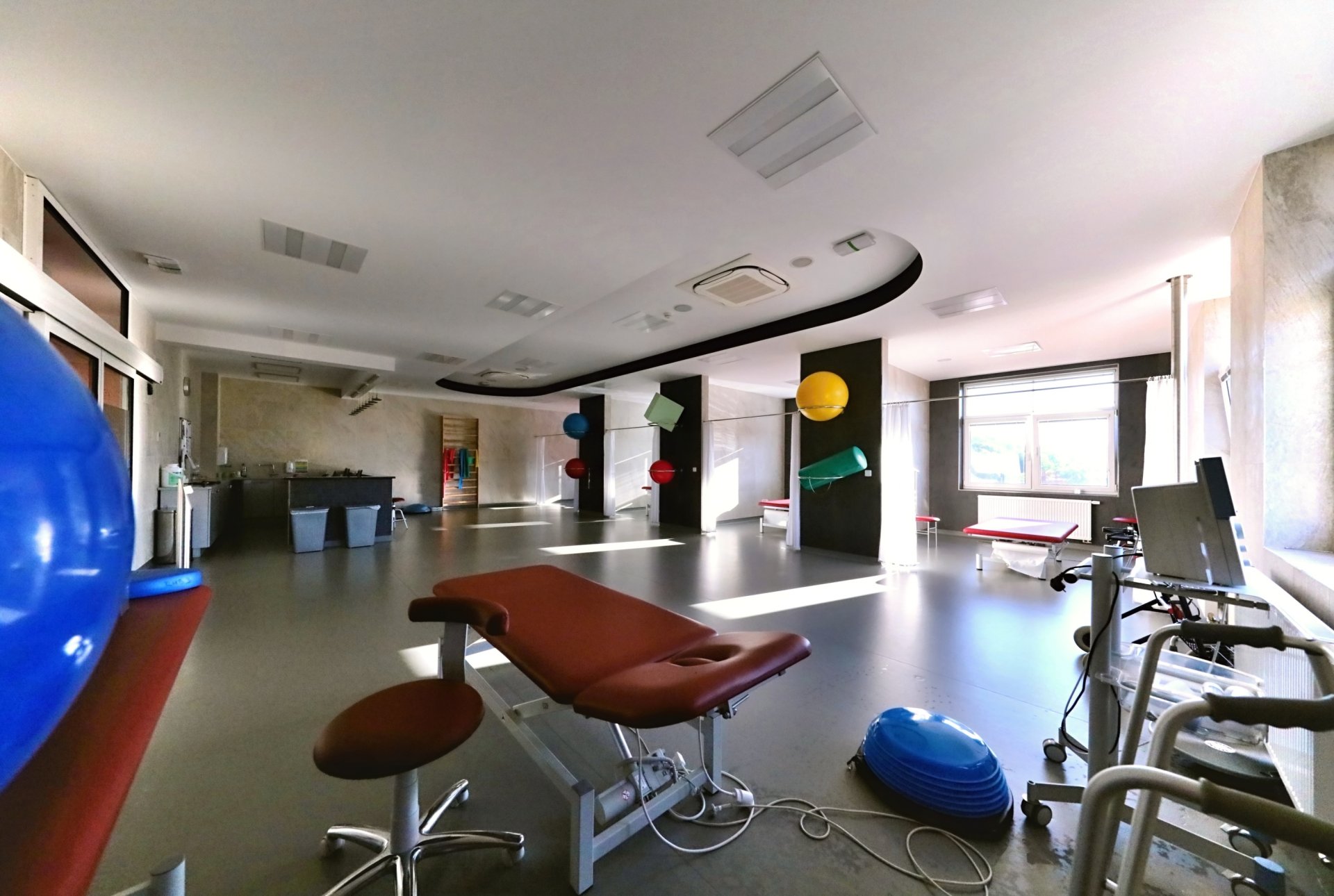
Everything has certainly not been discovered. The innovations are mainly in treatment procedures and techniques, but the main thing is that new technologies are entering the field. The development of robotic devices, which have started to be used in our field in recent years, can be considered a major advance. These are devices that, for example, allow a patient with immobile limbs to practise walking, or, in the case of a patient with an immobile hand, a so-called 'robotic glove' allows movement with the fingers using visual feedback. We also have this device in our Rehabilitation Centre.
What is the most interesting thing about this field for you?
What I like most about rehabilitation is that it takes a holistic view of the patient's difficulties. Our field has no sharp boundaries, it is intertwined with orthopedics, traumatology, neurology. It is necessary to have sufficient knowledge of these fields as well. In many patients, neurological disorders, joint disorders or post-traumatic movement limitations all contribute to the difficulties and all of these need to be addressed in the patient. Such a complex patient is always handled by a whole team of staff, including a rehabilitation doctor, a physiotherapist, an occupational therapist, possibly a speech therapist and a prosthetist, each contributing their own contribution.
Author.