Česky
Česky


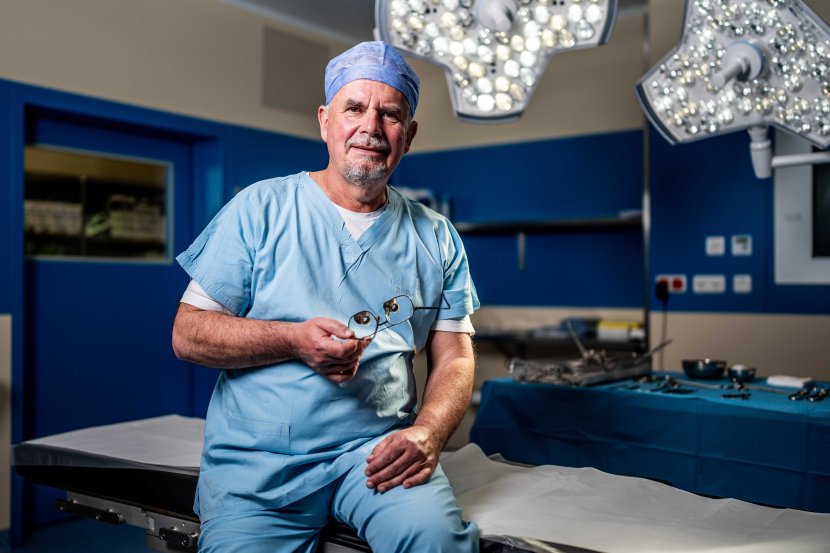
What led you to plastic surgery?
After graduating from the 1st Faculty of Medicine in Prague, I worked in the surgical department of the then University Hospital Pod Petřínem in Prague, where I also obtained a specialisation in general surgery. However, I did not find it creative enough in my further development, and I was also fortunate enough to meet Associate Professor Radek Vrabec at that time. He was an excellent plastic surgeon who was initially immensely patient with me.
Shortly after the revolution, you spent two years in Australia. How did you manage to get there?
The 1990s were an interesting open time when Václav Havel was known everywhere, so it was a bit easier for me as a Czechoslovakian. Which allowed me to take the opportunity to travel, and in my case, all the way to South Australia. But they didn't know what to expect from a guy from Eastern Europe. So I only got a three-month internship at the Repatriation General Hospital in Adelaide to start with. It wasn't easy to succeed, but I managed to prove myself, and eventually got a job for a year. And being a workaholic since my youth, I still served at the local university hospital, Flinders Medical Centre. Then the second year I got a job there.
How did you handle English at the medical level?
I needed to talk and, most importantly, understand, which was quite a challenge in a typical "Australian" environment full of abbreviations and slang (laughs). But what I really liked about the Australians was their easy-going mentality, so everyone was very tolerant of me in the beginning.
Then came the return to Europe, but not yet to the Czech Republic, right?
After two years in South Australia, I answered an advertisement in the British Medical Journal for a position as a plastic surgeon at the St. Andrews Centre for Plastic Surgery, a prestigious clinic in the English county of Essex. I didn't expect to hear from anyone at all. Then a week later, our secretary came in and said they'd asked about me. Whereupon they invited me for an interview. To this day, I think that I succeeded in the audition over about a dozen other candidates because I found a kind of inner peace within myself, because at that time I didn't really care about anything - I still had a secure job in Adelaide and also in Prague.
You've had thousands of surgeries. With so many, is it easy to remember the most difficult one?
There have been many difficult procedures and it is difficult to single out any particular one. However, the most difficult ones were often performed as part of interdisciplinary teamwork with, for example, neurosurgeons, oncological surgeons or facial surgery specialists. I certainly enjoyed such operations the most.
You say that plastic surgery is both a philosophy and an art. Can you elaborate a little?
Plastic surgery captivated me mainly because it is a creative field. Each case is always individual and there is no room for a routine procedure. In aesthetic surgery, the surgical part takes a back seat, because psychosomatic medicine plays a major role. In other words, you're still helping the patient in some way, even if it's not an urgent health emergency. I always wonder if the procedure needs to be done. And if it's a so-called proxy problem - for example, a woman having her breasts done because she thinks her husband will come back to her - I don't operate. In that case, I always advise waiting to do the procedure and sorting out priorities first. That makes my job all the more complicated, and that's why I've never operated against my will just because the patient wanted me to. I also have to be satisfied with the result, both aesthetically - I prefer natural beauty - and for the good feeling that as a doctor I have helped someone improve their quality of life. Therefore, every consultation with me is non-binding on both sides.
What can people come to you with?
I perform a full range of aesthetic procedures. Some of my favorites include facial rejuvenation surgery - all types of facelifts for women. I also do procedures that are rewarding from the patient's point of view, whose indication is usually not only aesthetic but also medical. It is, for example, the surgery of drooping eyelids (blepharoplasty), when a person does not look more tired than he is, and he also immediately looks at the world better. Another example is the reduction of bulky breasts, where the relief from back pain and the joy of being able to move is always enormous.
And what if, on the other hand, a patient comes to you wanting breast augmentation?
This procedure is one of the very popular ones, but it has its pitfalls. It is necessary to thoroughly discuss with the patient what her expectations are and for whom she is actually undergoing the procedure, as I mentioned before. That is, the partner can usually be replaced more easily than the implants. Then it is often discussed that the volume of the breasts is not directly proportional to the beauty. Here it is important to imagine yourself in 15 years and what health limitations and risks are associated with the procedure. My goal is definitely to achieve a lifetime of pleasure the first time, and not to have the "new" breasts cause more problems and reoperations. So it's always a matter of psychological well-being. In other words, a beautiful life can be lived with small or pendulous breasts, as well as with protruding earlobes or other cosmetic "defects".
What are the recovery times?
It depends on the specific extent of the procedure. The immediate recovery usually lasts around one week, and there are always some restrictions on the patient's daily life until the sixth week. The final effect is assessed several months apart, usually after the scars have faded.
The vast majority of your patients are women. Do men also come to you? If so, with what mainly?
Among the most understandable aesthetic procedures for men is breast reduction (gynecomastia). Also, due to the current trend of haircuts, earlobe surgery and in my age group it tends to be blepharoplasty. I have undergone it myself and I do not regret it at all. However, I am not going to have any more procedures (laughs).
What made you join forces with AKESO medical holding and start operating at the Rehabilitation Hospital Beroun?
The safety of patients has always been my first priority and in this respect the Beroun hospital offers a highly equipped workplace comparable to the prestigious foreign clinics where I have worked. I also appreciate the fact that I can work in a team alongside "unburnt out" medical professionals who do not accept the answer that something is not working. Personally, I see this as an interesting shift in my career. Then, in the hospital grounds, next to our Czech flag, there is the Greek flag, which for me personally is a symbol of holiday comfort and mental relaxation, so I actually go to work to relax.
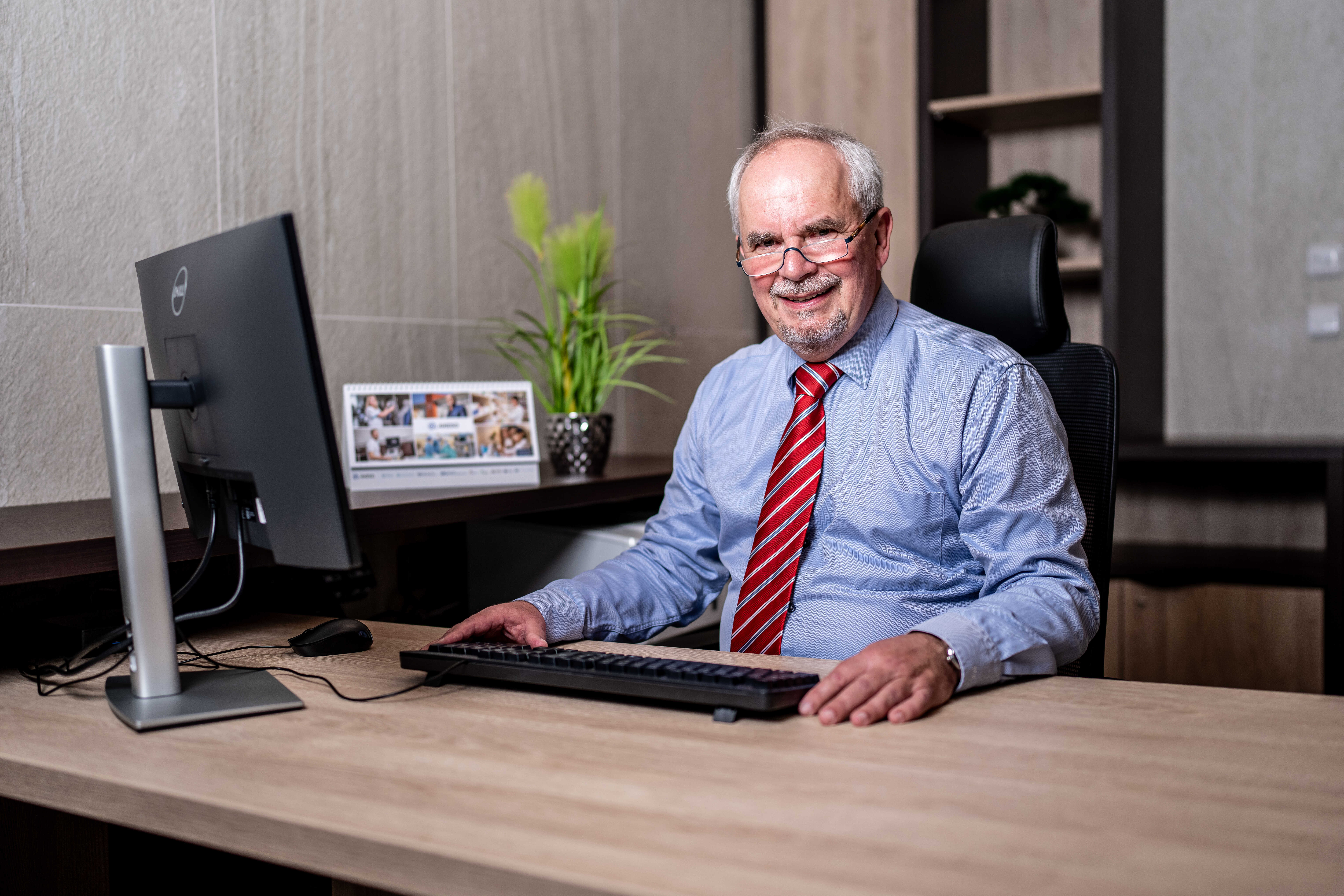
Plastic surgeon Miroslav Krejča, M.D., Ph.D.
He graduated from the 1st Medical Faculty of Charles University in Prague, where he now also teaches. In the Czech Republic, he has obtained a certification in general and then plastic surgery. He is duly registered as a plastic surgeon with the Medical Board of South Australia, the Australian regulatory body responsible for overseeing the practice of physicians. He holds similar licences, at the level of primary and consultant, in the Czech Republic, the United Kingdom and Ireland. According to him, he takes a break from his work because he enjoys it immensely and it is his hobby. In his spare time, he enjoys cycling, skiing and seeks out the tranquillity of walking in the Brdy Mountains. His experience in Australia awakened his love for the sea, so he often heads to Sardinia, where he says the closest beaches are similar. He lives on the outskirts of Prague, has three children and is married for the second time.