Česky
Česky


"They help us to make rehabilitation even more effective for our patients with neurological, trauma and orthopaedic diagnoses. Especially MYRO is very popular," said Pavla Košková, head occupational therapist.
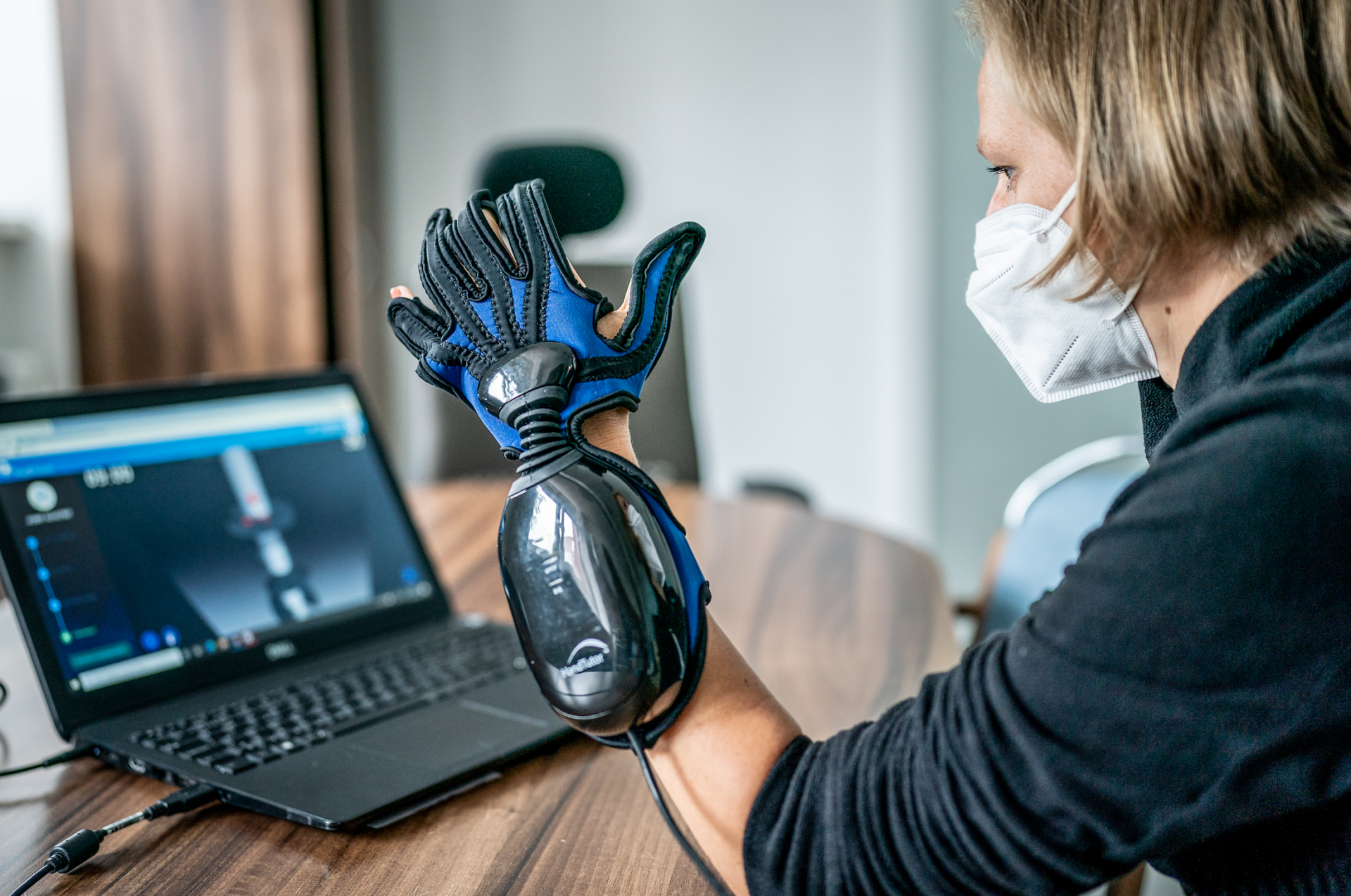
Meditutor is a rehabilitation system that uses feedback for highly specialised rehabilitation for patients with upper and lower limb movement deficits. The system also enables 3D visualisation through wireless intercommunication. Thus, it helps with the training of larger movements and their coordination. The patient can see on the monitor not only how fast he can exercise, but also the range of the exercise. This is always tailored to the patient.
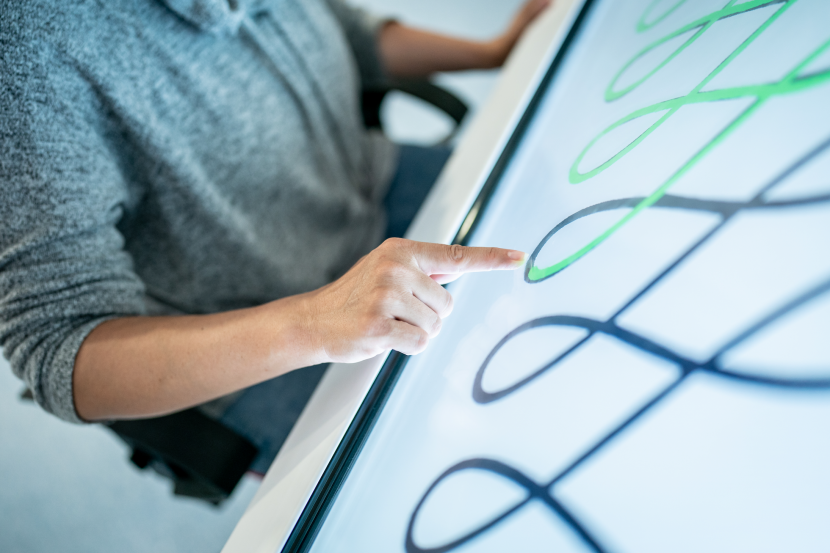
The most used device so far is the MYRO, a large interactive whiteboard. "Therapy on this device can target gross and fine motor skills, coordination of movements, but also cognitive functions such as concentration or attention, which are often impaired in patients with neurological disorders, in addition to mobility disorders," explains Pavla Košková. MYRO is used not only for diagnosis but also for therapy. It has become very popular for us mainly because of its wide-ranging use. It has also proved to be excellent for cognitive training and for patients with Neglect Syndrome. Recently, we have also used this device in therapy for post-covid patients.
Not only do the various tasks to be completed capture the attention of the patients, but control can be performed with the finger, hand or real objects, thus improving the patient's grip and overall motor skills. MYRO can not only be used individually in some tasks, but can also be set up for two patients at the same time.
"This device not only helps us in the therapy itself, but also records the results and abilities of the patient. Thanks to this comparison, it motivates him or her to further activities and higher goals," explains Košková.
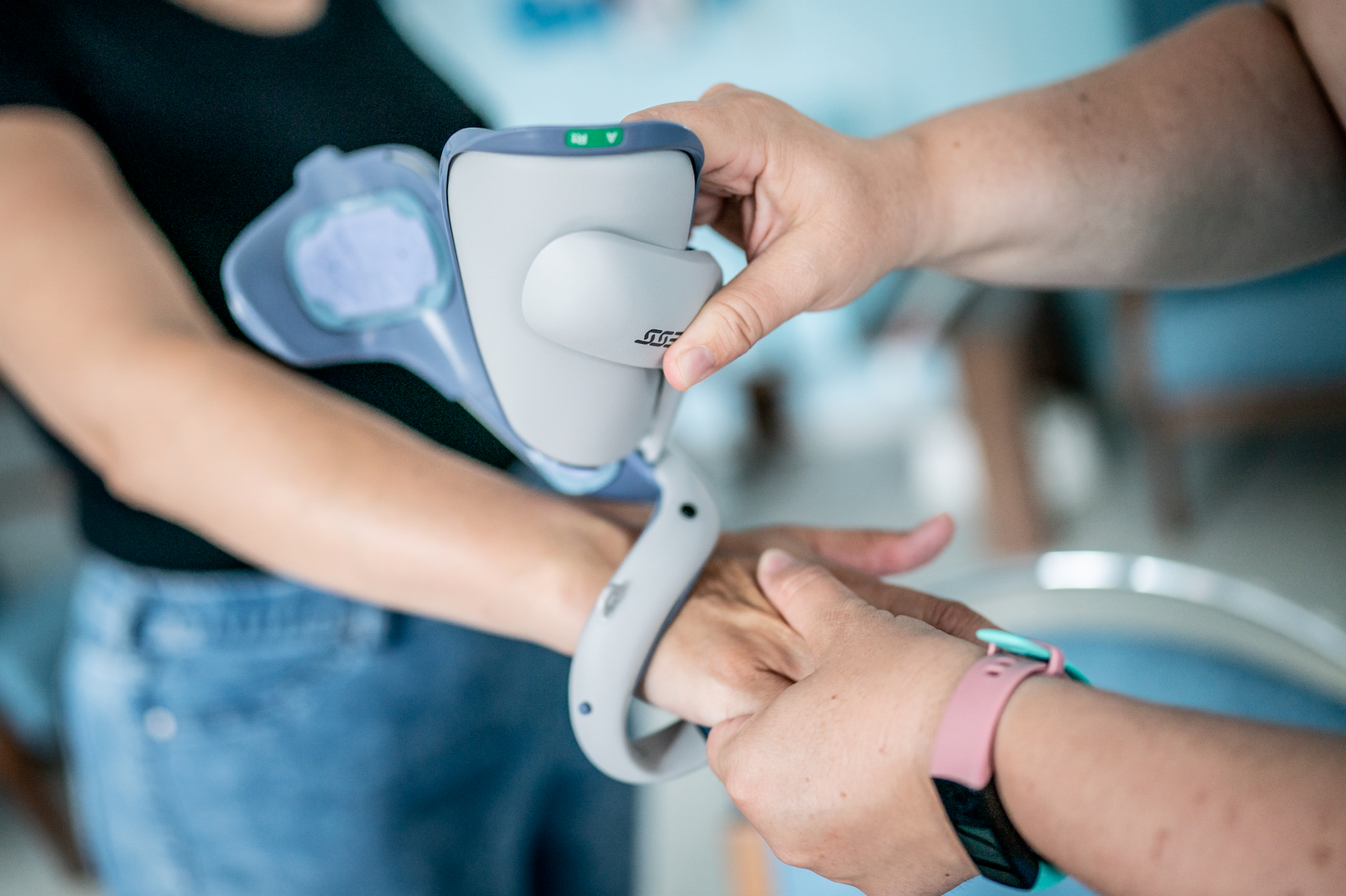
The third innovation is a device for functional electrical stimulation of the upper and lower limbs. These devices have electrodes that stimulate the nerves controlling certain muscles in the arm or leg. Thus, on the hand, the grip and grasp of the fingers is promoted, and on the lower limb the device is used to promote the elevation of the paralysed leg during walking, thereby improving the quality of gait.