Česky
Česky


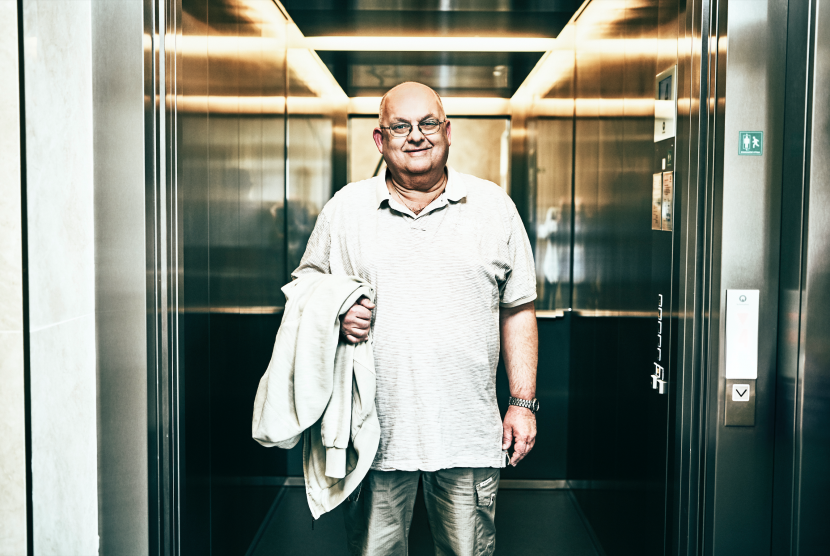
You are the head of the aftercare department at the Rehabilitation Hospital Beroun. What kind of patients, after what kind of injuries or illnesses, do you actually take care of?
We receive patients from a large number of hospitals, especially from Prague clinics and Central Bohemia hospitals, but also from wherever they are needed. Most of our patients suffer from polymorbidity, i.e. the combination of several diseases or organ failure. It can be said that heart diseases, conditions after vascular catastrophes, such as strokes, heart attacks, cardiac arrhythmias or failures, or vascular involvement of the lower limbs predominate. Of pulmonary diseases, of course, chronic obstructive disease including its complications, often culminating in chronic respiratory insufficiency. Of the metabolic diseases, diabetes mellitus, i.e. diabetes mellitus of all types, is the clear leader, closely followed by obesity and metabolic syndrome. When the abdominal organs are affected, especially the liver is affected in the long term, ranging from simple fatty liver to liver failure due to liver cirrhosis. High blood pressure is a silent killer for which patients often underestimate treatment for years or decades, and complications subsequently bring them to us. Kidney diseases are also numerous. Treatment is challenging, especially when the patient reaches the point where he or she needs treatment with an artificial kidney, or is already at the stage where multiple drug therapy in conjunction with a special diet and controlled drinking regimen is necessary. In elderly men, we naturally deal with prostate problems and, in general, mobility disorders of any origin.
How many people who need help come to you every year?
Generally hundreds. Statistics are tricky because we have been working with different numbers of beds since 2012. There has been a professional restructuring of the department, extensive building reconstruction and modernisation of our workplace, including the need for temporary relocation, as well as the extensive completion of the Rehabilitation Hospital Beroun and Hospital Hořovice. The important thing is that the number of our patients has been increasing for a long time, the treatment time is relatively short and the success rate of healthcare is very good, perhaps even excellent.
So how many patients will return to normal life?
We are able to heal some patients completely and return them to the analogous living conditions to which they were accustomed. For others, we manage to rehabilitate sensory functions, for example, with eye surgery or glasses, by providing a hearing aid, or improving dietary intake by rehabilitating teeth, and they return home in better condition than they were. The same is true for restoring mobility. In some cases, we are satisfied when we are able to stabilise and improve a patient with a defect. Post-operative care has been very good and we discharge most patients home after compensated healing, and we also discharge older patients to social care facilities. The pharmacotherapy situation is more difficult, as many individuals take multiple medications, sometimes habitually, or are dependent on them. Rationalisation of pharmacotherapy usually succeeds and brings about an obvious improvement in the patient's condition, but it takes quite a long time. In general, it seems to me that there is an overuse of drugs in our society. Improving the general condition and remediating organ dysfunctions always seems to us to be the greatest achievement. I dare say that we are successful to varying degrees in about four-fifths of patients.
How has the aftercare profession actually changed in the time you've been involved in it?
The fundamental change is the increasing calendar age of the population, but this is often not a cause for rejoicing. The biological age of our people is usually much worse and does not allow for a good quality of life. Medicine is now able to use increasingly gentle, modern and less invasive diagnostic and treatment procedures for these people, but sometimes even this is not enough. A wrong lifestyle, especially smoking, excessive consumption of alcohol and other vices, is very much at work here. In general, our society does not pay much attention to health prevention.
Is it realistic that in the future you will get all patients 100% well? That they will all return to the life they led before the accident or illness? Or is that more of a utopia?
No, it's not. It's not. It's utopia. You'd have to make everyone immortal and healthy and young forever in the future. We don't have a Makropulos project. In this context, I would like to say to the people: Think about material security in old age and give it away after death.
Is it true that you relax by shooting, that you go to the shooting range? What do you get out of it, why do you enjoy it so much?
Yes, I do. I have been involved in shooting sports for decades and of course I go to shooting ranges. I have nothing to do with hunting or hunting. Shooting gives me joy, a steady hand and discipline. I am a member of a shooting club that includes many doctors, lawyers, businessmen, engineers and people from all walks of life. We work with the police, fire department or ambulance service. For example, at our kids' day and club meeting we had some nice demonstrations of police intervention and we are glad to have guys like those from the SWAT team who came to us. They are proficient and they mean business too. The kids were thrilled with the firefighters and learned how to use a fire extinguisher. They learned first aid for injuries from the paramedics and got a number of useful lessons and a few observations from the city police.
Do you collect guns like someone might collect stamps?
I don't have a gun collection and I don't collect guns. In all the time I have been involved in shooting, I have never used a gun against anyone, however, I am able to defend myself effectively and if someone were to attack me or perhaps even try to take my gun, then I would tell them off: Molón labe!
What else do you do in your spare time?
I fish, swim, go to the seaside occasionally, read, but most of all I enjoy my granddaughter, with whom we can have a lot of fun. I used to ride a bike, but I can't do that now. Sometimes we get together in a circle of old friends and have a good time. I have a nice wife who comes to get me when we have such a friendly session and have a beer. Even on my first spring fishing trip she comes with me and brings me luck. I try to avoid TV, whose output is really crappy, and ignore social media. I only watch Hyde Park Civilisation regularly because it features people whose intellect is admirable, unmatched from my perspective, and whose work record is excellent. I'm glad such people exist on our planet. I use the conveniences of the IT revolution, of course, from the internet to the mobile phone, but I choose my needs and information carefully.