Česky
Česky



The results of the project, which we have been working on since 2014, were successfully published in the latest issue of the renowned professional journal Czech and Slovak Neurology and Neurosurgery. We consider this to be an extraordinary success, as the entire implementation and subsequent publication of such a large-scale study at a workplace outside the university is not at all easy and it is rather a rarity.
We asked Dr. Libuše Brabcová, who is in charge of the project and who was the principal investigator of the grant from Charles University:
What is Huntington's disease?
Huntington's disease is a rare but very serious neurological disease, which currently affects about a thousand patients in the Czech Republic. It is a genetically determined disease, which means that a person carries the information leading to the disease since birth. Clinically, the disease most often manifests itself around the age of 40. However, there are also juvenile forms, when people become ill at a very young age. Until then, the person concerned lives a completely normal life as a healthy person.
The disease causes a gradual loss of the ability to control one's movements, speech and swallowing disorders, progressive dementia, personality changes and mood changes. In advanced stages, it leads inevitably to full disability and dependence on 24-hour care. On average, 15-20 years elapse from the onset of clinical symptoms to the full development of disability.
Can the disease be cured?
There is currently no known way to stop or cure the disease. There are only treatments aimed at affecting the symptoms. However, even this has only limited possibilities. Rehabilitation care is one of the few things we can offer patients. The impact of rehabilitation procedures on the functional status of patients with neurodegenerative diseases for which there is not yet a causal treatment option has become very topical in recent years. There have been several studies, particularly from abroad, which confirm the meaningfulness of rehabilitation treatment.
It is not our aim to return patients to full health; unfortunately, this is not realistic. Our aim is to improve, or at least maintain for as long as possible, their abilities and self-sufficiency, and to prevent health and other complications that can be prevented by early rehabilitation. Often people of working age, active, often parents of young children, come. We want to help them to spend the time they have to live with their illness in the best possible way, in the best possible condition.
Please tell us more about this study.
Rehabilitation for Huntington's disease is not yet widely used in our setting. However, we know from foreign sources that it has good results in many respects.
We have therefore decided to test the effectiveness of our procedures with a clinical study. This is the first comprehensive study on this topic in the Czech Republic. Therapists working with the diagnosis know from experience that there is an improvement after the therapy. However, the knowledge needs to be based on regular research within the framework of "evidence based medicine". The study is being conducted in close cooperation with the Centre for Extrapyramidal Diseases of the Neurological Clinic of the VFN and the 1st Faculty of Medicine of the University of Veterinary and Pharmaceutical Sciences under the direction of As. MUDr. Hana Brožová, PhD. and prof. MUDr. Jan Roth, Csc.
Our patients come for a three-week intensive rehabilitation stay using the full range of physiotherapy, occupational therapy, speech therapy, psychology, social counselling, etc. The therapy is conducted according to fixed rules based on previous findings from abroad. Each patient is monitored and re-examined according to a fixed protocol for a total of 7 months.
At present, there are about 35 patients in our group, which is considered to be a relatively high number for research on such a rare disease, especially if the research is conducted in only one centre as here. The results obtained from the first, pilot group of patients confirm our hypothesis that the clinical condition can be influenced by rehabilitation and that the improvement persists for some time after the end of the therapy.
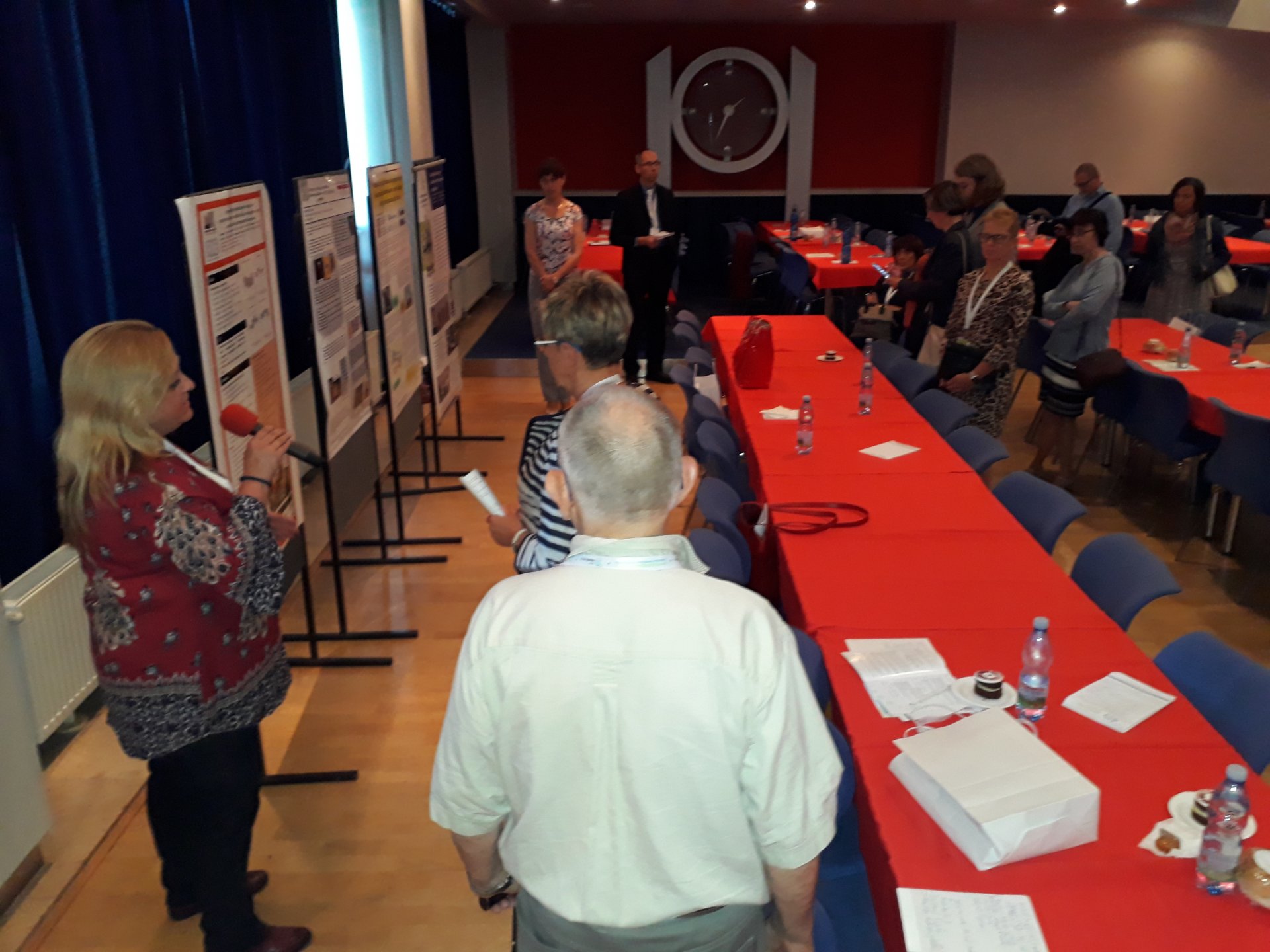
To our great joy, we have now successfully published the results of the study in the latest issue of the respected professional journal with the impact factor "Czech and Slovak Neurology and Neurosurgery." The work has also been presented in the form of lectures and posters at several domestic and international professional conferences. The whole project was supported by a grant from the Grant Agency of Charles University, a grant from PRVOUK and a grant from the Ministry of Health of the Czech Republic.
What next?
Of course, we continue to provide rehabilitation care to patients with Huntington's disease outside the scope of the study. Many of them have already been hospitalized with us several times, and we are in constant contact. Patients and their families usually rate our therapy and its results very positively. The good relationships that we have been able to establish in our collaboration certainly play an important role.
We are currently in the process of statistically processing the results of all patients and preparing the complete results for publication. At the same time, such study-based findings can be used, for example, in negotiations within the healthcare system so that rehabilitation care for this diagnosis is seen as an integral part of treatment, not as a 'luxury extra'.