Česky
Česky


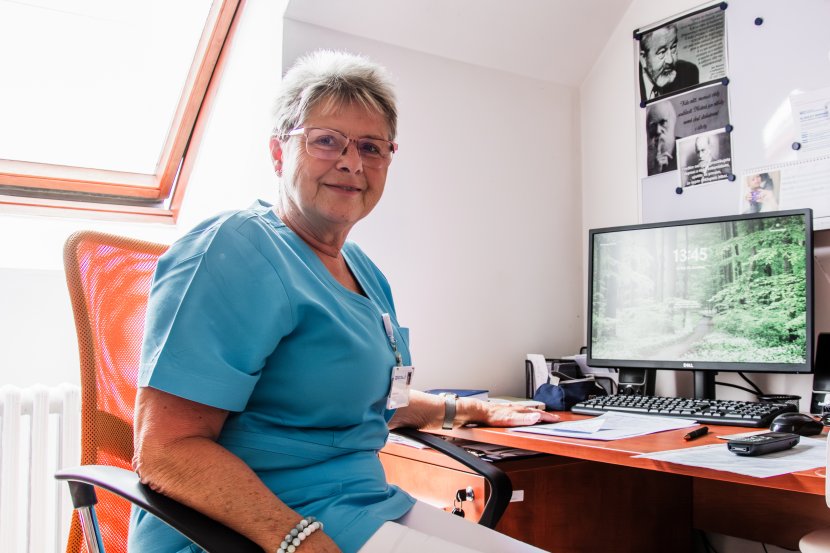
What made you choose the nursing profession?
Nursing runs in the family. Even as a child I used to give injections to dolls (laughs). My aunt was a nurse, my grandfather was a doctor and my niece also works as a nurse. I kind of had it in me already.
After your studies, you immediately started working in traumatology at the hospital in Most. Why this particular field and what was your first experience?
Already during your studies and practice you start to profile yourself to a certain field. Someone tends towards internal medicine, another towards surgery. I gravitated towards surgical fields from the beginning, and since I had the opportunity to practice in the traumatology department in Most, "trauma" was an obvious choice for me. I enjoyed the work and the direct contact with people, even though it was often challenging. It was a forty-bed station where many times I was alone on shift, sometimes with one nurse. Then when they brought in three or four crashes, we had a lot to do. I was fortunate to have had great teachers in my early days.
The big problem nowadays is the shortage of nurses. What was it like back then?
I spent three years in the hospital in Most and then moved to Žebrák. And when I wanted to start working after maternity leave, there was nowhere to go. But in the north of Bohemia, it was the opposite extreme, they didn't want to let me go there at first. So I first worked in the district pharmacy service, where I invoiced prescriptions for five years and waited patiently for a job to open up. Finally, in 1985, I joined the hospital in Horovice and spent 22 years there.
What were the beginnings like?
Because there was no room in the surgical outpatient clinic, where I wanted to go, I worked for the next five years in sterilization. Only then did I get into surgery, and only because a nurse had emigrated to the West. There was a good team and the work was very varied, because it included surgery, urology and traumatology.
What did you like most about being a nurse?
First and foremost it's the contact with patients and knowing that you can help them. You have to have that in you. If someone does that job who doesn't have a strong relationship with people, they can never be a good nurse. The alpha and omega is to be positive with patients because they have to trust you and feel your support. It is always polite to address them by name or title, tell the truth and treat them as a partner in the treatment. Their cooperation is a must. Proper communication will then help to overcome not only fear, but perhaps also the pain of an unpleasant procedure.
And it is undoubtedly also a demanding profession. What was difficult for you?
The physical and psychological side is challenging. Often the psychological one prevails. It is therefore very important that everyone on the ward works well together, gets on well with each other and, most importantly, helps each other when needed. Collegiality is essential in this environment.
I'm sure you have a memory of a patient coming back to you after discharge to say thank you. Is there one that sticks in your mind?
It's happened a few times. And each time it's a nice recognition of our work. I remember a patient who was in a bad car accident, had iron everywhere you looked. The gentleman came to us for treatment and check-ups for a long time afterwards, and each time it was a very nice encounter on a friendly level.
You joined the Rehabilitation Hospital Beroun shortly after it was bought together with the Hospital Hořovice by Mr. Ing. Zavalianis. How was the Beroun hospital then?
It seemed as if time had stopped here. The hospital did not have a good reputation. There were no basic aids for the staff, there was a lack of medical supplies, and the cleaning was in a state of disrepair. The supplying companies did not even come here anymore because the hospital's debt was astronomical. It was not a pretty sight and I admired the staff who worked in these conditions. They were heartbreakers, and still are, because many of my colleagues have been here since school. Hats off to them.
How did the hospital change after that?
I joined in January 2008 and shortly afterwards the director, Mgr. Natasha Petsini. So you can say that we have been here together from the beginning. I remember how we used to go around the hospital and just write down what was to be liquidated, rebuilt, to be written off and so on.
The reputation of the hospital must have improved after that. Didn't it?
In the beginning, a lot of people were worried about what would happen to it after the sale. There were rumours that there would be only a plastic surgery department for VIP clients; what would people do without the hospital then. Of course, nothing like that happened. Changes for the better happened quite quickly. Gradually, building after building was reconstructed, contractors began to return, new equipment was purchased for staff and patients, and the park was revitalized. Over a period of several years, and thanks to the vision of the owner, the hospital is unrecognizable and to the satisfaction of patients throughout the region and beyond. Importantly, it has once again become a respected medical facility known throughout the country.
To top it all off, you have been serving in a new-to-you position as the hospital's head nurse.
Fortunately, I was already starting with valuable experience from the hospital in Horovice, where I had been the head nurse during her maternity leave. After about five years, we started preparing the Beroun hospital for accreditation, so I was added to the job of head nurse as quality manager, who is more or less in charge of the whole accreditation preparation. That was a very challenging period. The director and I spent maybe twelve hours a day here. Then in 2015, we got our first accreditation and the others followed every three years. It must be added that there was, and of course still is, a very capable and well-cooperative staff with whom success was more or less certain.
Then came the covid. How do you remember this period?
It was not easy for anyone. At the beginning we were all scared because nobody knew what the virus would do. We had to set up facilities to carry out swabs, then a vaccination centre in the meeting room of the hospital. Both sites were staffed by hospital staff along with outside health workers. It was necessary to relocate the entire internal section to other wards and turn it into a covid section. From one day to the next, our nurses in the Rehabilitation Center, as well as in the Aftercare Department, had to be reoriented to care for more difficult patients. But in the end, they appreciated the knowledge and experience from another care system, which was beneficial for their future work. It was challenging for everyone - from serving long overtime hours to adhering to wearing prescribed protective equipment - it is very demanding to move around for a full 12 hours in a respirator and overalls. A lot depended on the willingness of the people and I have to say that everyone did a great job.
You have 47 years of experience as a nurse at virtually every level. What would you say to aspiring nurses?
I've actually already outlined it here. The job of a nurse is not for everyone, and you have to feel first and foremost that you want to help others, and not just physically. Because this profession is all about support, empathy, good communication, but also solidarity, responsibility and respect for colleagues and patients. My work has always been made easier by the excellent cooperation with the station nurses, the chief nurses and the hospital management.
But you're not quite retired yet. Your experience and knowledge are welcome in starting the Mental Rehabilitation Center on a part-time basis. You'll have more time on your hands anyway. What are you most looking forward to?
The peace and quiet that has been lacking in the marathon of previous years. My garden, which needs a makeover. I have received beautiful gifts from my colleagues and the hospital management that will help me to relax and keep fit and I thank them very much for them. At the same time, I would like to once again thank everyone for their wonderful cooperation and wish them all the best for the years to come, and most importantly, robust health. We have been a great team to work with.
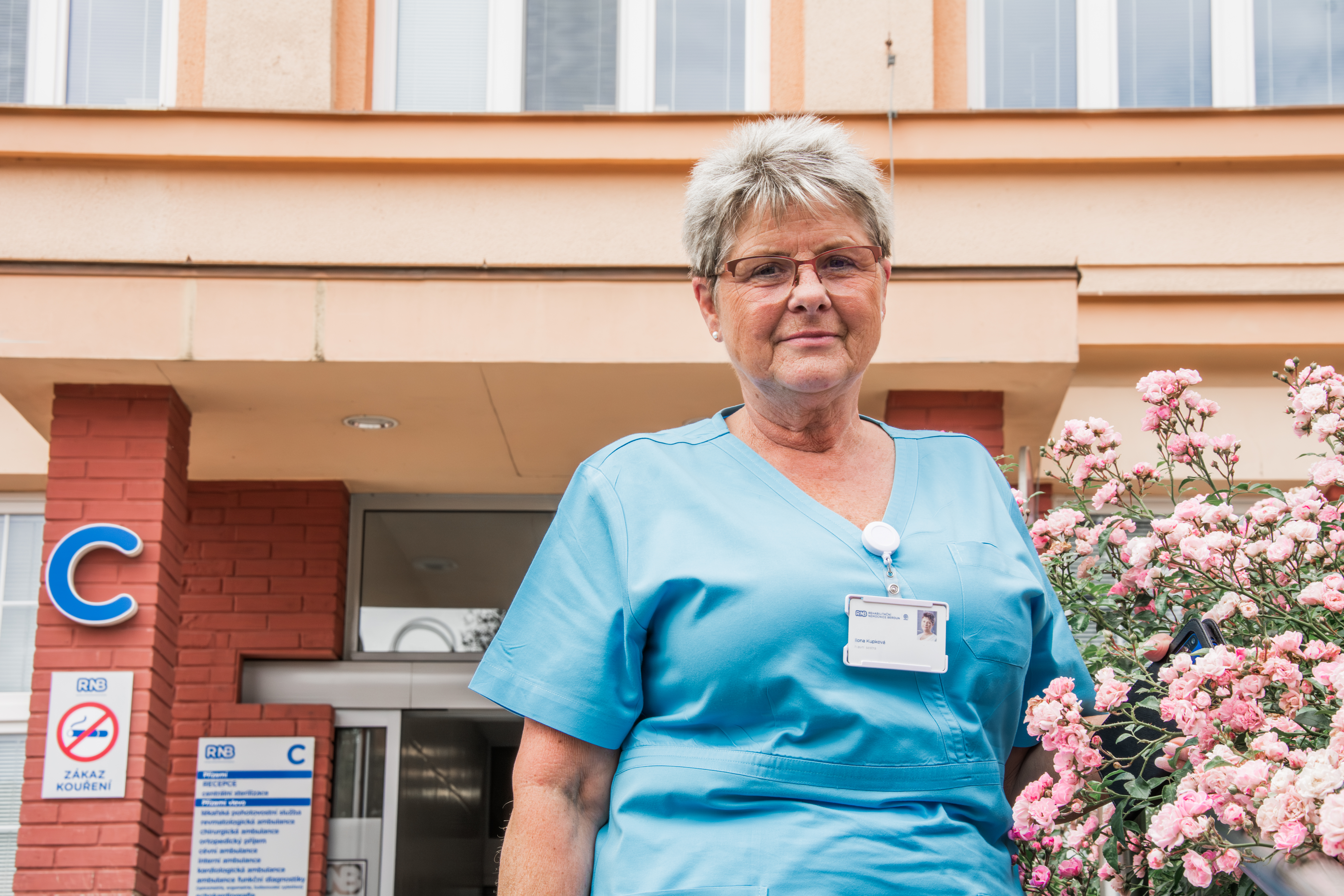
Ilona Kupková, outgoing head nurse of Rehabilitation Hospital Beroun
She graduated in general nursing from the Secondary Medical School in Ústí nad Labem. She graduated in 1976 and immediately joined the traumatology department at the hospital in Most. Before she started working at the Hořovice Hospital in 1985, she spent five years in the district pharmacy service. She then spent 22 years at the hospital in Hořovice, where she moved through several positions. In 2008, she won a tender for the position of head nurse at the Rehabilitation Hospital Beroun, where she spent 15 years. Now she works part-time as a consultant for the start-up of the Mental Rehabilitation Centre.