Česky
Česky


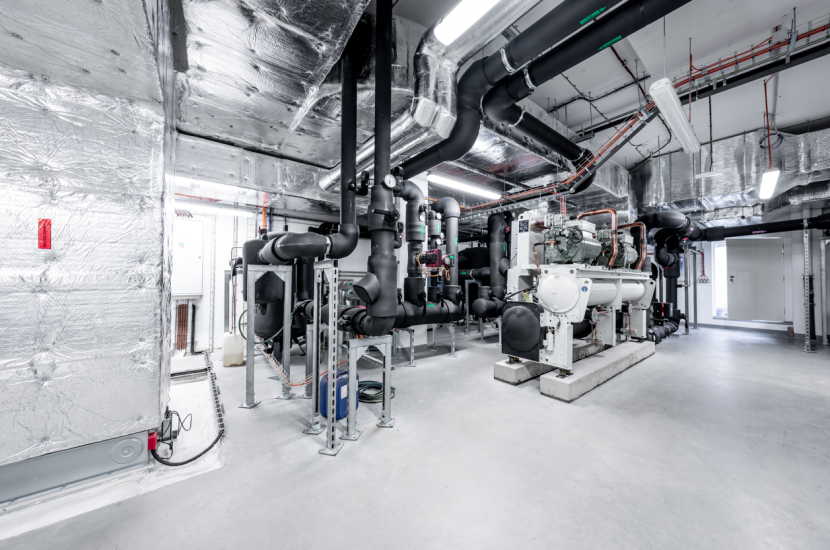
Refrigerant preparation and distribution
The air handling system in the new surgical pavilion has several basic components, all of which are very large. Two compressor units are essential (one is located outside the technical room, the other, the one in the photo, inside), which prepare the refrigerant for cooling the air. The refrigerant here is either water or propylene glycol. One of the refrigeration units is also tasked with preparing refrigerant for the original adjacent pavilion. The refrigerant is routed through pipes wrapped with black rubber insulation that does not allow water vapour to escape. As a result, air moisture cannot condense on the pipes and the pipes do not corrode.

The exchanger cools or heats the air
Heat exchangers are another essential component. The machine in the picture does much more, but its main job is to "produce" air at the desired temperature with the help of refrigerant. "In addition to cooling, the air can be heated, of course, and this is also done by heat recovery, where the air already used in the building is heated by fresh air brought in from outside," says Georgios Giannitsis, HVAC (building services) coordinator at CONSTRUCTION TEAM, which is in charge of construction activities at AKESO Holding and which also built the surgical pavilion. When heat recovery is not enough, heating is still provided through part of the hot water exchanger from the boiler room.
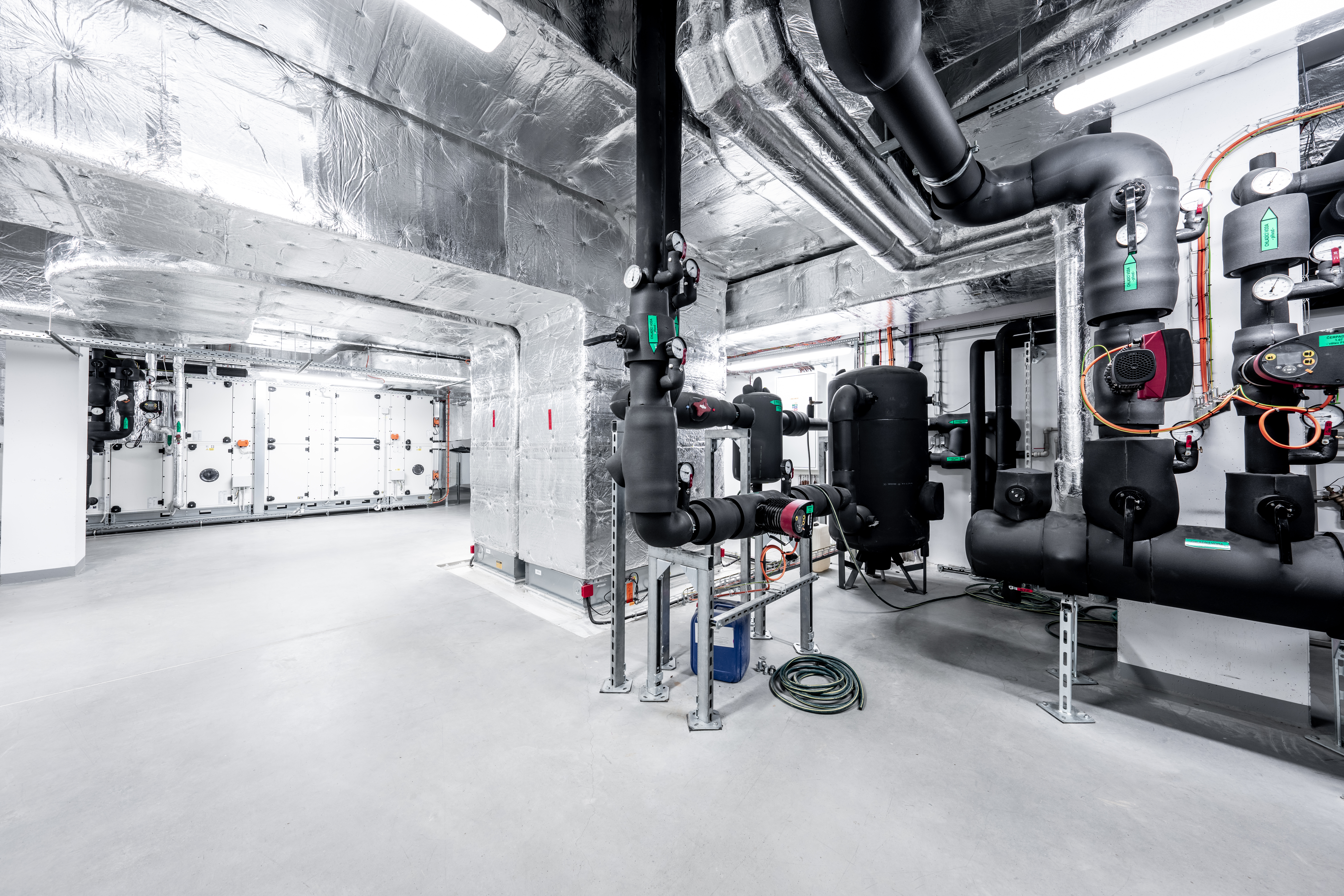
Giant pipes
The air is distributed through the building by the air ducts, which are of impressive dimensions in the technical room itself (they are the silver-insulated ducts). But large duct diameters are a necessity. "The requirement today is for lower air velocity, i.e. perceptually less draughts. To be able to replace the required air volume, we need ducts with a larger diameter," explains Giannitsis. Larger diameters and lower speeds also mean more economical fans that drive the air and lower noise levels. Sound attenuation is a major consideration throughout the system, as is meeting all fire standards. "However, these relatively new requirements complicate any HVAC retrofits in older buildings," adds Giannitsis.
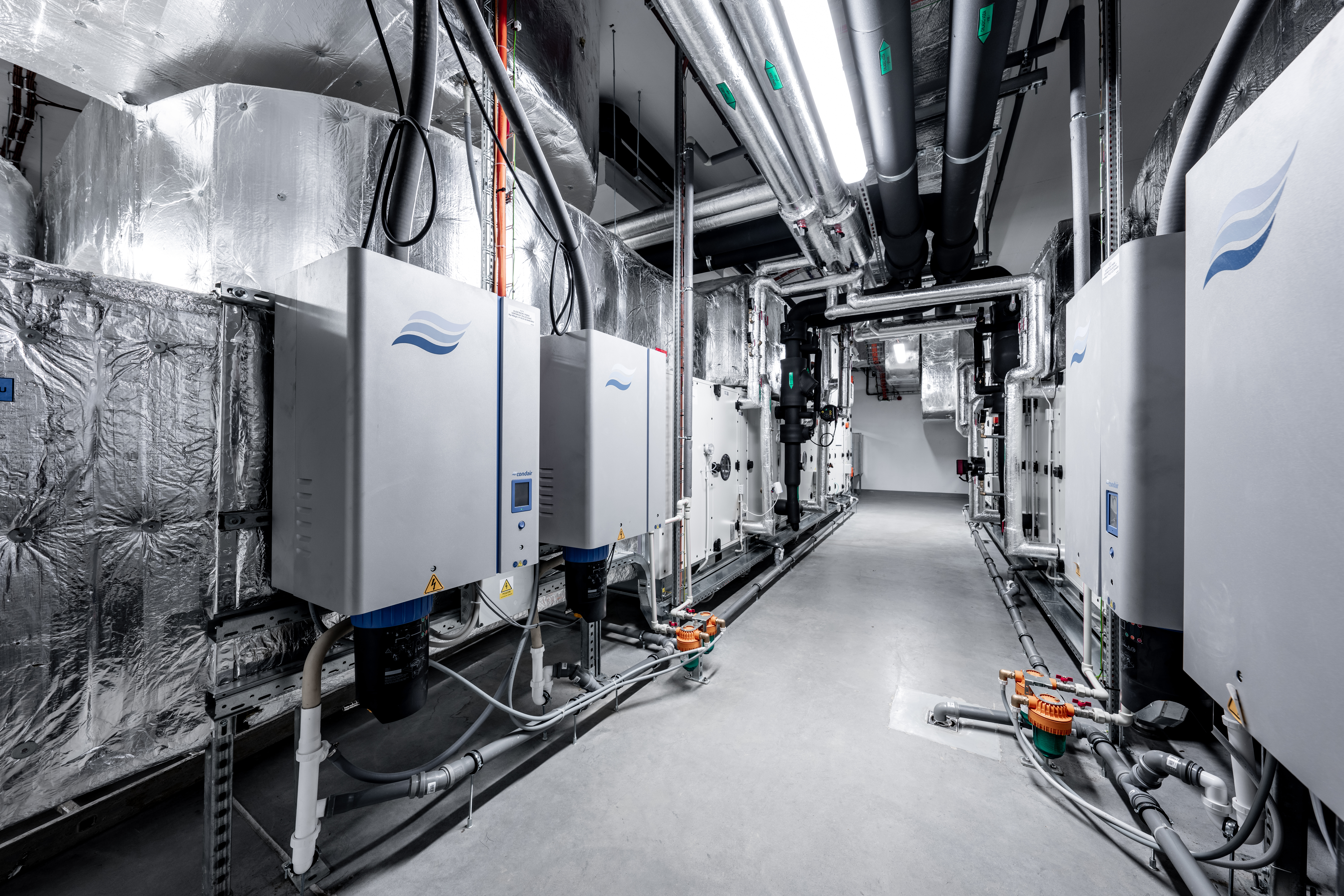
Humidity is extremely important
Steam generators are also a special part of the HVAC ductwork, helping to humidify the treated air to the required values. The evaporators are "powered" by hot water supplied from the central boiler plant. In addition, the air humidity is adjusted separately according to the specific needs of the rooms. "Patient rooms themselves require a different humidity, while operating theatres, which are generally very tightly controlled places, require a different humidity," explains Giannitsis. According to him, the air handling system itself is actually a relatively simple matter; the most complex part is the control. "The requirements are very diverse, and we try to manage everything as efficiently as possible, but also with the comfort and health of the patients in mind," says Giannitsis.