Česky
Česky


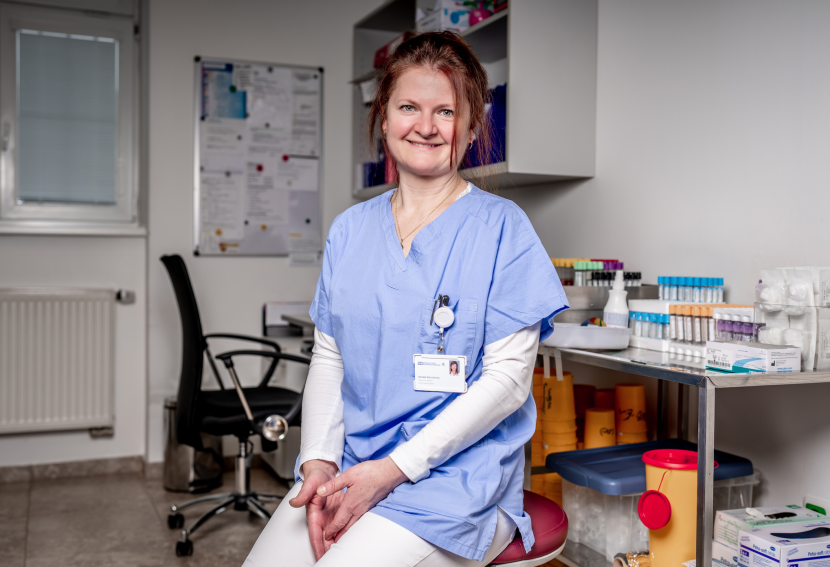
The experience of health professionals clearly shows that aggressive patients are not and have not been uncommon in acute admissions. But how do you explain their increasing number?
Clearly, the current covid era is having an impact in this regard. People are generally more under pressure, they have been confined to their homes for a long time and it has not worked well for them. In addition, many of the patients we see at the reception have lost their jobs and are dealing with stressful situations with alcohol or even drugs. All this then translates into aggressive behaviour. Another group of aggressive patients are people with psychiatric illness or depression. Quite often, the trigger for aggressive behaviour is also waiting for an appointment or when patients are told that it is better to go to a GP with a non-acute problem.
Is it possible to generalise about who is most likely to be aggressive?
We see problem behaviour most often in the middle or younger middle generation. However, it is definitely not just a male population issue, women are also aggressive and we often wonder how explosive they can be.
How exactly does aggression manifest itself in your workplace? Is it directed directly at health professionals or is it more about the environment in which you work?
We have experience with various forms of aggressive behaviour, so neither people nor equipment are spared. That is why we use a special room for "problem" patients, where there is a minimum of belongings and where they can be supervised by the police if necessary.
Is the presence of a police officer frequent in your workplace?
We only call the police for aggressive patients when it is really necessary. We know that they will arrive promptly if necessary, but we try to manage the situation on our own. Often the presence of a nurse brother we have on site, who is physically very well equipped, helps.
What other measures are in place in your department?
As far as the environment is concerned, we have reinforced doors in the reception area, and sometimes the internal security or the orderly is also of some help. But a very successful step in the fight against aggressive patients has been the self-defence courses that the hospital has organised for us. The staff are interested in them, and after a break caused by the epidemic of covid-19, they are back again. We feel the need to review everything we have learned.
What else do you think could help in the stressful and stressful situations that treating aggressive patients undoubtedly is?
When our new Mental Rehabilitation Centre opens, where patients with, for example, an acute psychiatric problem where aggression is very common should be referred, it will take the pressure off our ward. Thanks to the planned expansion of the internal reception, we should also have a better spatial arrangement, which would ensure greater comfort for non-conflicted patients. This is because the room where we treat aggressive patients is currently in close proximity to the areas where we care for other patients. This is, of course, very disturbing and unpleasant.
Are all these challenging moments balanced by some positive phenomena?
Any thanks for the work we do is a great pleasure. During the most challenging covid weeks, the material support in the form of something healthy and good - for example, when we received a batch of fresh fruit and fruit juices on the ward - was a great comfort.