Česky
Česky


Together with the opening of the Rehabilitation Centre in 2015, a swimming pool was put into operation, which is part of the hydrotherapy department and is divided into two separate tanks. One is used for group therapies and the other is used for individual rehabilitation treatments. In June last year, with the opening of the Centre for Mental Rehabilitation (CDR), a second pool was put into operation, which is mainly used for physical psychotherapy activities and also for relaxation.
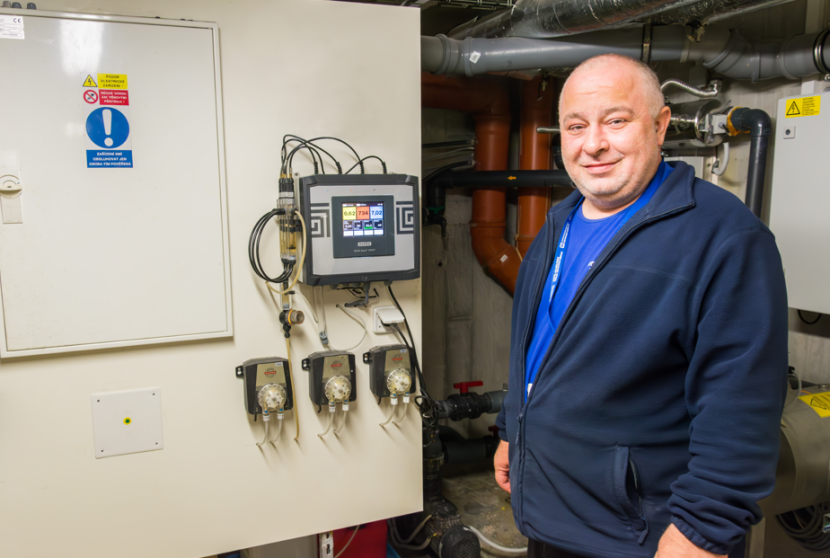
In both pools, it is necessary to keep the water clean and pleasantly warm. For this purpose, the necessary technologies are hidden in the machine rooms and have been taken care of by the maintenance technician Jiří Luňáček since the beginning. He has to be at work at three in the morning so that he can take care of everything before the patients arrive. As he says, he has long since got used to the "baker's shift".
His day starts with checking the quality of water and the proper functioning of the individual cleaning devices. "First thing in the morning, I have to measure the condition of the water directly in the pools, to which chemical treatment has to be added manually from time to time. Which is best done just before opening, so as not to disturb the patients," he begins.
Supervising the quality of the water, which must meet strict hygiene standards, is the most important part of the working day. For this purpose, Jiří Luňáček samples the water several times a shift to continuously check its condition. He carefully records everything in his diary. "The pH and alkalinity of the water, the concentration of free and bound chlorine, the temperature and the presence of bacteria and other possible pathogenic microorganisms are monitored," he explains, adding that once every two weeks, samples are taken by an employee of the State Health Institute. "After that, random unannounced checks come from the regional sanitary station," he adds.
The number of people visiting the pools has a major impact on the water purity parameters. The cleaning system is automated and can react to changes by regulating the intensity of the individual cleaning phases. However, it is important to check that the instruments measure correctly. "This means that I have to measure all the monitored parameters manually and, based on the values obtained, I can calibrate the related equipment if necessary. In addition, thanks to regular reports, I know how many people have visited the pools on a given day, and I have to replace the water in the system with fresh water from the mains according to this figure. The standard is 45 litres per person," he explains.
To keep all the components of the technology working properly, it is important to service them daily. Jiří Luňáček, for example, identifies possible leaks in the pipework system, which he immediately fixes if necessary. The work also includes regular cleaning of the water filters and other components to prevent the build-up of bacteria, especially legionella. "It is also important to inspect and wash the strainers where the measuring probes are installed. Similarly, I have to clean the injection valves of the pool chemistry," he adds, noting that the service company's staff comes to carry out more technologically expert interventions.
In addition, both pools undergo bi-weekly sanitary cleaning of the storage tanks, drainage channels and the entire filtration system. "We completely drain the pools once a year for general cleaning," concludes Jiří Luňáček.