Česky
Česky


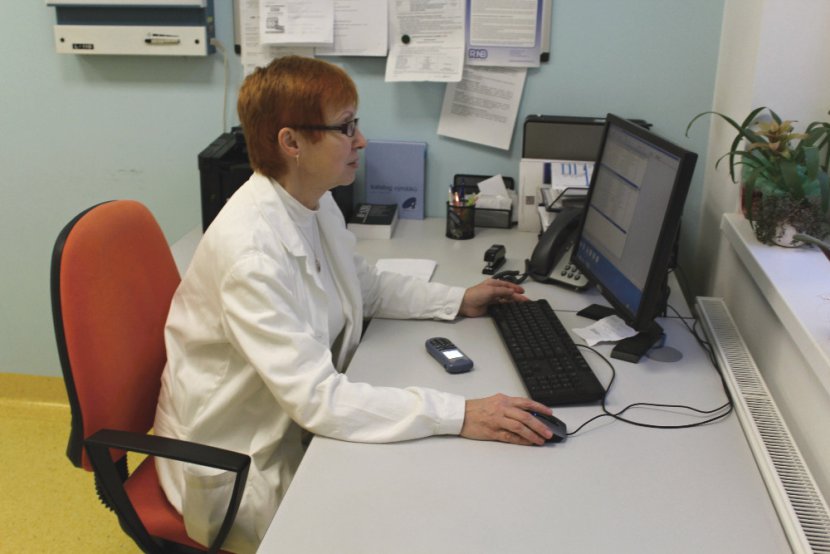
For many people, there is still a shyness to come to the doctor with some "delicate" health problems. One of them is anorectal dysfunction, i.e. a disorder of coordination of the muscles of the rectum, used to ensure the retention or emptying of stool. And so it happens that this problem is often addressed at the stage of more severe or even chronic disability. Treatment is always difficult. Therefore, it is essential that the patient is cared for by a team consisting of a gastroenterologist, surgeon, radiologist, rehabilitation physician, physiotherapist and psychologist. Patients with faecal incontinence and pelvic floor disorders are also treated at the Beroun Hospital, specifically at the Rehabilitation Centre. Patients usually come from a specialist doctor with a diagnosis and treatment already in place. Often from the partner hospital in Hořovice, where they have recently also specialised in the treatment of inflammatory bowel diseases such as Crohn's disease.
We asked MUDr. Milena Kolářová, deputy head of the Rehabilitation Centre of the Beroun Hospital, a few questions explaining this problem and the possibilities of its solution with the help of rehabilitation.
Doctor, how does this disorder arise in the first place?
The disorder of coordination of the rectal muscles can be organic or functional, as well as primary, congenital - sphincter damage or neurological disability and primary, acquired - trauma, postoperative or postpartum conditions, multiple sclerosis, tumour, etc. Secondary is that which arises from other conditions - for example, diarrhoeal conditions, metabolic diseases, laxative dependence, drug intoxication and during or after inflammatory disease. Stool incontinence can be complete or partial - with greater exertion or diarrhoea a person cannot fully pass stools, but at rest they can.
How does anorectal dysfunction manifest and affect young people?
Among other things, it manifests itself primarily through constipation or, conversely, incontinence of stool. This is a very serious problem that is not often talked about and whose consequences are not only health-related but also social. Yes, it also occurs in young people, who often isolate themselves as a result, losing contact with their surroundings, which brings with it subsequent psychological difficulties. However, mental health also plays a major role in older people, and not only in the case of dementia. But there is also functional anorexic dysfunction, where there is no muscle or nerve involvement, but some dyssynergia on a different basis, which causes pain during intercourse or difficulty in defecating. It should be added that due to the anatomical conditions, the pelvic floor is connected to the genitals, rectum and bladder and all these areas and functions may be affected. Difficulties are often experienced, for example, by women after complicated births.
How can the right rehabilitation treatment help these patients?
It should be pointed out that a number of studies have shown that rehabilitation for faecal incontinence and pelvic floor disorders is of great importance. After the examination, patients are given a rehabilitation treatment plan, which of course follows the recommendations of the gastroenterologist or surgeon. Patients are usually already instructed to follow a certain regimen, which is extremely important in the case of difficulties associated with anorectal dysfunction. Let us recall that this includes diet, appropriate aids, hygiene products and exercise regimes, and, where appropriate, appropriate medication. It is the exercise regimen that is then recommended by the rehabilitation physician together with the physiotherapist, who exercises with the patient as recommended by the physician.
What is the most important thing in the rehabilitation of such a patient?
There are many things, but as far as the main thing is concerned, the trust between the doctor, physiotherapist and the patient is very important, as well as the activity of the patient himself, who must regularly exercise at least three times a day at home according to what he learns at each visit to our Rehabilitation Centre. To give you an idea: the exercise itself is first focused on the entire musculoskeletal system, sometimes the physiotherapist first performs soft techniques and removes blockages before specifically focusing on the pelvic floor. The physiotherapists have special courses, know how to use certain equipment and guide the patient to further exercises that improve their overall fitness. But certainly no one needs to worry about this, as in rehabilitation in general, the approach to each patient is individual. But the outcome, to a large extent, depends on the patient's effort.