Česky
Česky


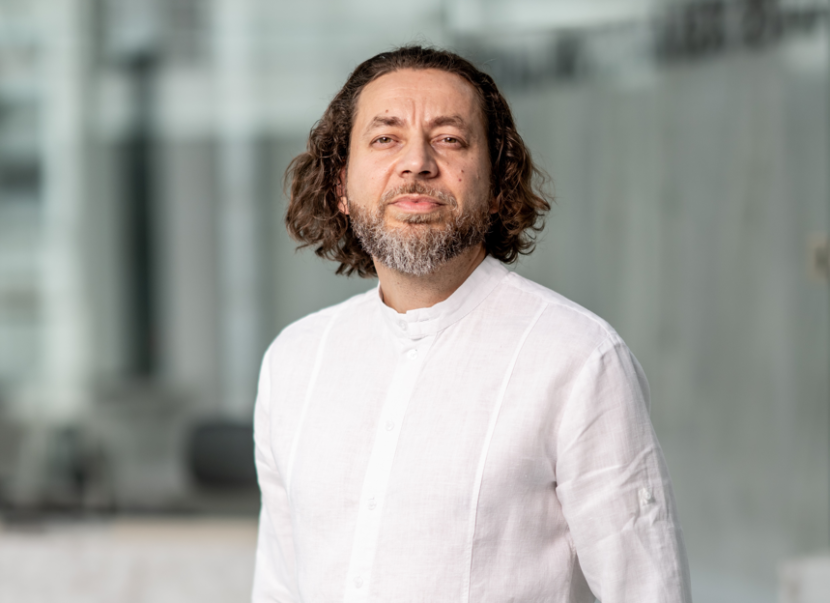
Marko, when did you first realize you wanted to go into nursing?
Basically, I had to go all the way to Ukraine to get that realization. In 2001, I went to this country with a group of volunteers to work on the reconstruction of an institution for children with mental disabilities. While a bunch of guys and I were in charge of installing new windows, the girls from our group were again working with the hospitalized patients. And their work was very close to my heart. That's where I first got the idea that I would actually like to work in some kind of nursing field. One of the nurses then advised me that since I already had my high school diploma, I just needed to finish my vocational courses in nursing school. I enrolled in a three-year full-time course in general nursing at the Secondary Medical School in Michalovce, which I enjoyed and found fulfilling from the very beginning.
What field did your first steps lead to?
After my studies, I started working in the so-called "restless ward" in the psychiatric hospital in Bohnice, where I spent a very intensive year. Here we received clients with acute psychological problems directly from the street. I remember that there was an absolutely wonderful station master Mgr. Vladimír Ochrana, who was an ethically extremely mature person. I learned many things from him. For example, I remember how he always reminded us in a dignified way that our patients were sick people, and despite their often problematic and aggressive behaviour, he taught us how to work with them empathetically and sensitively. We were there first and foremost to give them care and not to judge them. I really liked this approach, even though it was very challenging at times.
Did this harsh experience discourage you from working as a nurse?
Definitely not, it was incredibly rewarding and also motivating for me. However, after a year in Bohnice I returned to Slovakia, but soon I went back to the Czech Republic and started working as a nurse at the Leontýn Home for the Disabled in Roztoky. I spent nine years there, until 2012. Compared to Bohnice, the job was rather stereotypical, which in simpler terms required patience above all. Even though it was a very interesting and rewarding experience, I sensed that it was rather stagnant in terms of professional growth. So I needed to get a kick-start again and enrolled in the Bachelor of Nursing at the 3rd Faculty of Medicine of Charles University. Thanks to that, I got back to that classic nursing job. I did my compulsory internship at our hospital, where I then got a job at the Rehabilitation Centre. But I enjoyed my studies so much that I continued my studies at Tomas Bata University in Zlín. Here I graduated with a master's degree in management in healthcare.
But then you left our hospital for some time. Why?
Yes, I received an interesting offer from the hospital in Rakovník, but after about three quarters of a year I was lured away by the position of ministerial councillor at the Ministry of Health. Even though it was an interesting experience, I didn't really like the job because I practically became a clerk. I decided to come back to Beroun, again to the Rehabilitation Centre, and I was very pleased with how warmly I was received by my old colleagues.
There are undoubtedly challenges in the nursing profession. Which ones have met or are still meeting you?
There are difficult moments in every profession. In my case, I have experienced countless of them. But I guess I am lucky that such different challenges have not been so difficult or even such an obstacle for me in my twenty years of practice that I could not overcome and I burned out professionally.
So let me ask you the opposite - what do you enjoy and find fulfilling about this work?
I love working with and caring for people, and I have the same appreciation for the people who provide that care. We're all in this together, which is actually something unique. In general, it's a very rewarding profession because you get immediate feedback from patients. It is then extremely motivating when you see that your work is producing positive results. The fact that the effort and care you put in really improves people's lives is very satisfying for me.
In May this year, you were appointed station nurse of the inpatient ward in our Rehabilitation Centre. With what vision did you take on this position?
In terms of those short-term goals, it was definitely paramount for me to ensure the smooth running of the ward especially in terms of seamless shift staffing. Here, I really appreciate my colleagues for their helpfulness, professionalism and willingness to adapt to changing conditions when necessary. Thank you all very much for that. As part of my medium to long term goals, I would like to involve student nurses and recent graduates as much as possible. As part of my lifelong learning, I received an interesting offer to complete the Clinical Practice Mentor Course and I began to perceive the time commitment of this dual role, so I agreed with the Deputy Director of Nursing, Mgr. Radka Zinková, I agreed to leave the role of station nurse to my colleague and focus more on mentoring students and creating optimal conditions for quality and effective teaching of professional practice in our Rehabilitation Centre.
What is your message to aspiring nurses?
You can already see from the practice that future nurses do with us whether the job is for them or not. You can tell just by greeting the patients. Whether they are looking forward to seeing these people and having fun with them, or whether it is just a kind of "silent game" where they are just mechanically doing their job. So the prerequisite is that you have to have an altruistic mindset and a positive attitude towards people, the rest you will learn. There are many types of medical wards and they always place different demands on nurses - somewhere there is more physical stress, somewhere there is more mental stress, and in some cases both meet. So I would say it's important to think carefully about your choice of nursing profession. If you don't feel that way, you'll never do the job well.