Česky
Česky


Doctor, could you explain what we should understand by the term “musculoskeletal sonography outpatient clinic” and what you do here?
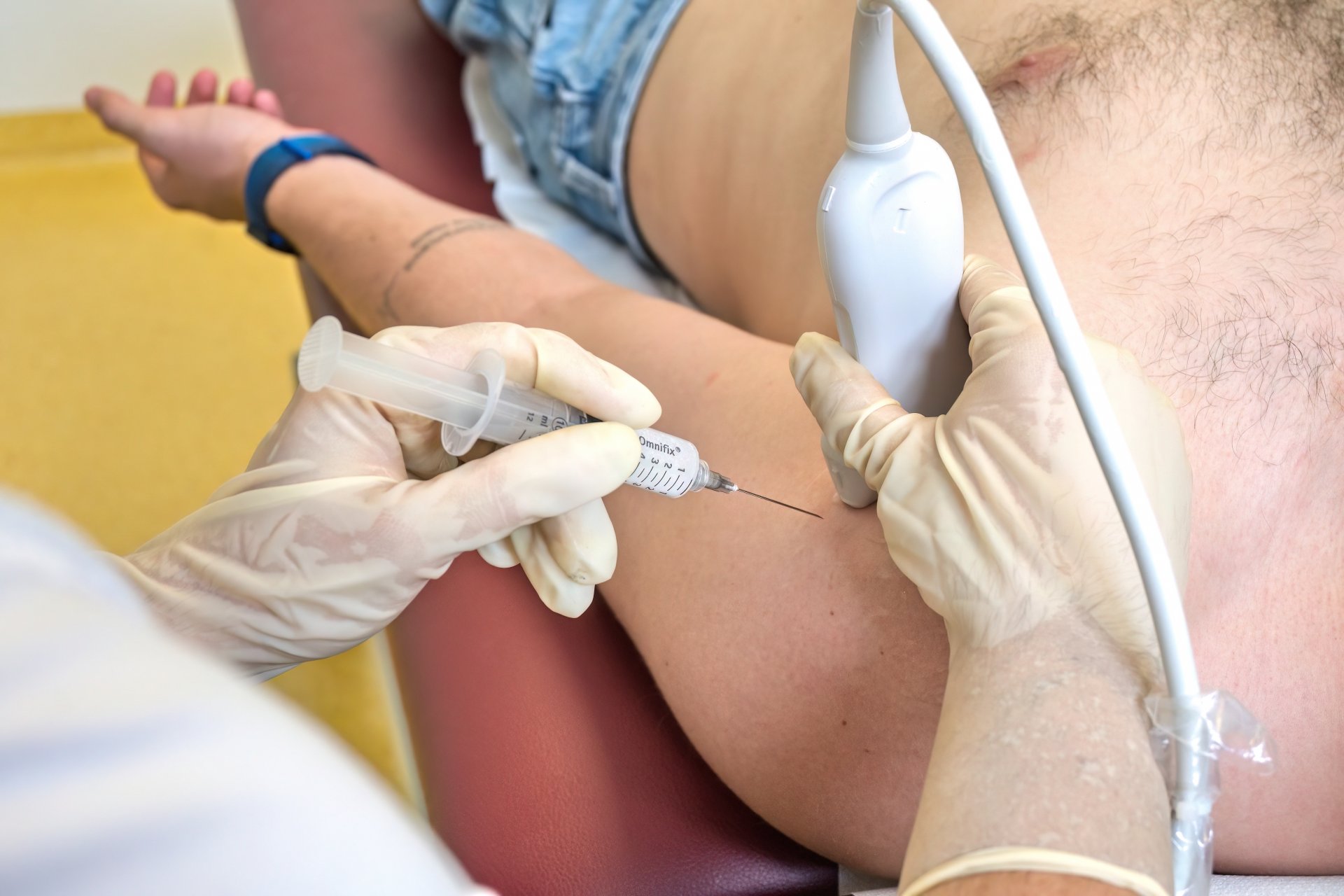
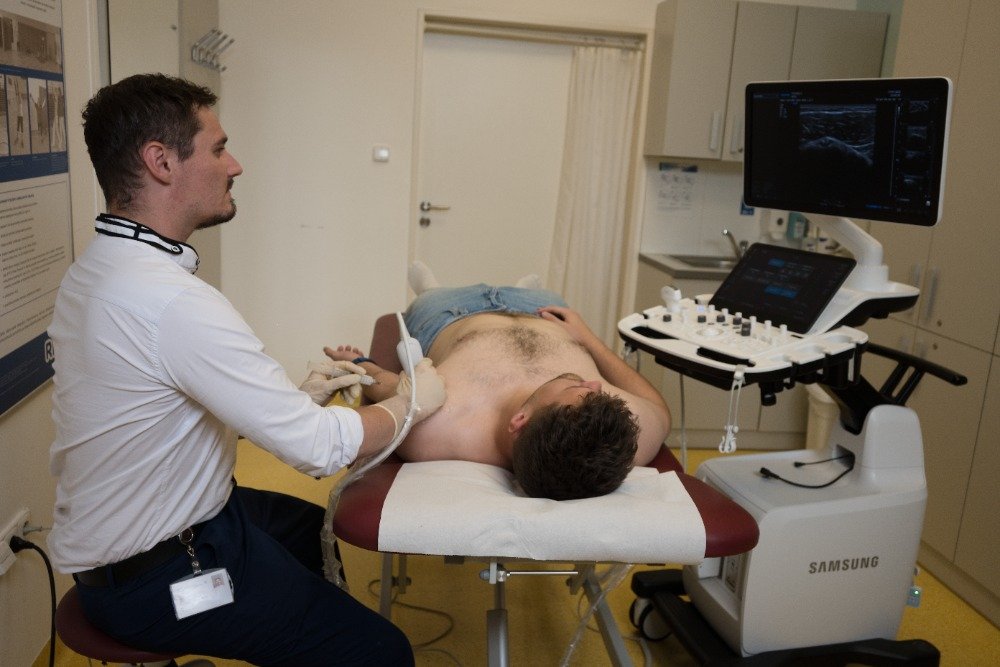
Our outpatient clinic specialises in the use of modern ultrasound diagnostics for musculoskeletal disorders and the treatment that directly follows. However, it’s not just about looking at images. Our main tool is what’s known as ultrasound-guided intervention. This means that once we identify the source of a patient’s pain, we can administer the medication with absolute precision under real-time visual guidance.
What are the most common problems patients come to you with?
The primary reason people come to us is, without a doubt, pain. Most often, we deal with joint problems, tendon issues, entrapment syndromes of the peripheral nerves (such as carpal tunnel syndrome), or pain originating in the spine. Our patient population is extremely diverse. On the one hand, we treat older patients with chronic degenerative changes; on the other hand, we treat young people and athletes recovering from injuries, most often with torn tendons or damaged nerves.
How does an ultrasound examination compare to a standard X-ray or MRI?
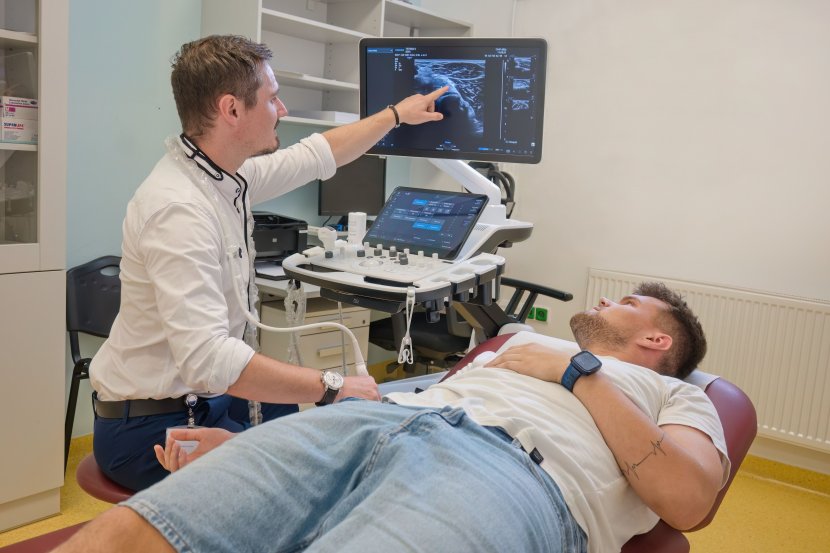
Ultrasound is an exceptionally sensitive and specific method for soft tissues such as muscles, tendons, insertions, nerves, and joints. You cannot see soft tissues on an X-ray; X-rays primarily evaluate bone structures. MRI is, of course, excellent, but ultrasound now offers a great alternative. A very important advantage is the ability to perform dynamic examinations—we observe the movement of soft tissues relative to one another in real time as the patient moves, and when the patient reports pain during movement, we can investigate, for example, a possible mechanical conflict. Furthermore, the examination is completely safe, involves no radiation whatsoever, and can be performed repeatedly, even right at the patient’s bedside.
“Ultrasound gives us tremendous freedom. We can see soft-tissue pathology immediately and take action right away.”
In the past, so-called “blind” injections were commonly performed. How is guided intervention better?
This is an absolutely fundamental shift. With a conventional injection, the physician relies solely on touch to locate anatomical landmarks and assess the resistance the tissue offers to the needle. With ultrasound, however, we can see both the target tissue and the needle tip itself at all times. This significantly reduces the risk of injury to surrounding structures, such as blood vessels or nerves, and makes the procedure much more comfortable and less invasive for the patient. We can be certain that the medication will reach exactly the desired area—for example, within the tight sheath of a tendon, around a nerve, or directly into the joint cavity—rather than into the surrounding soft tissues, where it would not have the desired effect.
What medications do you most commonly administer to the affected areas?
We use two basic types of substances. The first option is the classic combination of a local anesthetic and a depot corticosteroid. This mixture has a strong analgesic and anti-inflammatory effect. The second option is the administration of joint nutrition, known as hyaluronic acid viscosupplementation. This acts mechanically within the joint as a protective gel that reduces friction while also biologically stimulating and supporting cartilage metabolism.
Does this mean that the injection will cure the patient once and for all?
I’d like to emphasise one thing: the procedure itself is not a cure-all. There is no miracle substance with a permanent effect. However, our treatment does something extremely important: it opens what is known as a “window of opportunity.” By eliminating acute pain, we bring the patient to a functional level where they can finally get a good night’s sleep and begin high-quality, unrestricted exercise with a physiotherapist. That is precisely where the magic of interventional rehabilitation lies. Combining immediate relief with subsequent active exercise is the key to long-term success.
Do you plan to further expand your range of services?
Definitely. Our big plan for the future is to expand our services to include spinal procedures. We want to establish the facilities needed to perform what are known as caudal blocks. These advanced procedures are indicated for patients with spinal canal stenosis or nerve root irritation caused by herniated discs. This will be a semi-outpatient procedure, after which the patient will rest for one to two hours in our monitored recovery room before being able to go home. We believe this step will take care for patients with back pain to the next level.
How can patients schedule an appointment with you, and what do they need to do so?
Appointments are made through our reception desk at 311 745 000. It is a great advantage if the patient already has a referral from a primary care physician, neurologist, or orthopedist. Especially in cases following injuries, it is crucial that an X-ray examination be performed in advance to rule out traumatic changes to the skeleton.