Česky
Česky


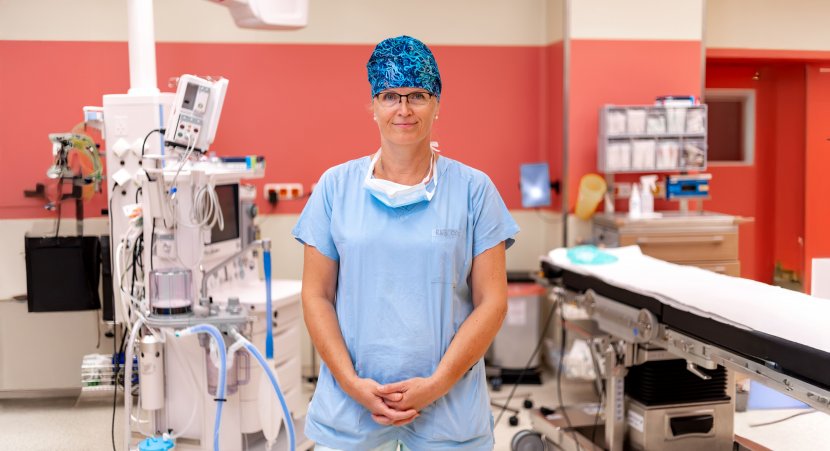
Marcela had been thinking about a career in healthcare ever since elementary school. “I used to listen with great fascination at home to the conversations of my two aunts, nurses. One of them, Emilka Dejdarová, was even my ward nurse for several years,” Marcela recounts, adding: “After school, however, I first started working in the surgical ward,
Day shift in numbers
7 operating rooms + one minor procedure room for outpatient procedures
10–20 minute procedures
15–20 procedures per operating room per day, most commonly knee and shoulder arthroscopies
18 scrub nurses in the operating rooms
A Day in the Life of a Surgical Nurse
Morning 6.45–7.00
Arrival at work, reviewing the surgical schedule:
The workday starts at seven in the morning by entering the operating suite through the airlock, changing into surgical scrubs, and meeting colleagues in the staff room. Here, Marcela checks the schedule to see which operating room she will be working in for the day. Next is familiarising herself with the surgical schedule, during which she usually manages to fit in breakfast and her first cup of coffee.
7.00–7.30
Receiving sterile supplies, sorting, and storing them:
Sterilisation department staff send processed items from the previous day up via the "clean" elevator. These supplies are then sorted and stored in their designated places.
7.30–8.00
Preparing the operating room according to the schedule:
Nurses prepare the necessary supplies (trays/sets of instruments, draping packs, surgical gowns, dressing materials, equipment, implants, etc.). It is essential to ensure that everything required for the entire surgical list is available. Work in the OR is a team effort, so the anesthetic nurse and orderlies/sanitarians prepare their required equipment at the same time. Meanwhile, the surgeon and assistant admit patients in the outpatient clinic. Ward nurses settle surgical patients in bed, and upon a phone call confirming the OR is ready, they transfer them to the operating suite. On any given day, two nurses are assigned to the OR: one scrub nurse and one circulating nurse. They usually rotate roles throughout the day.
8.00–12.00
Usual start of the surgical schedule, lasting all morning:
During procedures, the circulating nurse keeps additional supplies within reach that the surgeon might need and opens/unwraps them for the surgical team as required. The scrub nurse assists the surgeon, keeps instruments clean and sterile, monitors the progress of the procedure, and responds to the surgeon’s requests. Before and after the operation, the count of all instruments and sponges/gauze must match so that nothing is left in the surgical wound; the scrub nurse informs the surgeon when counts are correct. After the procedure, working together with the circulating nurse, she sends used instruments for sterilisation. The patient is awakened from anaesthesia and transported back to the ward. The operating room is cleaned and prepared for the next operation.
Midday / Afternoon 12.00–12.30
Lunch break. The entire surgical team eats lunch together.
12.30
The second half of the surgical schedule begins.
Evening 19.00
End of working hours.
However, it depends on the patient volume – sometimes there are fewer patients, other times more, and the work must be finished. After completing the surgical schedule, the operating room must be cleaned, consumed supplies replenished for the following day, and some items prepared for tomorrow. The rest of the operating suite also needs to be tidied up and prepared for the next day. Afterwards, the surgical team gradually heads home.